
























Strategies for Responding to Negative Product Feedback: The Credibility Thermostat Concept
How to reset the thermostat, and CodeRabbit as a case study
Read the full articleYou might also wanna read

Why Criticism Lingers: The Psychology Behind Negative Feedback's Staying Power
Can you recall a time when your parents criticized you? It could be about your motivation for school or work or a time you messed up on the
 thegrowtheq.com·21d ago
How to Detect and Fix Negative Sentiment in AI Answers About Your Brand
AI models like ChatGPT, Claude, and Perplexity are shaping buying decisions before prospects ever visit your website, making negative sentim

Study finds warning labels shift perceptions of sycophantic AI but fail to reduce its influence on users
Recent work has raised concerns about the influence of sycophantic AI on user judgment and relationships. One proposed mitigation, which has
 arxiv.org·22d ago
Study finds warning labels shift perceptions of sycophantic AI but fail to reduce its influence on users
Recent work has raised concerns about the influence of sycophantic AI on user judgment and relationships. One proposed mitigation, which has
arxiv.org·22d agoHow to Handle Negative Feedback as a Musician (2026)
Frameworks for handling press reviews, sync rejections, social trolls, and label passes without losing creative confidence, with real artist

Why Trust in AI Feedback Needs a Reality Check
AI feedback isn't always honest. Contextual Sycophancy reveals subtle biases in critical moments. A new approach, “ESA,” offers a solution b
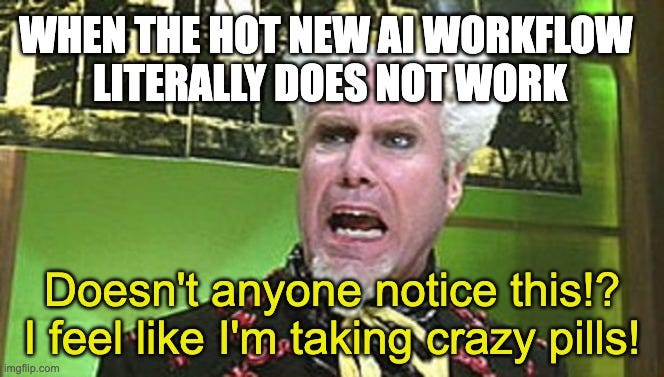
The AI Confidence Theater: A critique of hype cycles and performative certainty in tech discourse
We don’t need an extra reason to be anxious
 elenaverna.com·14d ago
The AI Confidence Theater: A critique of hype cycles and performative certainty in tech discourse
We don’t need an extra reason to be anxious
elenaverna.com·14d agoThe AI Confidence Theater: A critique of hype cycles and performative certainty in tech discourse
We don’t need an extra reason to be anxious
elenaverna.com·14d agoThe AI Confidence Theater: A critique of hype cycles and performative certainty in tech discourse
We don’t need an extra reason to be anxious
elenaverna.com·14d ago
Comments
Sign in to join the conversation.
No comments yet. Be the first.