
























Statistical Analysis Reveals DSM-5 Disorders Don't Align with Natural Symptom Clusters
Whither Major Depression?
Read the full articleYou might also wanna read


Data-driven unification of 72 biomedical publication types and study designs into a hierarchical rubric
Abstract. Our goal is to unify the 72 biomedical publication types and study designs (collectively, PTs) into a single rubric and hierarchy.
 academic.oup.com·1mo ago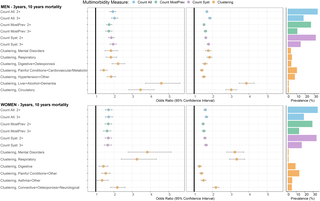
UK Biobank study compares count-based and clustering definitions of multimorbidity and their association with prevalence, health profiles, and mortality
In this cohort study, Gabriella Silva and colleagues evaluate different definitions of multimorbidity (count-based versus clustering) and th
 plos.io·1mo ago
Examining socio-structural factors and harms in the biopsychosocial model of chronic illness and disability
The biopsychosocial (BPS) model of health and illness, as discussed in mainstream literature, is typically associated with Engel (1977, 1992
Efficacy of a Cognitive Behavioral Therapy–Based Online Self-Help Group for Depression and Suicide Ideation: Randomized Controlled Trial
Background: Despite the high prevalence of depressive disorders, access to effective treatment remains limited due to financial, geographic,

When Machine Learning Gets Mental Health Outcomes Twisted
A machine learning pipeline intended to explain mental health risks in students reveals more about data constructs than actual outcomes. The

Rethinking Evaluation Frameworks for AI in Mental Health Care
Although artificial intelligence (AI) shows growing promise for mental health care, current approaches to evaluating AI tools in this domain
 arxiv.org·29d ago
Comments
Sign in to join the conversation.
No comments yet. Be the first.