
























Study links online political hostility to offline democracy deficits and economic inequality
By
Eric W. Dolan
Summary
A new study published in Nature Human Behaviour challenges the common assumption that social media itself is the primary driver of toxic political debates. Instead, the research provides evidence that offline societal factors—specifically levels of democracy and economic inequality—significantly shape the amount of political hostility users experience online. The findings indicate that social media users in less democratic and less economically equal countries face considerably more digital aggression than those in more egalitarian nations. The study shifts the blame from platform design to broader structural inequalities.
Source
 bskyStudy links online political hostility to offline democracy deficits and economic inequalitypsypost.org
Key quotes
· 3 pulledSocial media is often blamed for turning political debates into toxic battlegrounds, but a new study provides evidence that offline societal inequalities actually play a role in shaping this digital aggression.
The findings suggest that users in less democratic and less economically equal countries experience significantly more political hostility online than those in more egalitarian nations.
When the internet first emerged, many observers hoped it would create a more equal and inclusive public square.
You might also wanna read


Fractured reality: how algorithms fuel polarisation and affect democracy
The Noisy Room: How a Toxic Minority Distorts Our Perception of Social Media
This interactive essay examines how a tiny minority of users posting severely toxic content on social media creates widespread misperception
 The Noisy Room·1mo ago
Study in Nature Shows Social Media Algorithms Significantly Influence Political Attitudes
A study published in Nature examines how social media feed algorithms influence political attitudes. The research found that users who switc
 werd.io·4mo ago
Longitudinal Analysis of Affective Polarization in 12 Western Democracies
This academic study analyzes affective polarization across 12 Western democracies using national election study data from 143 elections span
 academic.oup.com·8mo ago
Exploring the Impact of Divisive Accounts on Online Toxicity
The article discusses the contrast between the toxicity of the online world and the tranquility of daily life, attributing it to a small num
theguardian.com·11mo ago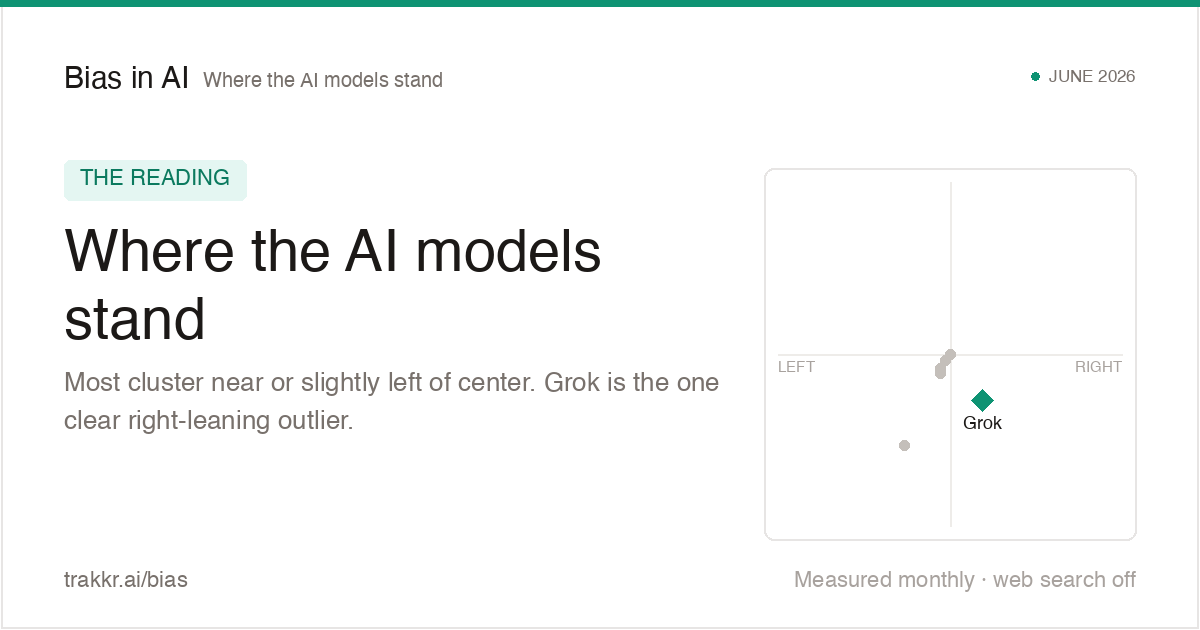
Measuring political bias in major AI models through repeated testing
This article presents a methodology for measuring political bias in major AI models by asking them the same charged questions about politics
 trakkr.ai·9d ago
Comments
Sign in to join the conversation.
No comments yet. Be the first.