
























First reported by bsky
Pete Hegseth's spiritual adviser Doug Wilson says Latter-day Saints should not hold office in his ideal Christian America
Snicker
By
JD is back
2d ago
Source
rougemag.squarespace.comSnickersquarespace.comPete Hegseth’s spiritual adviser longs for a day when Latter-day Saints can’t hold office or possibly even vote If Pete Hegseth was attempting a theological purge when the Pentagon recently rolled out a controversial “Christian list” that left out Latter-day Saints, the defense secretary’s spiritual adviser wouldn’t have necessarily objected. After all, Pastor Doug Wilson doesn’t see members of The Church of Jesus Christ of Latter-days Saints as Christian. If anything, the since-updated directory for military chaplains didn’t go far enough for Wilson, a self-described “orthodox Christian” (not to be confused with members of the Eastern Orthodox Church ), who would have culled a few more groups he considers too “heterodox” to claim the label. Nonetheless, he is quick to point out that he played no part in the Pentagon’s actions. “I’m happy to tell you,” Wilson told The Salt Lake Tribune, “I had nothing to do with” the department’s snub of Latter-day Saints. Wilson is the most prominent figure to emerge from a denomination founded in the late 1990s known as the Communion of Reformed Evangelical Churches , which claims between 23,000 and 25,000 adherents globally. Known for, among other views, calling the 19th Amendment granting women the right to vote a “ bad idea ,” Wilson said he also doubts the “snafu” was the work of his most famous follower. “It did not look to me,” the pastor of the denomination’s flagship Christ Church congregation in Moscow, Idaho, said, “like Pete Hegseth saying, ‘Let’s make sure that the Mormons are not on the list of Christians.’” Doug Wilson’s America Wilson has no problem with the government weighing in on matters of theology. Quite the opposite. Wilson is a self-identified Christian nationalist. Through his sermons, books, blog and podcast, he is tirelessly engaged in constructing a society whose leaders and laws accord with what he believes to be biblical principles. What would such a world, one he estimates is still hundreds of years off, look like? For one, he said, abortion, except those performed to save a mother’s life, would be “gone.” So, too, would be the U.S. Supreme Court decision declaring same-sex marriage a constitutional right. No-fault divorces would also be banned, Wilson explained, and only one member of each household — typically the husband — would have the right to vote. Upholding all these laws, he added, would be elected officials who pass doctrinal litmus tests. “In my ideal Christian republic,” Wilson said, “I’d want all officeholders to be orthodox Christians.” By this, he clarified, he means Christians who accept the trinitarian view that God, Jesus and the Holy Spirit are three in one — not, as Latter-day Saints believe, three separate entities . When asked if members of the Utah-based faith would be allowed to vote in this hypothetical republic, Wilson hesitated. “I would say it’s a problem,” he said. Then again, he explained that he’s “not convinced” that a total prohibition would be necessary. Meanwhile, he welcomes Latter-day Saints casting ballots at present, given their tendency to support conservative candidates and policies. “You have to be able to distinguish between what is the greater problem,” he said. Currently, “kids being aborted and same-sex weddings are a far greater problem than Mormons voting.” An emerging standard-bearer Wilson is hardly a lone voice in the wilderness. Rather, he emerges, said Daniel Williams , a historian of religion and politics at Ohio’s Ashland University, from a worldview championed by theologian Rousas John Rushdoony . “Rushdoony wanted to import biblical law from the Old Testament into American law,” said Williams, author of “ God’s Own Party: The Making of the Christian Right .” “That’s the strand of theological thinking that Doug Wilson draws on now.” Wilson’s views, however, have a ways to go before they reflect any kind of mainstream thinking. Surveys from the Pew Research Center have found a decline in the percentage of Americans who say the government should “stop enforcing separation of church and state,” from 19% in 2021 to 13% in 2026. At the same time, more than half (54%) want the government to keep that wall in place. According to these same polls, which carry a margin of error of about 2 percentage points, the number who say they want the Bible to “guide” U.S. law has held steady at around 1 in 4 U.S. adults. Lately, top Latter-day Saint leaders have doubled down on the need for those with divergent views and beliefs to live together peacefully. That urging has taken the form of sermons on civility , public speeches decrying political polarization and, recently, a Sunday school lesson on the nation’s founding celebrating pluralism. “We should not seek total dominance for our own position,” church President Dallin H. Oaks said in a landmark 2021 address at the University of Virginia. “We should seek fairness for all.” Still, nearly half of church members either adhere to or sympathize with Christian nationalist views, according to recent data from the Washington-based Public Religion Research Institute’s American Values Survey. But, as Kristin Kobes Du Mez , a history professor at Michigan’s Calvin University, noted, there’s a difference between how representative Wilson is and the pastor’s “significance.” “His proximity to power,” said Du Mez, author of “ Jesus and John Wayne: How White Evangelicals Corrupted a Faith and Fractured a Nation ,” “is more impressive than it ever has been.” Exhibit A: In February, Wilson delivered a 15-minute sermon at a Pentagon prayer service at Hegseth’s invitation. Neither is Wilson shy about touting his growing network of influential players in American politics. “This is the first time we’ve had connections with as many people in national government as we do now,” Wilson told The Associated Press last August, around the time that the Communion of Reformed Evangelical Churches opened a new congregation in Washington. More mainstream Christians have noticed. In mid-June, the influential Albert Mohler , president of The Southern Baptist Theological Seminary, drew praise and consternation by appearing on Wilson’s podcast to discuss their forthcoming book — “ 5 Views on Christian Nationalism .” “Mohler is probably the most powerful man in the Southern Baptist Convention ,” Du Mez said, referring to the largest Protestant denomination in the country with more than 12 million members . He’s also someone, she said, who has kept Wilson “at arm’s length.” Until now. What Wilson’s rise means for Latter-day Saints With Wilson’s star shining ever brighter, should Latter-day Saints worry about their place in U.S. society and politics? “Probably not,” said Williams, the history professor at Ashland University, “although it’s hard to say for certain.” Despite their relatively large size, white evangelical Protestants are, he explained, a minority — and most are not actively trying to disenfranchise Latter-day Saints. However, Williams and Du Mez, who writes about Latter-day Saints in her new book, “ Live Laugh Love: The Secret History of White Christian Women and the World They Made ,” agreed that the church’s nearly 7 million U.S. members are likely to face a growing number of cold shoulders from white evangelicals. “Cultural trends,” Williams said, “are probably moving away from what seemed a decade or so ago to be signs of a rapprochement,” or reconciliation, “between the two groups.” One reason for this, Du Mez theorized, has to do with the shared sense of ascendency felt by many on the right. With Republicans in charge of Congress and President Donald Trump in the White House, she said, “some people feel that they are on the brink of ultimately achieving” their long-sought vision of a nation by and for Christians. “That surfaces the question,” she said, “of where do Mormons belong.” The answer is one the likes of Latter-day Saint and Utah Republican Sen. Mike Lee — who did not respond to a request to comment on Wilson’s views on members of the church — probably won’t like. The sense that Du Mez gets is that a growing number no longer feel that Latter-day Saints and their electoral muscle are needed. The focus instead is increasingly turning to “who counts as Christian,” she said. “And that’s where, for most evangelicals, Mormons are not going to be in the fold.”
You might also wanna read

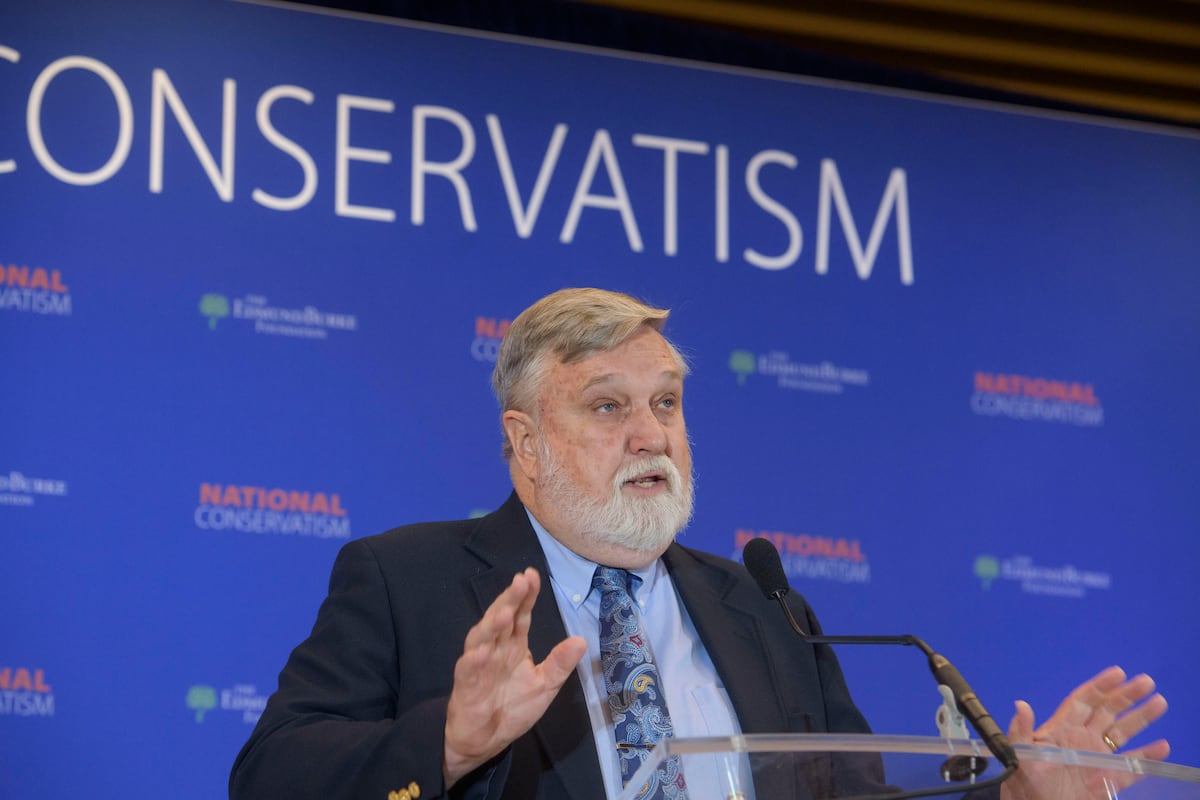
Pete Hegseth's spiritual adviser Doug Wilson says Latter-day Saints should not hold office in his ideal Christian America
A brief article reporting that Doug Wilson, a pastor who serves as Defense Secretary Pete Hegseth's spiritual adviser, has stated that in hi
 sltrib.com·2d ago
Pentagon under Hegseth accused of favoring white evangelical Christianity after cutting religious designations
Defense Secretary Pete Hegseth is accused of reshaping Pentagon policies to align with white evangelical Christian values, as evidenced by t
 bit.ly·24d ago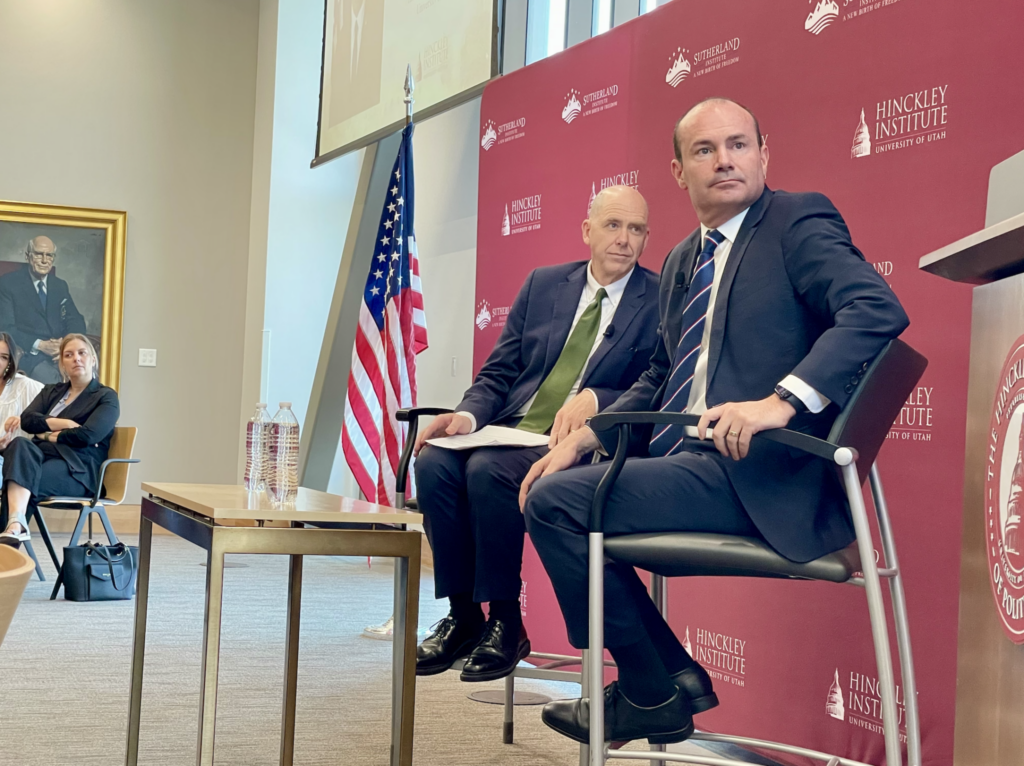
Pentagon reverses course, restores Latter-day Saints to recognized faiths list after GOP backlash
The Pentagon reversed its decision to remove dozens of religious denominations, including the Church of Jesus Christ of Latter-day Saints, f
 arkansasadvocate.com·26d ago
The Great Military Purge of People Pete Hegseth Doesn't Like
open.substack.com·28d ago
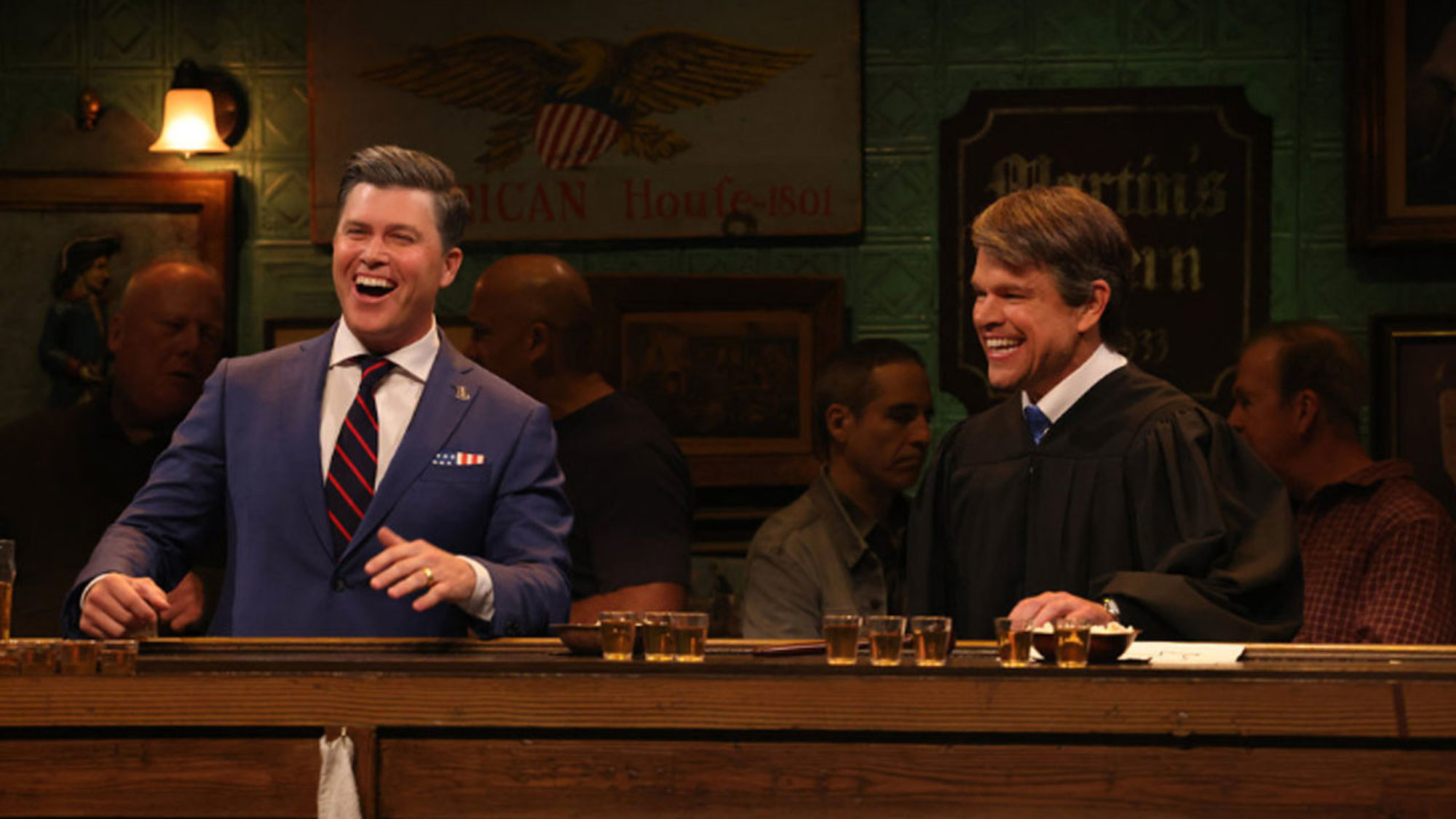
SNL's Colin Jost Pitched Pete Hegseth "Pulp Fiction" Sketch That Was Rejected as Too Ridiculous Before Real Hegseth Did It
SNL cast member Colin Jost (who plays Secretary of Defense Pete Hegseth on the show) revealed that he pitched a Cold Open sketch where Hegse
Bleeding Cool·1mo ago
Department of Defense Reduces Recognized Religious Faiths from 211 to 31
The Department of Defense has dramatically reduced its list of recognized religious faiths from 211 to 31, dropping approximately 180 faiths
 military.com·27d ago
Comments
Sign in to join the conversation.
No comments yet. Be the first.