
























Smart Source Detection Framework for Lobster Eye Telescopes
Peng Jia et al 2025 ApJS 281 26 A novel source detection framework employing neural networks resulted in a 27% increase in the number of detected sources compared to existing pipelines when applied…
Read the full articleYou might also wanna read


Machine Learning Validates Unrecognized Transient Astronomical Phenomena in Historical Observatory Images
Transient, star-like point sources that appear and vanish over short timescales are described in astronomical images prior to launch of Sput
 arxiv.org·2mo ago
AI tool discovers over 800 undocumented objects in Hubble Space Telescope archive
Two researchers at the European Space Agency have run an AI tool across nearly 100 million cropped images from the Hubble Space Telescope ar
 spacedaily.com·1mo ago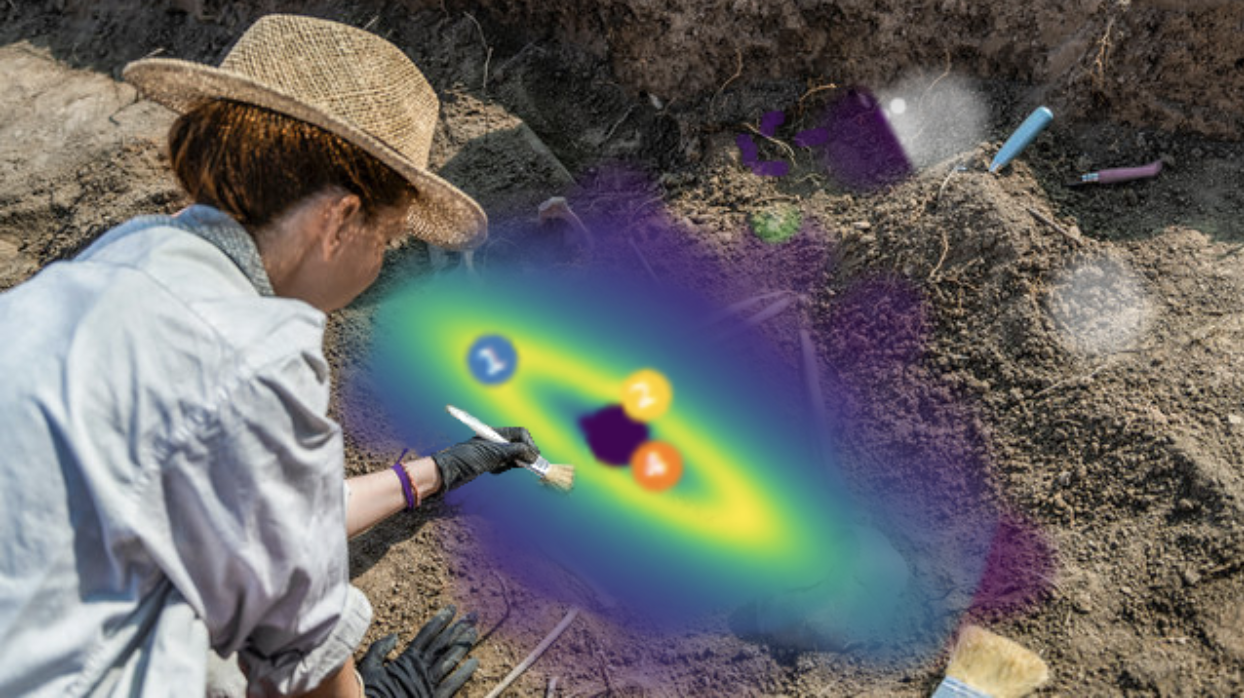
New imaging technique combines reference-star and angular differential imaging to reveal faint exoplanets and debris disks
What do astronomers and archaeologists have in common? Today's guest author discusses how faint exoplanet signals are extracted from their n
 astrobites.org·16d ago
Deep learning framework detects fine-scale ecological features invisible to standard satellites
We developed a high-resolution deep learning framework to reveal fine-scale ecological features, like hedgerows and copses, that are typical
 research.google·18d ago
High school student's AI identifies 1.5 million new celestial objects from NASA telescope data
A young mind builds an AI breakthrough Matteo Paz, a student at Pasadena High School, joined the Planet Finder Academy in the summer of 2022
 futura-sciences.com·1mo ago
Detecting neutron sources by borrowing inference tools from cosmology
Neutron sources can be directly identified from measured spectra rather than proxies using inference tools adapted from cosmology, according
Comments
Sign in to join the conversation.
No comments yet. Be the first.