
























SJVN Limited's Great Renewable Leap That Wasn't
From the article
In six years, SJVN's claimed project portfolio swelled from 5,200 MW to nearly 60,000 MW, then shrank to 21,374 MW. The company has not had a full-time chairman for 29 months. The stock price has slumped from Rs 150 two years ago, to barely Rs 70 now. Is the government really serious about managing its energy PSU's? On the day Nand Lal Sharma retired as Chairman and Managing Director of SJVN Limited, in February 2024, the farewell communications recorded a remarkable statistic: under his stewardship, the company's project portfolio had grown from 5,200 MW to 59,872 MW. Eighteen months later, SJVN's own management described its total project portfolio as 21,374 MW. No plant burned down. No projects failed spectacularly in public. Nearly 38,000 MW of claimed pipeline simply evaporated, without a press release marking its passing. That silent shrinkage is the clearest evidence for a proposition India's power sector prefers not to discuss: that a Navratna public sector undertaking, with a sovereign balance sheet, regulated returns and an 81.8% government shareholding, can be just as hostage to the personality in the corner office as any founder-led startup. Act one: the ambition machine (2018-2024) The numbers of the Sharma era read today like a fever chart. In May 2018, the company announced a Shared Vision of 5,000 MW by 2023, 12,000 MW by 2025 and 25,000 MW by 2040. For the Hydro power firm, a vast majority of this growth was to come from solar and wind energy. In February 2022, with installed capacity at just 2,016.5 MW, the vision was upgraded: 25,000 MW would now arrive by 2030, and 50,000 MW by 2040. The same month, SJVN handed the Rajasthan government a letter of intent for 10,000 MW of solar in five years with a proposed investment of Rs 50,000 crore. A 1.2 GW letter of intent from Punjab followed in July 2023, alongside a 320 MW award in Assam , floating solar in Madhya Pradesh, wind wins under SECI tranches, an MoU with PFC contemplating financial assistance for a portfolio valued at roughly Rs 1.19 lakh crore, and the creation of SJVN Green Energy Limited as the renewables vehicle. The claimed portfolio compounded from 16,000 MW in 2021 to 31,500 MW by mid-2022 to nearly 60,000 MW by the CMD's retirement. The market bought the story wholesale. SJVN's stock surged 113% in 2023, outperforming NTPC, Tata Power and Adani Power, on what analysts at the time described as an all-time-high order surge. What the installed-capacity line showed, meanwhile, was rather different: the 5,000 MW milestone promised for 2023 came and went with the company at roughly half that number. The gap between announcement and asset was widening even as the announcements accelerated. Act two: the empty chair (2024-present) What followed Sharma's retirement on February 29, 2024 is, in its own way, more damning of the system than of any individual. Geeta Kapur, Director (Personnel), was handed additional charge from March 1, 2024, becoming SJVN's first woman CMD. The Public Enterprises Selection Board recommended Sushil Sharma, Director (Projects), for the full-time post on April 8, 2024, but the Appointments Committee of the Cabinet never ratified the selection, reportedly following objections raised by the Lokpal, according to press accounts. On Kapur's retirement, the government handed additional charge to Raj Kumar Chaudhary, who was simultaneously running NHPC. When Chaudhary approached retirement, Bhupender Gupta, Director (Technical) at THDC India, took over as interim CMD from May 1, 2025, while retaining his THDC responsibilities. Twenty-nine months after Sharma's exit, India's second-largest hydro PSU has not had a chairman whose only job is SJVN. It is difficult to overstate what this does to a strategy that was constructed as a personal vision. The Shared Vision documents, the state MoUs, the tripling of targets were all artefacts of one office and, in practice, one incumbent. Interim chairmen holding day jobs at rival PSUs do not fly to Jaipur to defend a five-year-old letter of intent, and they do not stake political capital on a 25 GW promise made by a predecessor. The pipeline, deprived of its patron, went into quiet administration. Six years of SJVN: the office, the claims, and the assets Period Who held the CMD office Claimed portfolio / targets Installed capacity Dec 2017 - Feb 2024 Nand Lal Sharma (full-time) Portfolio: 5,200 MW to 59,872 MW; Vision raised twice, to 25 GW by 2030, 50 GW by 2040 2,016.5 MW (Feb 2022) to ~2,467 MW at exit Mar - Oct 2024 Geeta Kapur (Director-Personnel, additional charge) PESB pick for full-time CMD stalls at ACC stage ~2,467 MW Nov 2024 - Apr 2025 Raj Kumar Chaudhary (CMD, NHPC; additional charge) 2030 target quietly absent from communication ~2,967 MW (FY25-end; 691 MW added in FY25) May 2025 - present Bhupender Gupta (Director-Technical, THDC; additional charge) Portfolio now stated at 21,374 MW; FY26 RE guidance: ~650 MW 3,147 MW (Q2 FY26) to 4,196.5 MW (Jul 2026, with Bikaner + Buxar Unit-1) Sources: company communications, farewell announcements, PESB/press reports, Q2 FY26 earnings call, CARE Ratings (Nov 2025), exchange filings. Act three: the quiet repricing The numbers under the interim regime tell a story of deliberate deceleration. FY25 capacity addition was 691 MW. The Q2 FY26 earnings call in November 2025 guided to roughly 650 MW of renewable commissioning for the full year, with about 1.5 GW of solar expected in FY27, from an under-construction solar book of just 2,213 MW across fourteen projects. Plans to list SJVN Green Energy were pushed out by at least a year. Management's comfort on servicing Rs 30,000 crore of debt leaned explicitly on revenues from the Buxar coal plant. Even SJVN's flagship renewable achievement carries the same signature. The 1,000 MW Bikaner solar project, formally inaugurated by the Prime Minister this month, is a genuine landmark, India's largest single-location DCR solar plant. But it was conceived, tendered and contracted in the Sharma era, commissioned in phases through 2025 against CPSU-scheme timelines that pointed to 2024, and reached full commercial operation under the third of four interim chairmen. The current SJVN is, in effect, executing the previous SJVN's homework, competently, but without adding much new to the pile. Its much-cited role as a Renewable Energy Implementing Agency, with 19.8 GW of tenders floated, flatters the gigawatt count; only 3.74 GW of those have converted into signed power sale agreements, and intermediating other developers' capacity is not the same thing as building one's own. The uncomfortable symmetry Honesty requires acknowledging that the correction was partly healthy. A 59,872 MW portfolio on a company with 2.5 GW of operating assets and Rs 7,500-12,000 crore of annual capex was scarcely believable; it was a press-release aggregate of MoUs, LoIs and aspirations, much of which deserved to be written down. The interim managements that pruned it to 21,374 MW and pointed the organisation at Buxar, Bikaner and Arun-3 arguably did minority shareholders a service. But that is precisely the point. Both phases, the inflation and the deflation, are symptoms of the same institutional weakness: strategy at SJVN was never owned by the board, embedded in a capital plan, or stress-tested against the balance sheet. It was owned by the CMD. When the CMD changed, the strategy changed. Why this matters beyond Shimla SJVN is not an outlier; it is a warning. NHPC endured its own extended interim-CMD spell, and the practice of double-hatting chairmen across NHPC, THDC and SJVN has normalised the idea that leading a listed Navratna is a part-time assignment. For a country that has assigned a significant chunk of its 500 GW non-fossil target substantially to public sector execution vehicles, the arithmetic is unforgiving: every year a 25 GW vision idles under caretaker management is capacity that must be tendered, financed and built by someone else. And for the minority shareholders who hold 18% of SJVN, who bought a 113% rally built on a portfolio that has since halved, the episode raises questions that go beyond one company: whether PSU 'vision' documents should require board-approved funding plans before public announcement, whether the PESB-ACC pipeline can be held to statutory timelines, and whether a CMD's legacy claims at retirement deserve the same disclosure scrutiny as any other forward-looking statement to the market.
Continue reading on Saur EnergyYou might also wanna read


Pakistan’s solar revolution: phase-two in full swing
Business Recorder·15h ago
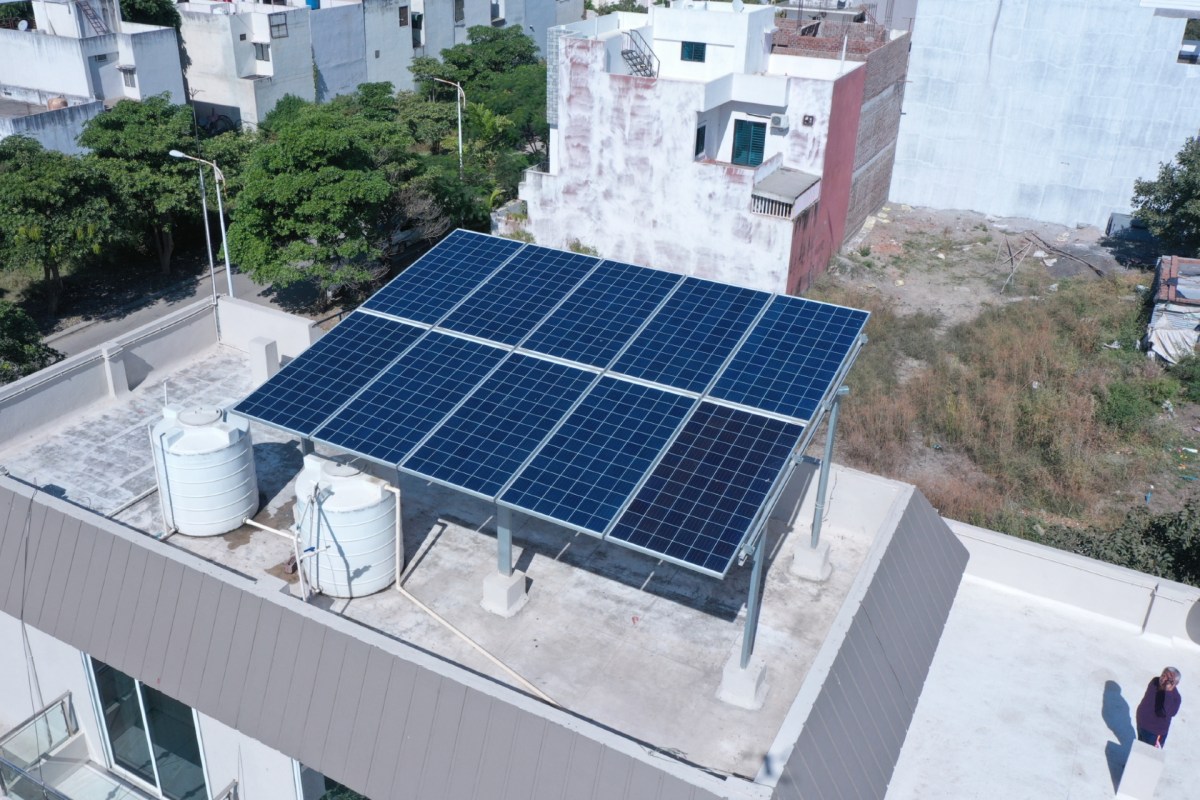
SolarSquare in talks to raise $55-60M Series C at up to $500M valuation as India's rooftop solar market attracts VC interest
SolarSquare, an Indian rooftop solar startup, is in advanced talks to raise $55-60 million in a Series C round co-led by B Capital and Light
 twp.ai·20h ago
The spot mirage
itkservices3.com·2mo ago
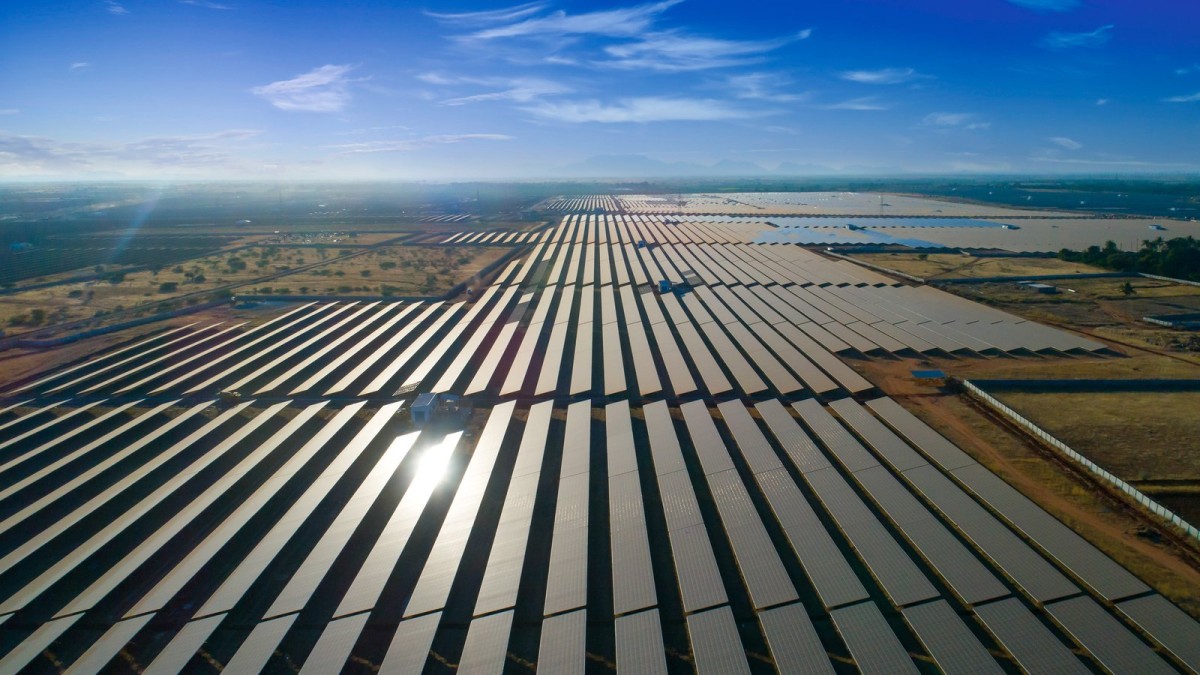
India's $100 Billion Grid Investment Fuels Solar Manufacturing Surge
India has undergone a dramatic energy transformation from a coal-focused strategy to a solar energy boom. The Modi administration, which in
 oilprice-com.cdn.ampproject.org·13h ago
CleanMax Delivers Record Commissioning Of Over 500 MW In A Single Quarter (Q1 FY27); Operational Renewable Energy Portfolio Stands At 4.2 GW – EQ
Solar Quarter·2d ago
MES issue Tender for CMMO for SPV Solar Power Plant of Capacity 4 MW and 2 MW And Connected Works at Army Area Jodhpur under GE (Army) No. 01 – EQ
Solar Quarter·2h ago
Comments
Sign in to join the conversation.
No comments yet. Be the first.