
























Differentially Private Seeding Algorithms for Public Health Interventions Using Contact Tracing Data
By
[Submitted on 26 May 2023 (v1), last revised 19 Jun 2026 (this version, v7)]
Summary
This paper addresses the challenge of using seeding algorithms for public health interventions (like PrEP distribution for HIV prevention) when complete sexual activity networks are unavailable due to privacy concerns. The authors propose differential privacy-preserving algorithms that work with influence samples from contact tracing rather than full network data. They introduce randomization in data or outputs to bound individual privacy loss, and demonstrate through theoretical analysis and simulations on synthetic and real-world sexual contact data that performance degrades gracefully as privacy budgets tighten, with central privacy regimes outperforming local ones.
Source

 bskyDifferentially Private Seeding Algorithms for Public Health Interventions Using Contact Tracing Dataarxiv.org
Key quotes
· 4 pulledIn public health interventions such as distributing preexposure prophylaxis (PrEP) for HIV prevention, decision makers often use seeding algorithms to identify key individuals who can amplify intervention impact.
Building a complete sexual activity network is typically infeasible due to privacy concerns.
We study differential privacy guarantees for influence maximization when the input consists of randomly collected cascades.
Theoretical analysis and simulations on synthetic and real-world sexual contact data show that performance degrades gracefully as privacy budgets tighten, with central privacy regimes achieving better trade-offs than local ones.
You might also wanna read
Privacy-Preserving Distributed Maximum Likelihood Estimation via State Decomposition

Monadic DNA's Experiment on Anonymous DNA Analysis with MPC Technology
Monadic DNA conducted an experiment to enable individuals to access and analyze their genetic data anonymously and privately using multi-par
vishakh.blog·1y ago
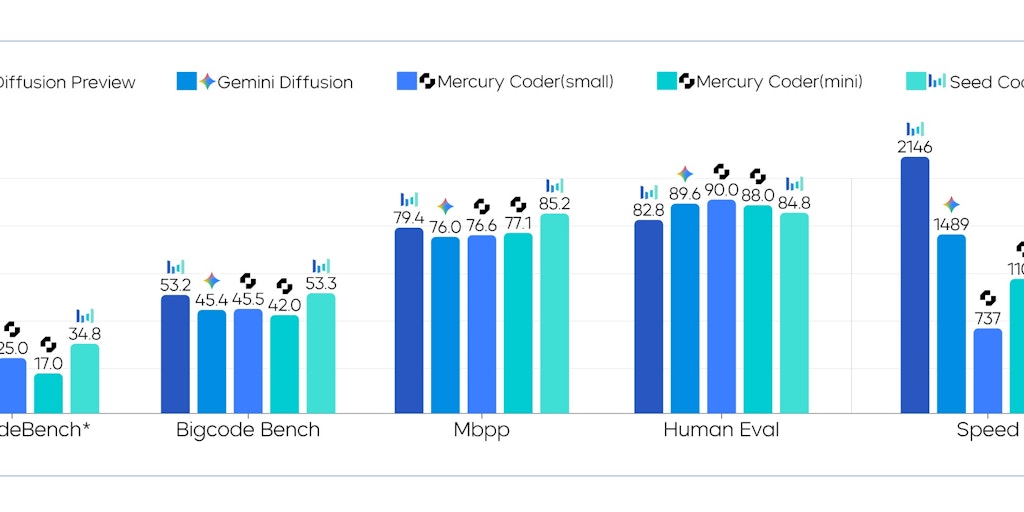
ByteDance's Seed Diffusion Model Boosts Code Generation Speed by 5.4x
Seed Diffusion, an experimental open-source diffusion language model by ByteDance's Seed team, offers a 5.4x inference speedup over comparab
 Product Hunt·11mo ago
How On-Chain AI Inference Protects User Privacy Through Decentralized Networks
This article explains on-chain AI inference, a privacy-focused approach to running AI models on decentralized cryptocurrency networks. Unlik
 noncemedia.com·2d ago
Tiny-diffusion: A minimal implementation of probabilistic diffusion models
Anonymous Credentials: Privacy-Preserving Rate Limiting for AI Agents
The article explores how Anonymous Credentials can address the security challenges posed by AI agents on the Internet. As AI agents increasi
 blog.cloudflare.com·8mo ago
Comments
Sign in to join the conversation.
No comments yet. Be the first.