
























Scientific Discovery: Scotch Tape Emits X-Rays When Peeled in Vacuum
Micro-cracks travel along the peeling tape at supersonic speeds, producing shock waves and sound pulses.
Read the full articleYou might also wanna read


When physicists used their own eyes as particle detectors: A history of vision and radiation
Some physicists at the early cyclotrons used their vision to locate high-energy particles. Since then, medical researchers have gained a bet
 physicstoday.aip.org·25d ago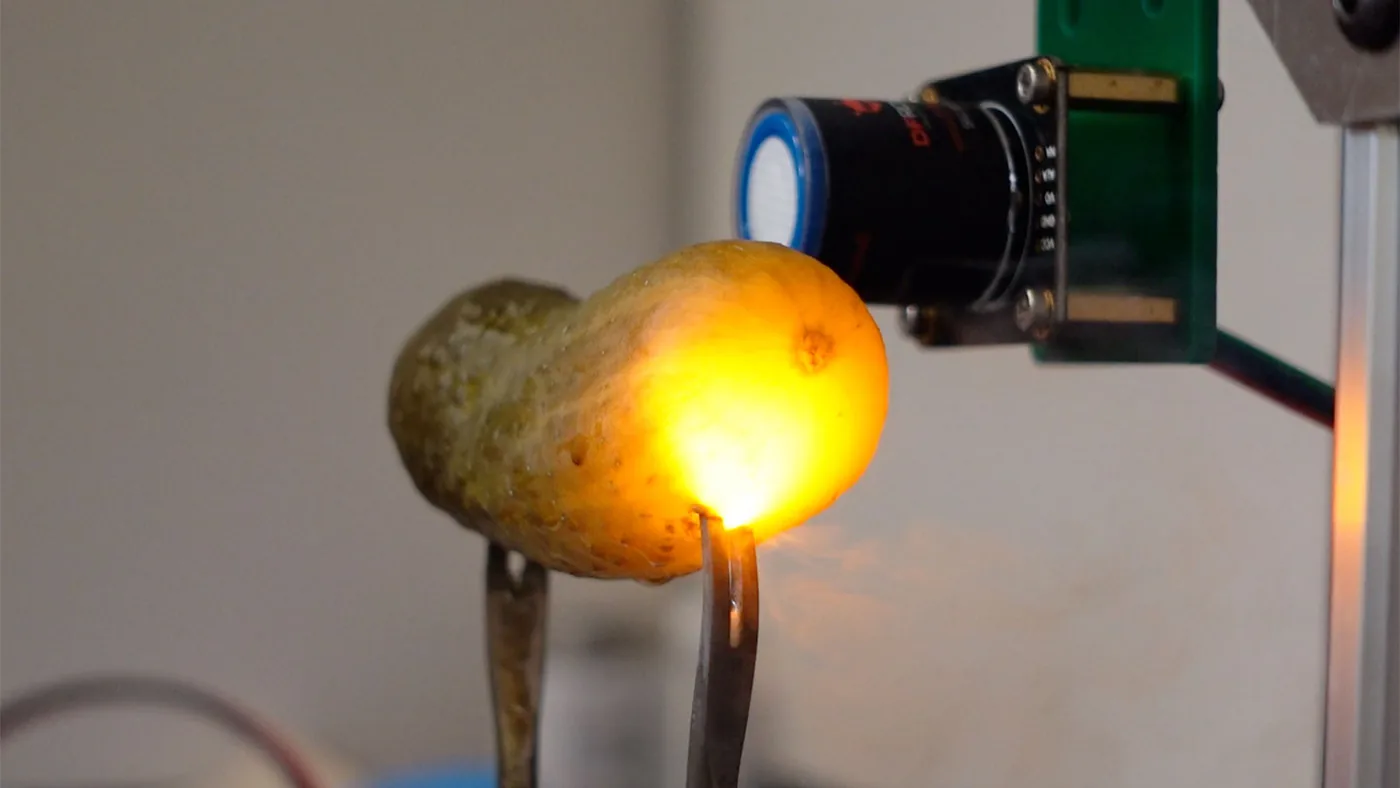
Scientists explain the physics behind the glowing pickle experiment
A scientist, a jar of pickles and a power strip walk into a room. The punchline involves physics, glowing condiments and a scientific party
 sciencenews.org·9d ago
Scientists explain the physics behind the glowing pickle experiment
A scientist, a jar of pickles and a power strip walk into a room. The punchline involves physics, glowing condiments and a scientific party
Science News·9d ago
The Faint Glow of Life: How Biophotonics Could Transform Our Understanding of Health and Disease
We’re just beginning to decode this faint optical “signature of life” and what it could reveal about health, disease, and the future of medi
 popularmechanics.com·18d ago
Programmable metasurfaces steer light generated by fast electrons
When fast-moving electrons pass over nanostructured materials, they can make those materials emit light — a phenomenon called cathodolumines

Do Laser Produced Plasmas Explain Some of the UAP Orbs?
A U.S. military artist’s vision of laser weapons. (Credit: Department of War, Wikimedia ) Today, I received an interesting message in respon

Físicos crean un agujero negro de luz en el laboratorio para probar la escurridiza radiación de Stephen Hawking
Mediante pulsos de luz en una fibra óptica, lograron crear un horizonte de sucesos y observar fotones en la región ultravioleta, con lo que
Comments
Sign in to join the conversation.
No comments yet. Be the first.