
























Scaling Echo State Networks: A New Learning Rule
Echo State Networks face challenges with high-dimensional learning. A new approach reduces variance by focusing on input dimensions, promising scalable and efficient adaptation.
Read the full articleYou might also wanna read


Emergent Hebbian Dynamics in Regularized Learning: A Theoretical Analysis
Hebbian and anti-Hebbian plasticity are widely observed in the brain and are classically modeled as mechanistic, local homosynaptic rules st
 arxiv.org·1mo ago
Theoretical Analysis Reveals Why Linear RNNs Are More Parallelizable Than Nonlinear RNNs
The community is increasingly exploring linear RNNs (LRNNs) as language models, motivated by their expressive power and parallelizability. W
arxiv.org·1mo ago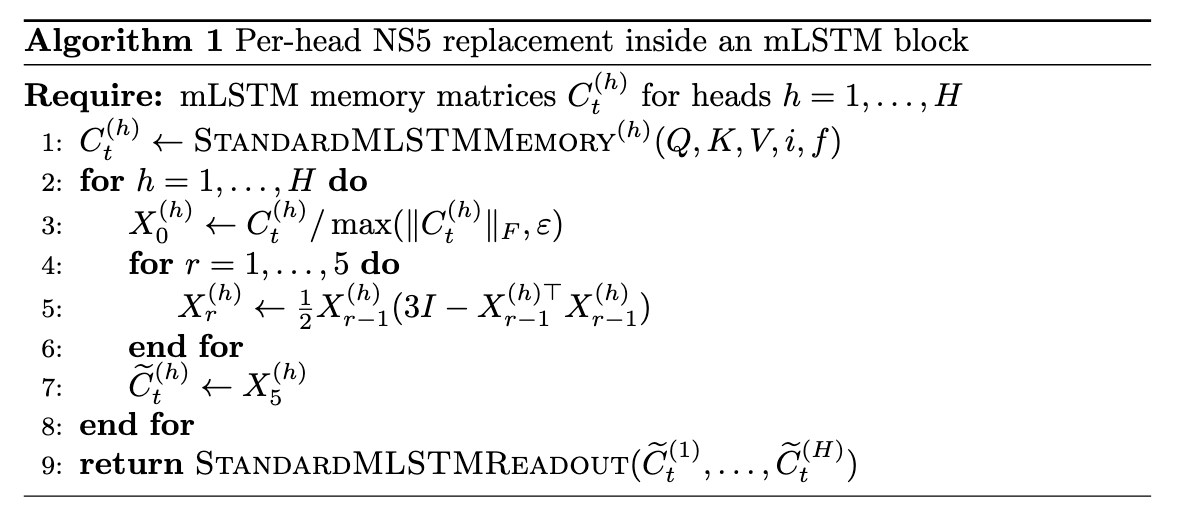
Matrix Orthogonalization Technique Boosts Associative Recall in Recurrent Neural Networks
Personal website of Ayush Tambde

Deep Neural Networks Converge to Universal Low-Dimensional Subspaces Across Diverse Tasks
We show that deep neural networks trained across diverse tasks exhibit remarkably similar low-dimensional parametric subspaces. We provide t
arxiv.org·7mo ago
Researchers Work to Decode the "Black Box" of Reservoir Computing and Brain-Inspired AI
Deciphering the Secrets Within Artificial Neurons
 akmaier.substack.com·1mo ago
Sparse Bayesian Learning Algorithms Revisited: From Learning Majorizers to Structured Algorithmic Learning Using Neural Networks
Sparse Bayesian Learning (SBL) is one of the most popular sparse signal recovery methods, and various algorithms exist under the SBL paradig
Comments
Sign in to join the conversation.
No comments yet. Be the first.