
























Saturn’s rings are so young that dinosaurs would have looked up at a ringless planet, and measurements from the Cassini probe suggest they are being pulled into the planet fast enough to disappear entirely
Cassini data point two ways at once: Saturn's rings look like a recent addition, younger than most of the dinosaur era, and they are draining into the planet fast enough to vanish. The post Saturn’s…
Read the full articleYou might also wanna read


Shining a Light on the Shadowy Movements in Saturn’s Rings
Astrobites reports on an explanation for the appearance of Saturn's A ring. The post Shining a Light on the Shadowy Movements in Saturn’s Ri
Ringed Versus Ringless Worlds: How Poynting–Robertson Drag Shapes Rings Across the Solar System
Ryuki Hyodo and Shigeru Ida 2025 ApJL 994 L15 Modeling suggests that drag due to solar flux acting on isolated particles is able to explain
A Survey of Cassini Images of Spokes in Saturn’s Rings: Unusual Spoke Types and Seasonal Trends
S. R. Callos et al 2025 Planet. Sci. J. 6 17 Particle clouds called spokes in the outer parts of Saturn’s rings show a variety of intriguing
Vortex-Induced Rings and Gaps Within Protoplanetary Disks
Xiaoyi Ma et al 2025 ApJ 979 244 Simulations show that vortices are capable of creating rings and gaps like those made by planets; however,
Retrograde Predominance of Small Saturnian Moons Reiterates a Recent Retrograde Collisional Disruption
Edward Ashton et al 2025 Planet. Sci. J. 6 283 Sixty-four new irregular moons of Saturn have been discovered, and analysis of all 122 irregu
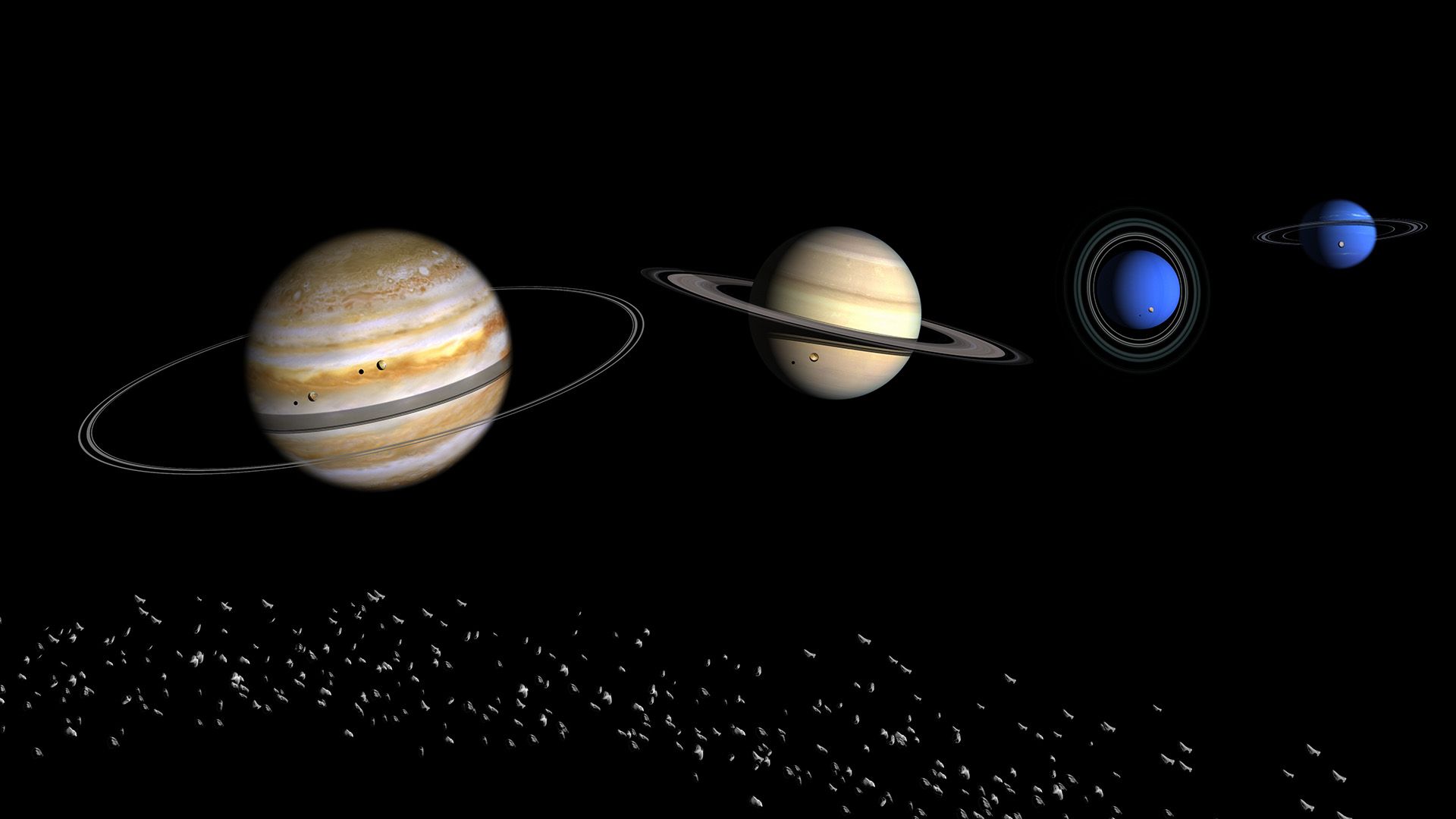
Study suggests two giant 'super Earths' may have existed in early solar system before being ejected
Our solar system may have hosted up to six giant planets in its first hundred million years, a new study suggests. The findings paint a more
 livescience.com·29d ago
Comments
Sign in to join the conversation.
No comments yet. Be the first.