
























Expert survey reveals widespread underreporting of same-sex sexual behaviour in mammals due to publishing bias
By
Karyn A. Anderson ,
Summary
A cross-sectional expert survey on same-sex sexual behaviour (SSSB) in mammals reveals a significant gap between observed behaviour and published reports. Among surveyed researchers (mostly studying Primates), 76.7% observed SSSB in their study species, but only 48.2% collected data on it, and merely 18.5% published on it. Notably, 38.6% of species identified as engaging in SSSB had no existing published reports. The primary reasons cited were rarity of behaviour and lack of research priority, while no respondents reported sociopolitical concerns or discomfort as barriers. Statistical analysis showed that taxa studied, education level, or LGBTQ+ identity did not predict observation, data collection, or publication of SSSB. The findings suggest a publishing bias against anecdotal evidence may contribute to underreporting.
Source
 bskyExpert survey reveals widespread underreporting of same-sex sexual behaviour in mammals due to publishing biasjournals.plos.org
Key quotes
· 5 pulledMost respondents (76.7%, N = 56) had observed SSSB in their study species, but only 48.2% (N = 27) collected data on SSSB, and few (18.5%, N = 5) had published papers on SSSB.
Of the unique species identified as engaging in SSSB in the survey, 38.6% (N = 17) have no existing reports of SSSB to the knowledge of the authors.
No respondents reported discomfort or sociopolitical concerns at their university or field site as a reason for why they did not collect data or publish on SSSB.
These results provide preliminary evidence that SSSB occurs more frequently than what is available in the published record and suggest that this may be due to a publishing bias against anecdotal evidence.
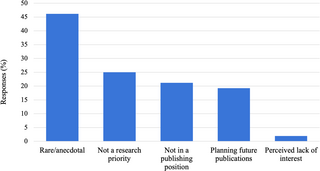
In both the survey questions and freeform responses, most respondents indicated that their lack of data collection or publication on SSSB was because the behaviours were rare, or because it was not a research priority of their lab.
You might also wanna read

How Misconceptions About Animal Sexuality Distort Our Understanding of Nature
The article explores how human misconceptions about animal sexuality have shaped our understanding of the natural world. It discusses a new
 Rolling Stone·3d ago
The Child-Like Role of Dogs in Western Societies
The Gender Attractiveness Gap
Satirical Study Claims Most Men Believe They Could Seduce a Bear to Save Their Lives
A satirical article from The Onion reports on a fictional University of Colorado study claiming that nearly 70% of men believe they could se
 The Onion·1mo ago
Evidence of the bouba-kiki effect in naïve baby chicks
Otters as Bioindicators of Estuarine Health: Research Gaps and Future Framework
This scientific synthesis article examines otters as bioindicators for estuarine health monitoring. It highlights how otters serve as integr
 emt.pensoft.net·3mo ago
Comments
Sign in to join the conversation.
No comments yet. Be the first.