
























Rendering Realistic Skies and Planetary Atmospheres in Real-Time with Shaders
This article explores how to render realistic skies and atmospheres in real time in the browser with shaders, from simple sky domes, to entire planets using shaders, raymarching, Rayleigh and Mie…
Read the full articleYou might also wanna read
Ultra-Black Coating Aims to Cut Satellite Light Pollution
Astrophysicists have developed a new ultra-black coating that could reduce the glare from satellite constellations, addressing growing conce


The Sleepers: A Case Study in Lightweight WebGL Techniques for Atmospheric Experiences
From swirling transitions and animated fog to mesh outlines and infinite worlds, here's a breakdown of the techniques behind it.
 Codrops·6d ago
Graphics Programming Weekly #445: Neural Render Proxies and Path Guiding Research
3D Programmer
 jendrikillner.com·7d ago
Mobile Compositor Effect Demo Using Raster Shaders
This demo shows how a raster shader can be used to create a mobile compositor effect.
 codeberg.org·1mo ago
Splat Refraction in PlayCanvas
The PlayCanvas engine has implemented a refraction effect for scenes created using Gaussian Splatting, utilizing WebGPU and WebGL. This expa
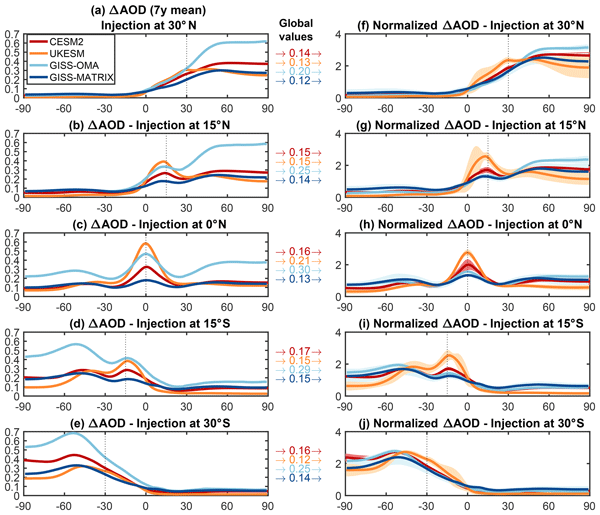
Climate model intercomparison study examines off-equatorial stratospheric sulfur injection for solar geoengineering
Abstract. There is now substantial literature on climate model studies of equatorial or tropical stratospheric SO2 injections that aim to co
 acp.copernicus.org·27d ago
Comments
Sign in to join the conversation.
No comments yet. Be the first.