
























Recreating the Canon Cat's Document-Centric Interface: A Minimalist Computing Experiment
Exploring the emergence of user conventions in a minimal system.
Read the full articleYou might also wanna read

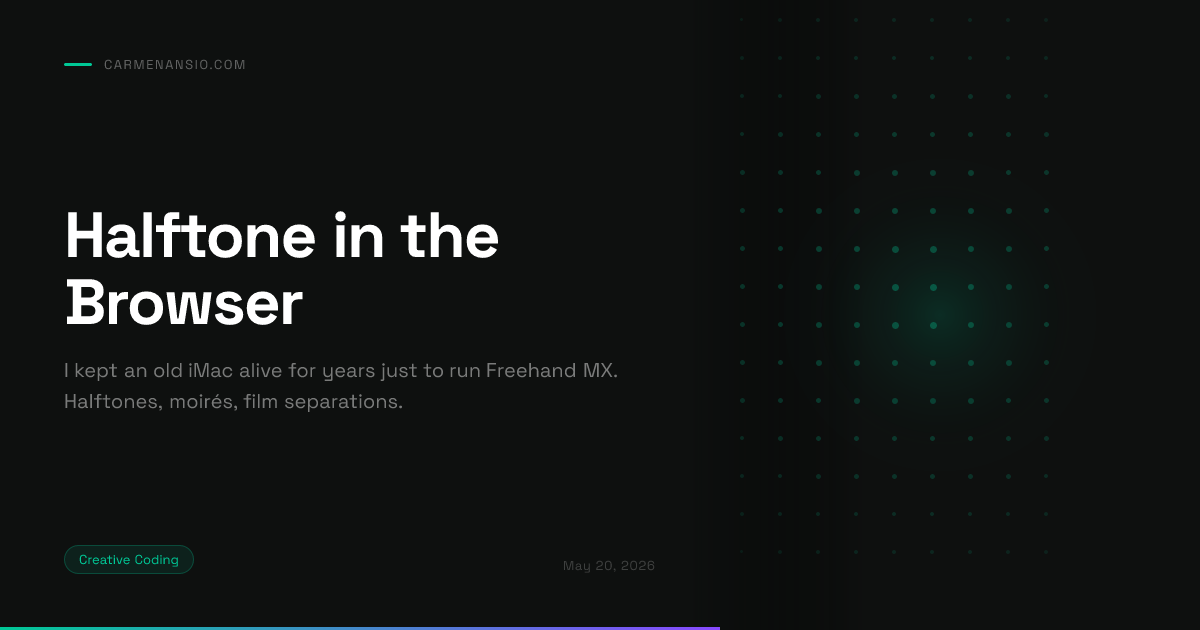
Why I Kept an Old iMac Alive for Freehand MX's Halftone Controls
I kept an old iMac alive for years just to run Freehand MX. Halftones, moirés, film separations.
 carmenansio.com·16d ago
Rethinking Tufte's data-to-ink ratio: When minimalism in data visualization goes too far
How much minimalism is too much minimalism? I explore this question and propose the most minimalist, highest scoring data-to-ink ratio on a
 frank.computer·1mo ago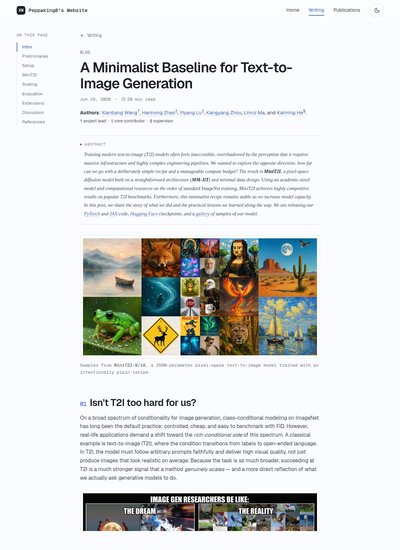
MiniT2I: A Minimalist Baseline Challenging the Complexity of Text-to-Image Generation
Training modern text-to-image (T2I) models often feels inaccessible, overshadowed by the perception that it requires massive infrastructure
 paperswithcode.co·26d ago
Building a Minimal RAG System from Scratch: PDF to Highlighted Answers in ~100 Lines of Python
Enterprise Document Intelligence [Vol. 1 #1] The smallest version of RAG that actually works, on a real PDF, with grounded answers and the s
 towardsdatascience.com·1mo ago
Understanding Human-Computer Interaction (HCI): Principles and Application with Figma
Human-computer interaction (HCI) studies how users interact with technology. Learn how to apply HCI principles using Figma in this guide.
 figma.com·1mo ago
17 Years of Smart Note-Taking: Connected Links, Markdown, and Learning in Public
Seventeen years of note-taking distilled: use connected links instead of folders, keep your notes in plain text Markdown, and publish your s
 ssp.sh·18d ago
Comments
Sign in to join the conversation.
No comments yet. Be the first.