
























Qubes Canary 047
1mo ago
Source
Qubes OSQubes Canary 047qubes-os.orgWe have published Qubes Canary 047 . The text of this canary and its accompanying cryptographic signatures are reproduced below. For an explanation of this announcement and instructions for authenticating this canary, please see the end of this announcement. Qubes Canary 047 ---===[ Qubes Canary 047 ]===--- Statements ----------- The Qubes security team members who have digitally signed this file [1] state the following: 1. The date of issue of this canary is June 03, 2026. 2. There have been 114 Qubes security bulletins published so far. 3. The Qubes Master Signing Key fingerprint is: 427F 11FD 0FAA 4B08 0123 F01C DDFA 1A3E 3687 9494 4. No warrants have ever been served to us with regard to the Qubes OS Project (e.g. to hand out the private signing keys or to introduce backdoors). 5. We plan to publish the next of these canary statements in the first fourteen days of September 2026. Special note should be taken if no new canary is published by that time or if the list of statements changes without plausible explanation. Special announcements ---------------------- None. Disclaimers and notes ---------------------- We would like to remind you that Qubes OS has been designed under the assumption that all relevant infrastructure is permanently compromised. This means that we assume NO trust in any of the servers or services which host or provide any Qubes-related data, in particular, software updates, source code repositories, and Qubes ISO downloads. This canary scheme is not infallible. Although signing the declaration makes it very difficult for a third party to produce arbitrary declarations, it does not prevent them from using force or other means, like blackmail or compromising the signers' laptops, to coerce us to produce false declarations. The proof of freshness provided below serves to demonstrate that this canary could not have been created prior to the date stated. It shows that a series of canaries was not created in advance. This declaration is merely a best effort and is provided without any guarantee or warranty. It is not legally binding in any way to anybody. None of the signers should be ever held legally responsible for any of the statements made here. Proof of freshness ------------------- Wed, 03 Jun 2026 02:51:46 +0000 Source: DER SPIEGEL - International ( NSDAP archive: How DER SPIEGEL processed the data from the Nazi card file Interactive Research Tool: What Your Family Did Under Hitler – Find Out Here Human Rights in the US: Meet the Transgender Americans Forced to Flee GOP Persecution An Interview with Maduro's Son: "We Should Have Done More to Protect My Father" Forced Mercenaries: How Russia Dupes Kenyans into Fighting in Ukraine Source: NYT > World News ( Iran War Live Updates: Iran Targets Neighbors as U.S. Condemns ‘Aggressive’ Strikes Russia Launches Deadly Strikes on Kyiv After Threatening Ukraine for a Week U.S. Ebola Unit Plans in Kenya, Subject of Protests, Suffers New Setback From Court Ruling The New Zealand Parakeet Pair That Are Saving Their Species U.S. Was Asked to Blacklist Colombian Cartel Gold. It Was Also Buying It. Source: BBC News ( Israel strikes southern Lebanon but partial truce with Hezbollah appears to hold US and Iran launch new strikes as ceasefire negotiations stall Putin remains uncompromising on Ukraine, but is public discourse on war changing in Russia? 'They'll fix the building, but not our souls': Sleepy Kyiv neighbourhood hit in Russian strike British couple lose Iran jail sentence appeal, family says Source: Blockchain.info 00000000000000000001c7c4fb4f5b739e74f18ca4b3b6add30011982c0735d7 Footnotes ---------- [1] This file should be signed in two ways: (1) via detached PGP signatures by each of the signers, distributed together with this canary in the qubes-secpack.git repo, and (2) via digital signatures on the corresponding qubes-secpack.git repo tags. [2] [2] Don't just trust the contents of this file blindly! Verify the digital signatures! Instructions for doing so are documented here: -- The Qubes Security Team Source: canary-047-2026.txt Marek Marczykowski-Górecki ’s PGP signature -----BEGIN PGP SIGNATURE----- iQIzBAABCAAdFiEELRdx/k12ftx2sIn61lWk8hgw4GoFAmogGGoACgkQ1lWk8hgw 4GqoLxAAgGBg5spc/nfW5c04S0nP7WhAgrBsjsLJEG2COhYhc2rK5IiLVYd1JroF QJiqw4OLmBoCCka+QFUmhsnPK2iQ+IVdm9uSPcyBkhBHk6C1RYEbyJFMqVhWzaCf v846YoAeQuKTZAQHb+BsdL/4uQNRI8bhmdIs6mqE3cxdGoqzalitfQ8Un0dv67Ma LqZM48GpiBZipuwpzMHNQ49IRNvjO+wArLrlNaoPtJD9VJAQcjp5772xXI2mWCj7 2BCwoZQ2vvcQA5qg/QL9WWFt9AYcp5kxZXkaGbjzX60wPwSYFz8xPHHsAP2sSbap a6npFo49QX+V8ho8a3q811dw0q6FCiurip4D2MTTSqDQBzxb8boRl43mZcaZhc6I GzKeY/VuH30YLuP6QoItTj1cW1APVgDh6KVSWhE2pZgjfRxsimMJti7dY3FX91oF twIZog8Z7CmlKumhH459YABTKoLR0YQLdVqlyGXROOvX3C5kZw2FBbfiTtkjmg9O aNb+GJ2ihBjUYkW3k+WHKJdA5rnd9VzYd+9w0wEnr02U/Ghh8o6BmEQQbdrMemso TuuupdLkylN19oPltjhmtBl7qe5XA1cshkCngcLhom99WgeQIfayUUEUwsPQMbCC HzYqOb8YCvntllFGcAHyyhxGizJUgIa9e6xogwP9DRT5DOCXevE= =v00t -----END PGP SIGNATURE----- Source: canary-047-2026.txt.sig.marmarek Simon Gaiser (aka HW42) ’s PGP signature -----BEGIN PGP SIGNATURE----- iQIzBAABCgAdFiEE6hjn8EDEHdrv6aoPSsGN4REuFJAFAmogYMsACgkQSsGN4REu FJCGMQ/7BfF8If6ooYaRvVxR/I/dqGBnE5vqmlKti89OfAHynZw4XpXbAsDXqZKV mPTRBMzfy5L9Ujo0xtmqg0+fMmhjzLqqUSlSRyZgGRUvkYkEV3tfG9qr0LWZmJLA dREye5fH5QYggcGUqZjRwcmSavdc/HfnTx6xW/yKzqH+43Gn3iAuHzr47J+vpvv3 Abr6aK1YKQGy5IvJ+CV5/9U4x+cDtYnuXqWoIZq0R8uHj1p4+wUnzWH1CIs1OKGQ nVUx0g6SH7ktqjGubhLIVGkPX6j/dKFN1OB1Qn2ooHQbqaHa4wDUM8TqdDna4gBP Batcgo6Kp7e+kec+OtEOHIjyFySNrNRtMpEI6cfVKmrGcBNDeWyfdV+5lpJtg4GP 0MyvgLovwYONkb8fWR25tAWj3O54Fjkydts9uM5cLWQBlQqUIbQBVRcXtHRmKgZS vrPf7ORjdBXf86CS35FTrwjKV9CcecZYgtQMthLOaYcsP4H5NKfnDr+4tyilaFjD dkl8rR6EbC+YV4OBNc+6OFBK9x7rV+uOrNqq00QHmsFw+jDEnQMKotWu49oZcszH 2vETkeXmJz0Mgs2H9KaY6xURj8bGHOGUfVSbZa1d55h+9R15j+94Hni/UyekgpEq AJ65/grY6xJ9iumeCFZhNYywvOzkeAQ2viDKzv9VfWcG31msmno= =ViwC -----END PGP SIGNATURE----- Source: canary-047-2026.txt.sig.simon What is the purpose of this announcement? The purpose of this announcement is to inform the Qubes community that a new Qubes canary has been published. What is a Qubes canary? A Qubes canary is a security announcement periodically issued by the Qubes security team consisting of several statements to the effect that the signers of the canary have not been compromised. The idea is that, as long as signed canaries including such statements continue to be published, all is well. However, if the canaries should suddenly cease, if one or more signers begin declining to sign them, or if the included statements change significantly without plausible explanation, then this may indicate that something has gone wrong. The name originates from the practice in which miners would bring caged canaries into coal mines. If the level of methane gas in the mine reached a dangerous level, the canary would die, indicating to miners that they should evacuate. (See the Wikipedia article on warrant canaries for more information, but bear in mind that Qubes Canaries are not strictly limited to legal warrants.) Why should I care about canaries? Canaries provide an important indication about the security status of the project. If the canary is healthy, it’s a strong sign that things are running normally. However, if the canary is unhealthy, it could mean that the project or its members are being coerced in some way. What are some signs of an unhealthy canary? Here is a non-exhaustive list of examples: Dead canary. In each canary, we state a window of time during which you should expect the next canary to be published. If no canary is published within that window of time and no good explanation is provided for missing the deadline, then the canary has died. Missing statement(s). Canaries include a set of numbered statements at the top. These statements are generally the same across canaries, except for specific numbers and dates that have changed since the previous canary. If an important statement was present in older canaries but suddenly goes missing from new canaries with no correction or explanation, then this may be an indication that the signers can no longer truthfully make that statement. Missing signature(s). Qubes canaries are signed by the members of the Qubes security team (see below). If one of them has been signing all canaries but suddenly and permanently stops signing new canaries without any explanation, then this may indicate that this person is under duress or can no longer truthfully sign the statements contained in the canary. Does every unexpected or unusual occurrence related to a canary indicate something bad? No, there are many canary-related possibilities that should not worry you. Here is a non-exhaustive list of examples: Unusual reposts. The only canaries that matter are the ones that are validly signed in the Qubes security pack (qubes-secpack) . Reposts of canaries (like the one in this announcement) do not have any authority (except insofar as they reproduce validly-signed text from the qubes-secpack). If the actual canary in the qubes-secpack is healthy, but reposts are late, absent, or modified on the website, mailing lists, forum, or social media platforms, you should not be concerned about the canary. Last-minute signature(s). If the canary is signed at the last minute but before the deadline, that’s okay. (People get busy and procrastinate sometimes.) Signatures at different times. If one signature is earlier or later than the other, but both are present within a reasonable period of time, that’s okay. (For example, sometimes one signer is out of town, but we try to plan the deadlines around this.) Permitted changes. If something about a canary changes without violating any of the statements in prior canaries, that’s okay. (For example, canaries are usually scheduled for the first fourteen days of a given month, but there’s no rule that says they have to be.) Unusual but planned changes. If something unusual happens, but it was announced in advance, and the appropriate statements are signed, that’s okay (e.g., when Joanna left the security team and Simon joined it). In general, it would not be realistic for an organization to exist that never changed, had zero turnover, and never made mistakes. Therefore, it would be reasonable to expect such events to occur periodically, and it would be unreasonable to regard every unusual or unexpected canary-related event as a sign of compromise. For example, if something usual happens with a canary, and we say it was a mistake and correct it (with valid signatures), you will have to decide for yourself whether it’s more likely that it really was just a mistake or that something is wrong and that this is how we chose to send you a subtle signal about it. This will require you to think carefully about which among many possible scenarios is most likely given the evidence available to you. Since this is fundamentally a matter of judgment, canaries are ultimately a social scheme, not a technical one. What are the PGP signatures that accompany canaries? A PGP signature is a cryptographic digital signature made in accordance with the OpenPGP standard. PGP signatures can be cryptographically verified with programs like GNU Privacy Guard (GPG) . The Qubes security team cryptographically signs all canaries so that Qubes users have a reliable way to check whether canaries are genuine. The only way to be certain that a canary is authentic is by verifying its PGP signatures. Why should I care whether a canary is authentic? If you fail to notice that a canary is unhealthy or has died, you may continue to trust the Qubes security team even after they have signaled via the canary (or lack thereof) that they been compromised or coerced. Alternatively, an adversary could fabricate a canary in an attempt to deceive the public. Such a canary would not be validly signed, but users who neglect to check the signatures on the fake canary would not be aware of this, so they may mistakenly believe it to be genuine, especially if it closely mimics the language of authentic canaries. Such falsified canaries could include manipulated text designed to sow fear, uncertainty, and doubt about the security of Qubes OS or the status of the Qubes OS Project. How do I verify the PGP signatures on a canary? The following command-line instructions assume a Linux system with git and gpg installed. (For Windows and Mac options, see OpenPGP software .) Obtain the Qubes Master Signing Key (QMSK), e.g.: $ gpg --fetch-keys gpg: directory '/home/user/.gnupg' created gpg: keybox '/home/user/.gnupg/pubring.kbx' created gpg: requesting key from ' gpg: /home/user/.gnupg/trustdb.gpg: trustdb created gpg: key DDFA1A3E36879494: public key "Qubes Master Signing Key" imported gpg: Total number processed: 1 gpg: imported: 1 (For more ways to obtain the QMSK, see How to import and authenticate the Qubes Master Signing Key .) View the fingerprint of the PGP key you just imported. (Note: gpg> indicates a prompt inside of the GnuPG program. Type what appears after it when prompted.) $ gpg --edit-key 0x427F11FD0FAA4B080123F01CDDFA1A3E36879494 gpg (GnuPG) 2.2.27; Copyright ( C ) 2021 Free Software Foundation, Inc. This is free software: you are free to change and redistribute it. There is NO WARRANTY, to the extent permitted by law. pub rsa4096/DDFA1A3E36879494 created: 2010-04-01 expires: never usage: SC trust: unknown validity: unknown [ unknown] (1). Qubes Master Signing Key gpg> fpr pub rsa4096/DDFA1A3E36879494 2010-04-01 Qubes Master Signing Key Primary key fingerprint: 427F 11FD 0FAA 4B08 0123 F01C DDFA 1A3E 3687 9494 Important: At this point, you still don’t know whether the key you just imported is the genuine QMSK or a forgery. In order for this entire procedure to provide meaningful security benefits, you must authenticate the QMSK out-of-band. Do not skip this step! The standard method is to obtain the QMSK fingerprint from multiple independent sources in several different ways and check to see whether they match the key you just imported. For more information, see How to import and authenticate the Qubes Master Signing Key . Tip: After you have authenticated the QMSK out-of-band to your satisfaction, record the QMSK fingerprint in a safe place (or several) so that you don’t have to repeat this step in the future. Once you are satisfied that you have the genuine QMSK, set its trust level to 5 (“ultimate”), then quit GnuPG with q . gpg> trust pub rsa4096/DDFA1A3E36879494 created: 2010-04-01 expires: never usage: SC trust: unknown validity: unknown [ unknown] (1). Qubes Master Signing Key Please decide how far you trust this user to correctly verify other users' keys (by looking at passports, checking fingerprints from different sources, etc.) 1 = I don't know or won't say 2 = I do NOT trust 3 = I trust marginally 4 = I trust fully 5 = I trust ultimately m = back to the main menu Your decision? 5 Do you really want to set this key to ultimate trust? (y/N) y pub rsa4096/DDFA1A3E36879494 created: 2010-04-01 expires: never usage: SC trust: ultimate validity: unknown [ unknown] (1). Qubes Master Signing Key Please note that the shown key validity is not necessarily correct unless you restart the program. gpg> q Use Git to clone the qubes-secpack repo. $ git clone Cloning into 'qubes-secpack'... remote: Enumerating objects: 4065, done. remote: Counting objects: 100% (1474/1474), done. remote: Compressing objects: 100% (742/742), done. remote: Total 4065 (delta 743), reused 1413 (delta 731), pack-reused 2591 Receiving objects: 100% (4065/4065), 1.64 MiB
You might also wanna read

Critical Undocumented Authentication Backdoor Found in Multiple Tenda Router Firmware Versions (CVE-2026-11405)
CERT/CC has disclosed a critical vulnerability (CVE-2026-11405) in multiple versions of Tenda firmware, revealing an undocumented authentica
kb.cert.org·5h ago
Git Commit Hash Malleability: Attackers Can Forge Verified Signatures Without Access to Signing Keys
This paper demonstrates a critical vulnerability in Git commit signing: an attacker can produce a second, distinct commit with identical tre
 arxiv.org·6h ago
The real cost, security, and culture problems behind enterprise AI agents
VentureBeat·9h ago

How to Decrypt ASP.NET View State Messages Using Auto-Generated Machine Keys from the Windows Registry
This article explains how to decrypt encrypted view state messages from compromised ASP.NET web applications. It covers the process of extra
 zeroed.tech·11h ago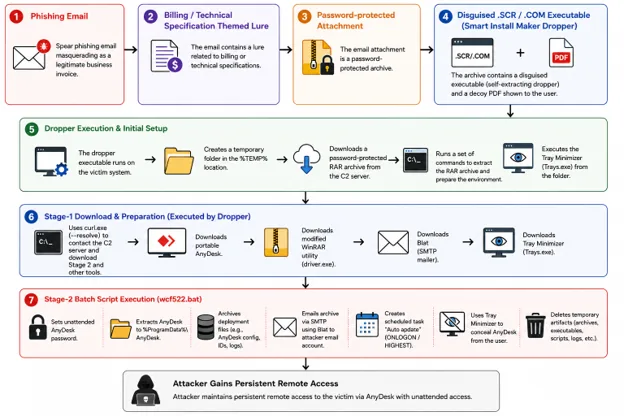
Spear-Phishing Campaign Targets Russian Aerospace Organizations Using AnyDesk and Data Exfiltration Tools
Seqrite reports a spear-phishing campaign targeting Russian aerospace organizations. The attackers impersonate the Russian research institut
 hendryadrian.com·11h ago
Hacked, leaked, and held for ransom: The worst breaches of 2026 so far
TechCrunch·13h ago
Comments
Sign in to join the conversation.
No comments yet. Be the first.