
























Project Euler: A Global Platform for Mathematical and Programming Challenges
A website dedicated to the fascinating world of mathematics and programming
Read the full articleYou might also wanna read
Daily Code Challenge: Solve a Reverse Polish Notation Evaluator
A daily coding challenge on the IWTLP platform tasks developers with evaluating a list of reverse Polish notation tokens. The problem involv


Semantic code search for Programming Idioms with LangChain4j and Vertex AI embedding models
By Guillaume Laforge & Valentin Deleplace The Programming Idioms community website created by Valentin lets developers share typical impleme
Navigating Competitive Programming Challenges
Navigate the world of competitive programming challenges, from beginner tips to mastering algorithmic problems. Explore top coding platforms
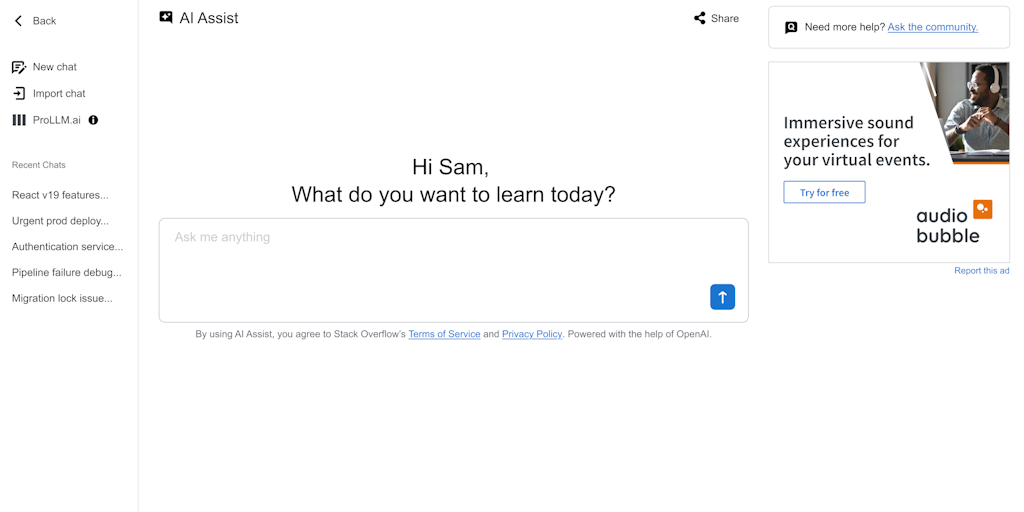
Stack Overflow: An Open Community Platform for Programmers and Developers
Stack Overflow is an open community for anyone that codes. We help you get answers to your toughest coding questions, share knowledge with y
 Product Hunt·7mo ago
Best Programming Challenge Websites for Professional Growth
Discover the best programming challenge websites to improve your coding skills, prepare for job interviews, and advance your career. Explore

AI's rapid progress in solving advanced math problems sparks debate among mathematicians
Mathematicians are stunned at the progress AI is making in solving advanced problems, leaving some questioning whether there will still be r
 newscientist.com·1mo ago
Comments
Sign in to join the conversation.
No comments yet. Be the first.