
























Probing the Accretion onto Supermassive Black Holes with X-ray Reverberation
Supermassive black holes (SMBHs) are millions to billions of times more massive than the sun. How SMBHs work is one of the key questions in astrophysics because they test the behavior of matter in…
Read the full articleYou might also wanna read


Discovery of a 36 Billion Solar Mass Black Hole in the Cosmic Horseshoe Gravitational Lens
ABSTRACT. Supermassive black holes (SMBHs) are found at the centre of every massive galaxy, with their masses tightly connected to their hos
 academic.oup.com·11mo ago
NSF VLA Reveals Supermassive Black Holes Emit Radio "Burps" Years After Destroying Stars
Astronomers using the U.S. National Science Foundation Very Large Array (NSF VLA) have found that when a supermassive black hole tears apart
 public.nrao.edu·25d ago
Do X-Rays Help or Hurt Massive Black Hole Formation?
Astrobites reports on how X-rays influenced the formation of the first massive black holes in the universe. The post Do X-Rays Help or Hurt

How MIT astrophysicist Erin Kara studies black hole echoes to understand galaxy formation
MIT Associate Professor Erin Kara seeks to connect the extreme physics of black holes with how galaxies such as our own Milky Way come to be
 news.mit.edu·14d ago
How MIT astrophysicist Erin Kara studies black hole echoes to understand galaxy formation
MIT Associate Professor Erin Kara seeks to connect the extreme physics of black holes with how galaxies such as our own Milky Way come to be
MIT Election Lab·14d agoRadiation and Magnetic Pressure Support in Accretion Disks Around Supermassive Black Holes and the Physical Origin of the Extreme-Ultraviolet to Soft X-Ray Spectrum
Yan-Fei Jiang et al 2025 ApJ 988 43 Simulated black-hole disks with accretion rates between 0.03 and 4 times the Eddington rate are capable
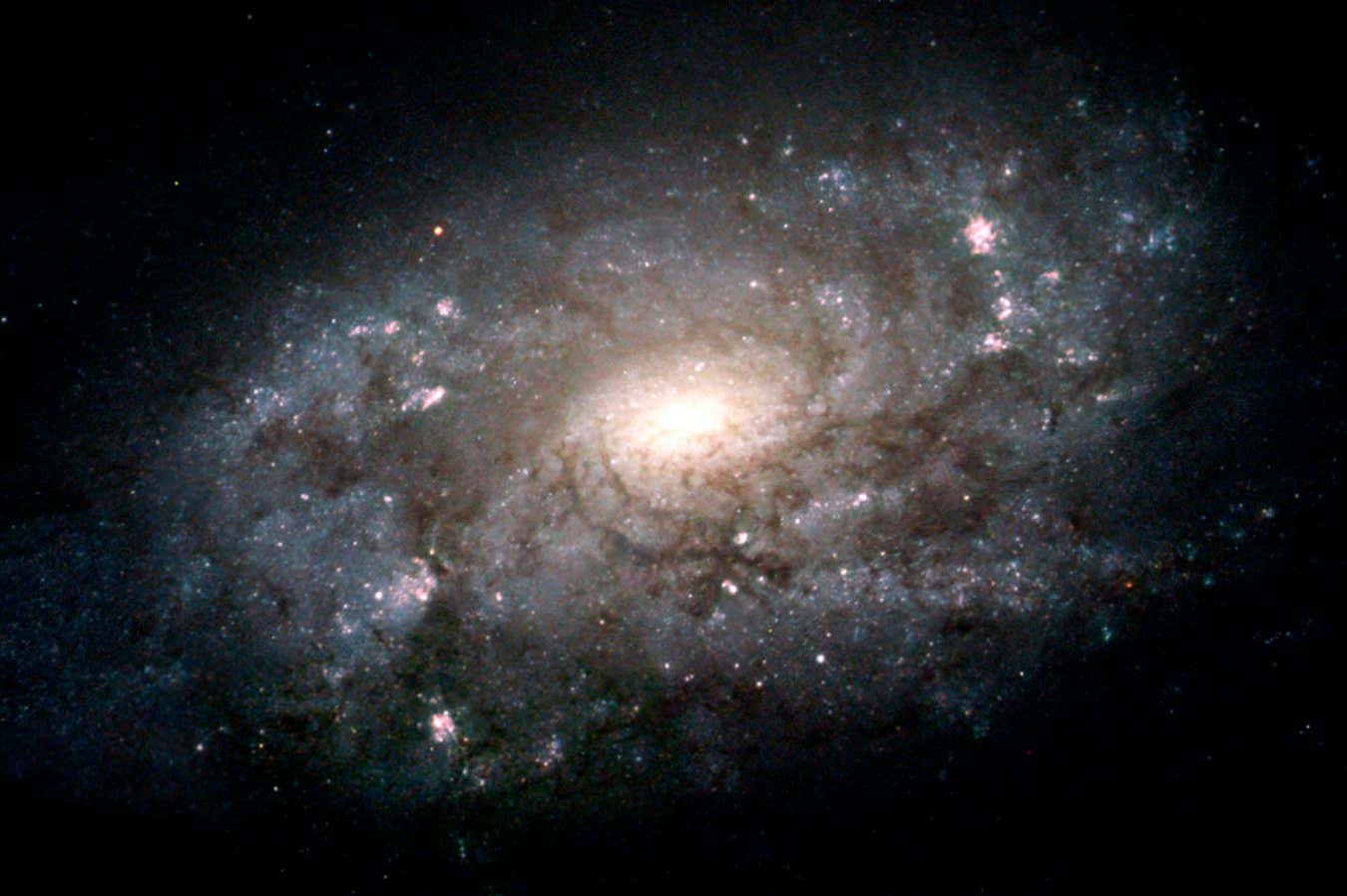
Supermassive black holes may predate the galaxies they inhabit, solving a cosmic mystery
Galaxies and their supermassive black holes evolve together, but which came first is an ongoing question. Now we may finally have an answer,
 newscientist.com·14d ago
Comments
Sign in to join the conversation.
No comments yet. Be the first.