
























Why Patients Still Want to Talk to a Human, Not a Bot, in Healthcare
By
David Burda
Summary
David Burda reflects on his Uncle Joe's daily calls to time and weather numbers as a poignant example of patients' desire for human connection in healthcare. The article argues that despite technological advances in healthcare, patients consistently want to speak to a real person rather than automated systems. Burda uses this personal story to critique the over-automation of healthcare interactions and advocate for maintaining human touch in patient care.
Source

 bskyWhy Patients Still Want to Talk to a Human, Not a Bot, in Healthcare4sighthealth.com
Key quotes
· 3 pulledMy Uncle Joe died in 1993 at the age of 70. The last few years of his life, he lived alone in a mobile home in Sturgeon Bay, Wisconsin.
After he passed away, his kids — my first cousins — were going through his bills only to find that he was calling the same two phone numbers every day. One turned out to be the number for the time. The other was the number for the weather.
Patients are telling us what they want, says 4sight Health's David Burda, and what they're telling us they want to talk to a human and not an automated bot.
You might also wanna read

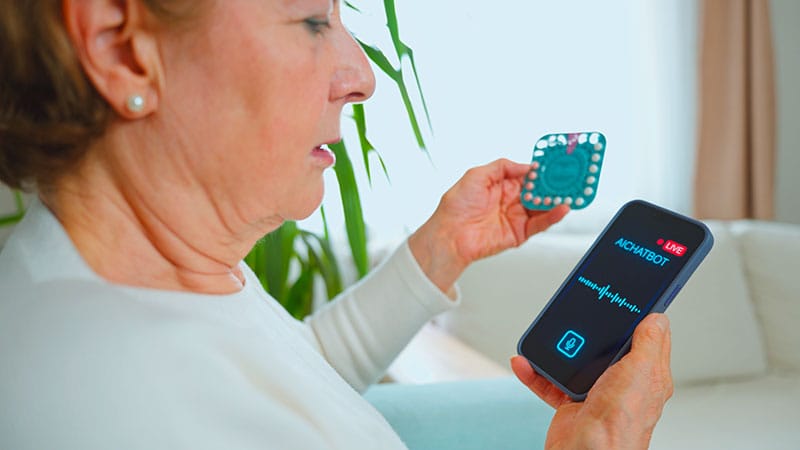
European patients turn to AI chatbots for medical guidance amid healthcare gaps
Patients in Europe, particularly those with rare or complex conditions, are increasingly turning to AI chatbots like ChatGPT for medical adv
 mdsc.pe·10d ago
Why patients should be cautious about AI scribing systems in medical appointments
Emily M. Bender and Decca Muldowney argue against the use of AI-powered automatic scribing systems in healthcare settings. The article detai
 buttondown.com·2mo ago
How AI is reshaping oncologists' trust in their own clinical judgment
This article explores how oncologists develop clinical intuition over years of practice and how the rise of AI in medicine is challenging th
mdsc.pe·6d ago
AI Chatbots Fill Healthcare Gaps for Chinese Patients Seeking Medical Advice and Companionship
The article explores how patients in China, particularly elderly and chronically ill individuals, are turning to AI chatbots like DeepSeek f
 restofworld.org·5mo ago
The Problem with Sycophantic Language in Human-Chatbot Conversations
The article discusses a concerning phenomenon where users adopt sycophantic, overly deferential language when interacting with AI chatbots,
 Defector·1mo ago
Towards better health conversations: Research insights on a “wayfinding” AI agent based on Gemini
 research.google·9mo ago
Comments
Sign in to join the conversation.
No comments yet. Be the first.