
























Pluto was discovered in 1930 by Clyde Tombaugh, a 24-year-old Kansas farm boy with no formal astronomy degree, who had taught himself the sky and built his own telescopes by grinding mirrors from salvaged parts — before Lowell Observatory hired him as a y
On February 18, 1930, Clyde Tombaugh found a moving point of light on two photographic plates taken at Lowell Observatory in Arizona. It was not a bright object. It was not found by looking through…
Read the full articleYou might also wanna read


How Pluto got its name
Though the planet Pluto was discovered by American astronomer Clyde Tombaugh in 1930, the credit for naming the outermost planet* of the sol

How the definition of a planet has changed over 250 years — and why the count may not be final
From 6 to 9 to 11 to 7 to 8: What 250 years has done to our solar system planet count.
 space.com·8d ago
How the definition of a planet has changed over 250 years — and why the count may not be final
From 6 to 9 to 11 to 7 to 8: What 250 years has done to our solar system planet count.
Space·8d ago
Astronomers Determine Brown Dwarf Age Using Tiny Stellar Pulsations
Results Test Brown Dwarf Theory challenging astrophysicists Maunakea, Hawaiʻi – Astronomers using W. M. Keck Observatory on Maunakea, Hawaiʻ

James Webb telescope may have discovered a mysterious, never-before-seen substance on Pluto and Titan
A new study has identified a very specific wavelength of light missing from both Pluto and Saturn's largest moon, Titan. The surprising sign
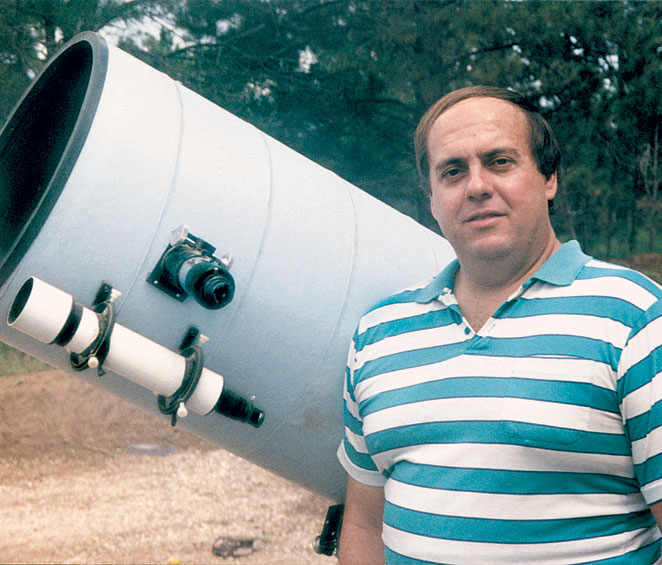
Alan Hale, Co-Discoverer of Comet Hale-Bopp, Dies at 67
Astronomer and comet-hunter Alan Hale passed away on Saturday, June 6th, at 67 years old in his home in Cloudcroft, New Mexico.
 skyandtelescope.org·1mo ago
Q&A: Kuiper Belt co-discoverer Dr. David Jewitt on his career and studying the Solar System's strangest visitors
Today we interview UCLA planetary scientist David Jewitt, who helped discover the Kuiper Belt and is now studying some of the Solar System’s
 astrobites.org·24d ago
Comments
Sign in to join the conversation.
No comments yet. Be the first.