
























Carnegie Mellon physicists confirm mechanics of cell membrane shape changes
By
Kirsten Heuring
Summary
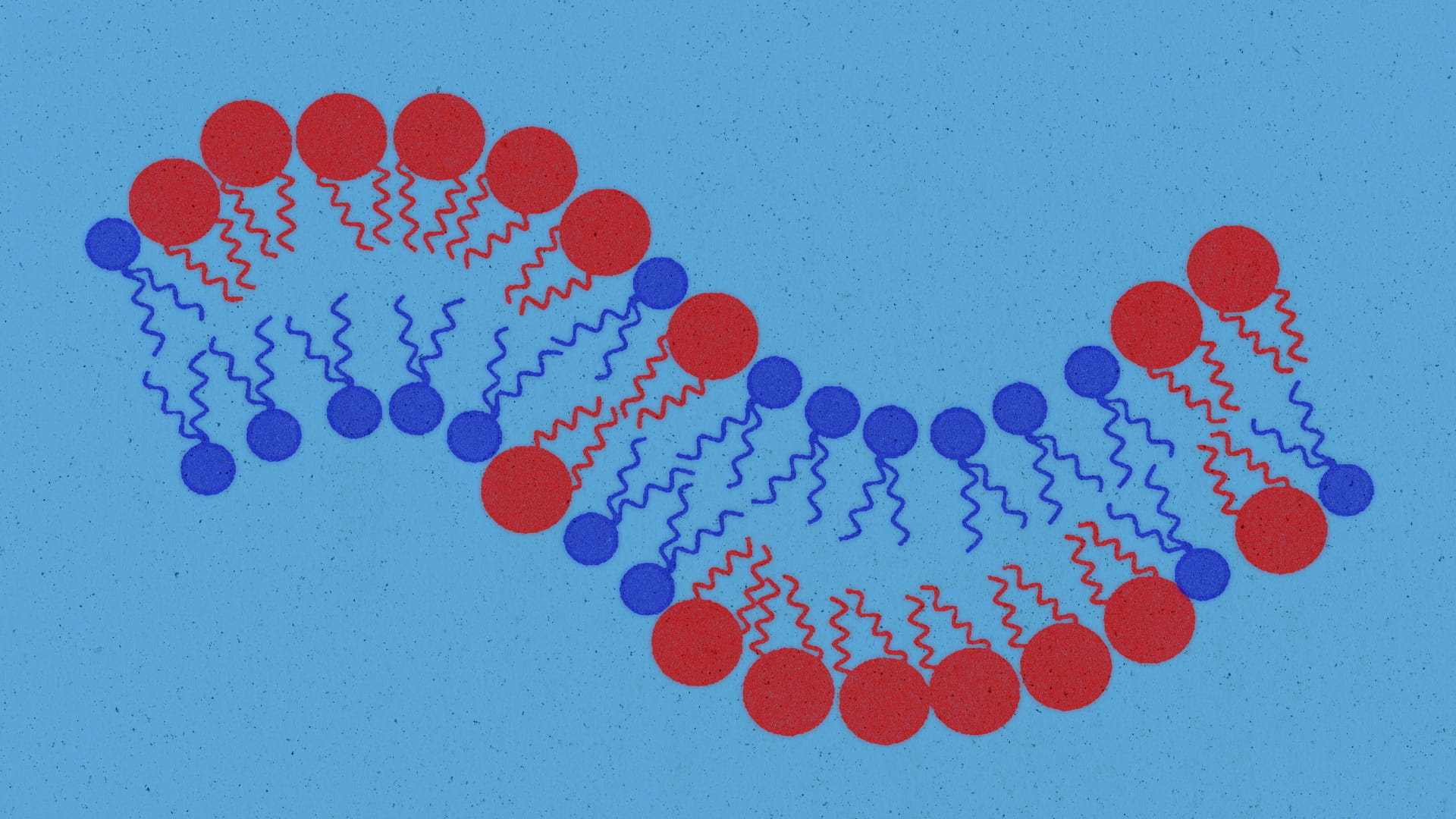
Carnegie Mellon University physicists, led by rising senior Lucy Knox, have used a combination of experiments and mathematical modeling to confirm the physical mechanics behind how cell membranes move and change shape. The research focuses on the physical properties of phospholipid membranes—molecules with water-attracting heads and water-repelling tails that naturally arrange into bilayer structures—and how these properties drive cellular motion and deformation.
Source
 bskyCarnegie Mellon physicists confirm mechanics of cell membrane shape changescmu.edu
Key quotes
· 1 pulledWe focused very directly on the physical properties of the membrane and how they emerge
You might also wanna read
Heat-triggered phospholipid flipping stabilizes plasma membrane fluidity

Physics-Based Model Bridges Molecular Dynamics with MRI Signals for Sharper Medical Imaging
Researchers at Rice University and Oak Ridge National Laboratory have developed a physics-based model that connects molecular-scale dynamics
 news.rice.edu·7mo ago
How proteins are inserted into cell membranes

Plant membranes shuffle lipids around to stay firm under heat stress

Why Cells Are Small: The Physical Constraints of Surface Area and Diffusion
This article explores why cells are typically small, focusing on two key physical constraints: surface area-to-volume ratio and diffusion li
 burrito.bio·26d ago
Exploring Fluid Mechanics Concepts Through Real-Time Thinking and Problem-Solving
The article presents a personal exploration of fluid mechanics concepts, written as a real-time thinking trace over several hours. The autho
 tsvibt.blogspot.com·4mo ago
Comments
Sign in to join the conversation.
No comments yet. Be the first.