
























Open/Closed Principle: Write Code That Extends Without Breaking
The Open/Closed Principle (OCP) is a software design rule stating that code components should be open for extension but closed for modification. The goal is to add new behaviors by creating new code…
Read the full articleYou might also wanna read


Programming Philosophy: Writing Self-Debugging Code with Clear Design Principles
I consider a lot of my cleverness when writing code is aimed at achieving functionality, performance, conciseness, etc., while being easy to
 news.ycombinator.com·5mo ago
Semantic Compression: A Different Approach to Programming Beyond Object-Oriented Design
An introduction to the idea that code should be approached with a mindset towards compressing it semantically, rather than orienting it arou
 caseymuratori.com·7mo ago
Rethinking the Single Responsibility Principle: Balancing Clean Code with Pragmatic Software Design
The Single Responsibility Principle is useful, but misusing it can create fragmented code, bloated interfaces, and technical debt.

Why SOLID and Clean Code principles feel disconnected from real-world programming
I learned to program through online documentation and projects. I also read books but I don’t consider them pivotal to my programming or sof
 devz.cl·15d ago
Programming: The Single Responsibility Principle
There’s a lot of genius in simplicity. This applies to many things in life and definitely in software development. SRP, or Single Responsibi
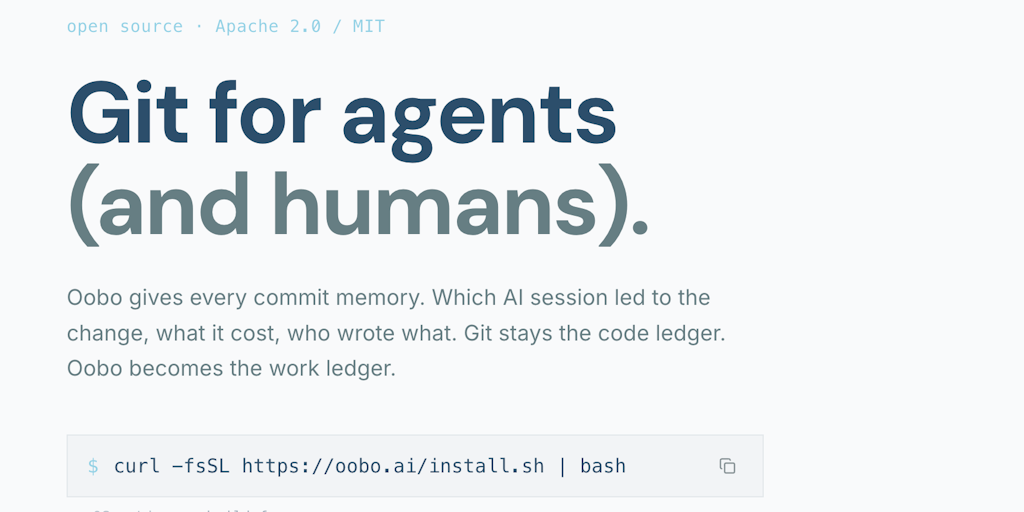
Oobo: Git Layer That Preserves Context for AI-Generated Code
Oobo is Git for agents (and humans). It enriches your repo with additional context about AI usage, helping agents and teams understand why s
 Product Hunt·4mo ago
Comments
Sign in to join the conversation.
No comments yet. Be the first.