
























Non-canonical amino acid incorporation enables minimally disruptive labeling of stress granule and TDP-43 proteinopathy
We report a minimally disruptive labeling strategy for stress granule protein, G3BP Stress Granule Assembly Factor 1 (G3BP1), and ALS-linked protein, TAR DNA-binding protein 43 (TDP-43), using the…
Read the full articleYou might also wanna read


Short RNA chaperones inhibit TDP-43 aggregation to reduce neurodegeneration in ALS models
Aberrant aggregation of the prion-like RNA binding protein TDP-43 drives several fatal neurodegenerative proteinopathies, including amyotrop
 doi.org·28d ago
Shortened TDP-43 isoforms form steric zippers driving aggregation and mislocalization in ALS pathology
Prion-like domain (PrLD)–mediated aggregation and concomitant dysfunction of the essential RNA-binding protein transactive response (TAR) DN
 science.org·15d ago
Therapeutic targeting of the conserved region within the low-complexity domain of TDP-43 is neuroprotective and extends survival in amyotrophic lateral sclerosis mice - Nature Aging
A study in Nature Aging identifies a region of the ALS-linked protein TDP-43 and shows that a brain-penetrant small molecule targeting this

Caspase-4 transgenic mice exhibit cytoplasmic TDP-43 accumulation and age-dependent neuropathology
Caspase-4 transgenic mice show cytoplasmic TDP-43 accumulation, crucial for studying ALS. This model solves previous limitations, unlocking
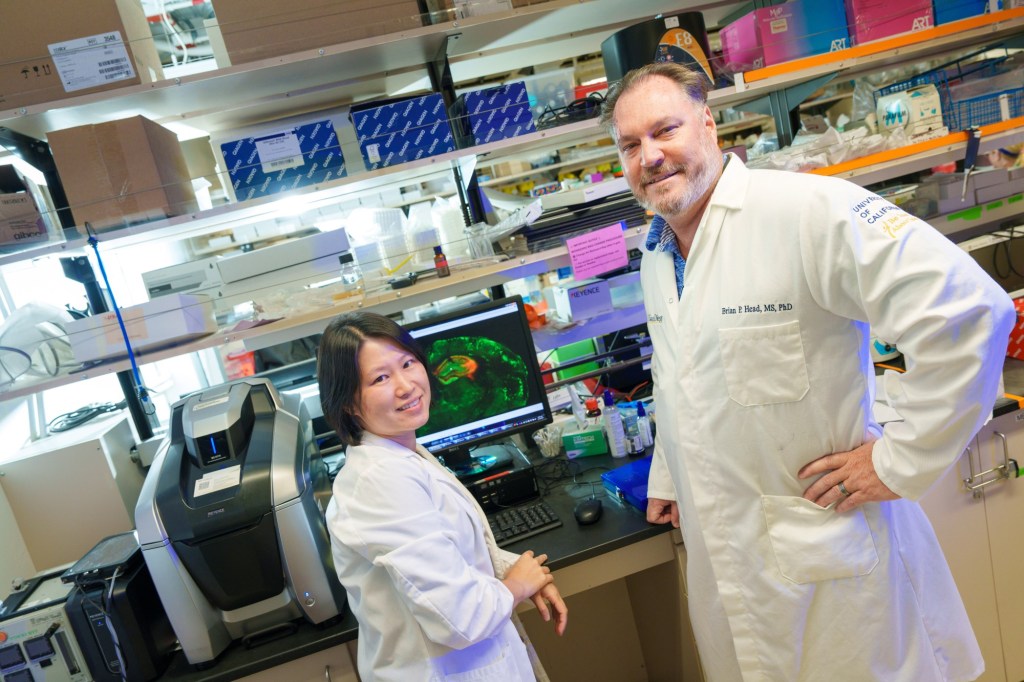
UCSD gene therapy preserves brain function by boosting protective protein rather than removing toxic TDP-43
UCSD study says the therapy increased expression of a neuroprotective protein to help preserve brain functions, despite the presence of a de
 sandiegouniontribune.com·1mo ago
New tools to study protein assembly may help in the search for neurodegenerative disease therapeutics
UCSB researchers develop computational models that use AI to predict distinct forms of protein assembly, providing a novel approach to inves
Comments
Sign in to join the conversation.
No comments yet. Be the first.