
























NIST Scientists Develop Integrated Photonic Circuits for Tunable Wavelength Lasers
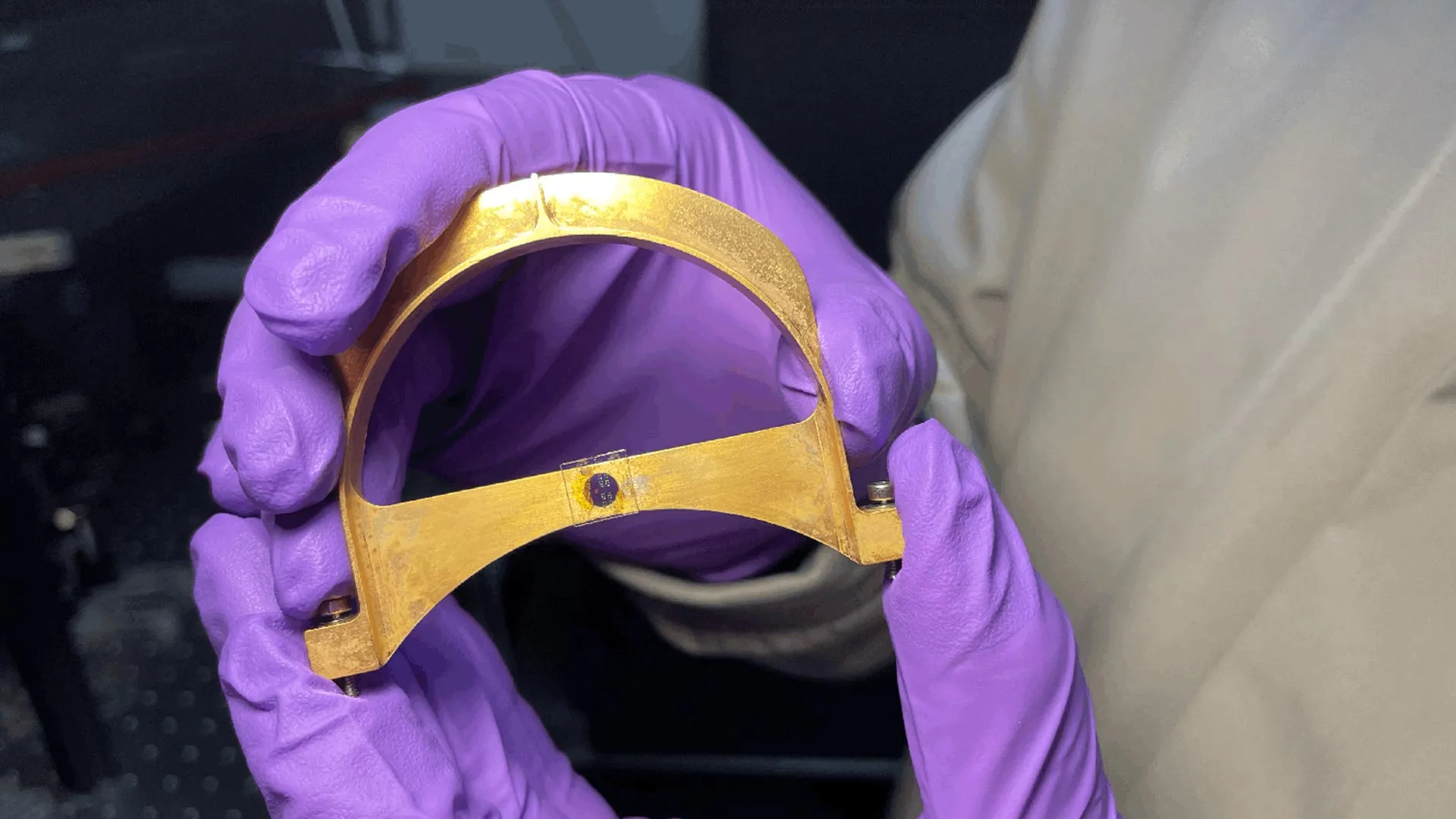
NIST scientists and collaborators have pioneered a way to make integrated circuits for light by depositing complex patterns of specialized materials onto silicon wafers.
Read the full articleYou might also wanna read


First quantum light source demonstrated on thin-film lithium tantalate platform for scalable photonic circuits
Thin-film lithium tantalate (TFLT) has emerged as a promising integrated photonic platform owing to its low photorefractive noise, high opti
 arxiv.org·1mo ago
First integrated electro-optic transducers demonstrated in thin-film lithium tantalate for quantum computing
Efficient and stable microwave-optical transduction is a key enabling technology for distributed superconducting quantum computing and heter
arxiv.org·1mo ago
Monash University Researchers Develop Compact Photonic Chip That Processes Information Using Light
Researchers have created a compact chip that manipulates light-based quantum information with remarkable precision, advancing the developmen
Stanford researchers develop room-temperature quantum device using twisted light
A new room-temperature quantum device uses twisted light to entangle photons and electrons, overcoming one of the biggest hurdles in quantum

Integrated silicon-carbide chip generates telecom photon-memory entanglement for quantum networks
Scalable quantum networks require the efficient generation, storage, and synchronization of entanglement between photonic qubits and quantum
arxiv.org·13d ago
EPFL researchers demonstrate first on-chip ultrafast laser using silicon nitride photonics
Yes—finally! Generation of intense ultrafast pulses directly on chip brings a new capability to photonic integrated circuits (PICs) and enab
 laserfocusworld.com·1mo ago
Comments
Sign in to join the conversation.
No comments yet. Be the first.