





















UvA researchers develop 25-liter pilot reactor that converts mixed plastic waste into oil using nanostructured catalysts
By
Mrigakshi Dixit

Not artisan, but a perfectly fine bagel. Hits the spot.
Summary
Researchers at the University of Amsterdam (UvA) have developed a 25-liter pilot reactor that uses a Solvothermal Liquefaction (STL) process to recycle mixed plastic waste back into oil. The process relies on specialized nanostructured solid catalysts that accelerate chemical breakdown without being consumed. In just 30 minutes, plastic molecular bonds collapse, producing three outputs: gas (used to power the system), char (solid byproduct), and dark brown oil rich in pure monomers needed to manufacture new high-quality plastic.
Key quotes
· 5 pulledThe key ingredient of all is the specialized nanostructured solid catalysts developed by the UvA team.
These microscopic structures accelerate the chemical breakdown without being consumed by the reaction.
In just 30 minutes, the molecular bonds of the plastics collapse.
The process cleanly splits the waste into three distinct products: gas, which is diverted to help power the system; char, which is filtered out as a solid byproduct; and a dark brown oil.
This oil is packed with the pure monomers needed to manufacture brand-new, high-quality plastic.
You might also wanna read

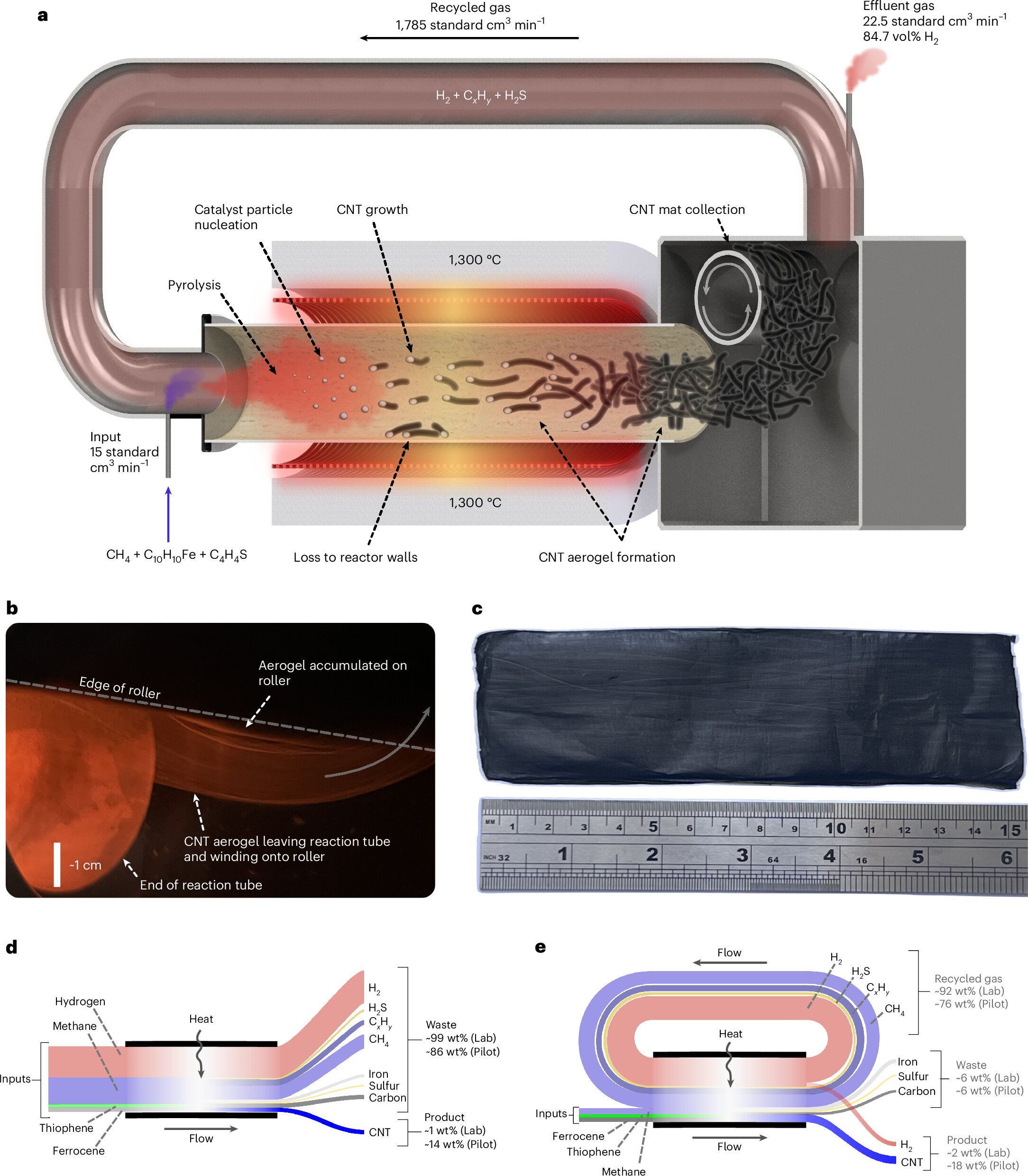
Cambridge Researchers Develop Reactor That Produces Hydrogen and Carbon Nanotubes from Natural Gas
University of Cambridge scientists have developed a novel reactor that simultaneously produces clean hydrogen fuel and carbon nanotubes from
 phys.org·5mo ago
Designer Upcycles Plastic Film Waste into Jellyfish-Like Lamps
Designer Xuanhao Li transforms discarded polyethylene packaging into marine-inspired lighting through the Polycycle Illumination collection,
 Dezeen·11mo ago
Johns Hopkins Researchers Develop Thermoelectric Cooling Technology with Double Efficiency
Researchers at Johns Hopkins Applied Physics Laboratory have developed a new solid-state thermoelectric refrigeration technology using nano-

Birmingham City University Showcases Architectural Projects Including a Microplastic Aquarium
The article highlights innovative architectural projects from Birmingham City University, including a 'microplastic aquarium' designed to ca
Dezeen·10mo ago
Sustainable Carbon-to-Acetylene Process with Barium Compounds
This article discusses a sustainable methodology for converting carbon sources into acetylene and carbon monoxide while capturing CO2 based
pubs.rsc.org·10mo ago
Grapevine Canes Converted into Stronger, Biodegradable Plastic Alternative
South Dakota State University researchers have developed a method to convert grapevine canes into a biodegradable plastic-like material that
 sdstate.edu·8mo ago