
























New fossil evidence brings Neanderthals closer to modern humans
From the article
Scientists studying exceptionally rare Neanderthal infant fossils have uncovered surprising evidence that challenges long-held assumptions about our ancient relatives, raising intriguing new questions about what really set them apart. Generated image of a Neanderthal. Credit: Pixabay. A new study has raised the question of whether Neanderthals are really that different from us modern humans. The research analysed rare remains of Neanderthal infants from the Sesselfelsgrotte cave in Lower Bavaria, where scientists discovered that Neanderthals and modern humans were more similar in their earliest childhood development than previously hypothesised. The study was conducted within the framework of the SHARP project funded by the National Geographic Society and led by Alvise Barbieri at the Interdisciplinary Center for Archaeology and Evolution of Human Behaviour (ICArEHB) at the University of Algarve. How different are we? Adult Neanderthals’ physiques are very different from those of modern humans, but they do also share some similarities. “Our results indicate that both human forms progressed through strikingly similar growth processes, at least during the later stages of pregnancy,” explained Prof. Dr Thorsten Uthmeier, Chair of Prehistoric Archaeology at FAU. These new findings highlight new insights for the ongoing debate: “Genetic analyses have demonstrated that Neanderthals and modern humans were closely related. Nevertheless, there is an intense debate about whether this genetic relatedness is sufficient for Neanderthals to be considered a subspecies of the species we belong to, Homo sapiens.” The international team used high-resolution micro-computer tomography (micro-CT) to study the fossils of three young Neanderthals who lived approximately 75, 000 to 50,000 years ago. The fossils included bone fragments from a Neanderthal fetus and milk teeth from two children. The analyses of the fetus, which passed away near the time of birth, show that the fetal skeleton's development is similar to the patterns we see in modern-day humans. Similarities discovered during earliest development The micro-CT analyses revealed that the fetus’ bones have typical characteristics of rapid growth in the third trimester of the pregnancy. Overall, this shows that Neanderthals had a prenatal development remarkably similar to that of modern-day humans. Researchers discovered that some bones showed slightly more advanced growth than those of modern humans. However, these differences do not change the conclusion of this study: That there do not seem to be any fundamental differences in the biological programs of Neanderthals and Homo sapiens in the earliest stages of their development. Related article Neanderthals didn’t just live in Europe - they reshaped it, fresh research suggests The researchers were also able to gain valuable insights into young Neanderthal life through examining the two milk teeth. They discovered mineralisation disorders that indicate physiological issues before and slightly after birth. These changes could be linked to a lack of Vitamin D or Calcium, but the team were unable to determine the exact cause. If the interpretation is confirmed, the findings from the Sesselfelsgrotte cave could be the oldest known proof of such early developmental disorders in Neanderthals. News reference Miszkiewicz, J.J., Godinho, R.M., Sohler-Snoddy, A.M., Pasda, K., Florent, D., Mahoney, P., Rathgeber, T., Posth, C., Thorsten, U. and Barbieri, A.. (2026). Early development of Neanderthals revealed through virtual microanatomy. .
Continue reading on YourweatherYou might also wanna read


Neanderthals and modern humans may have shared culture 59,000 years ago in Turkey, study finds
Live Science·2d ago
Cave finds reveal modern humans and Neanderthals may have shared long-term cultural continuity
Phys·3d ago
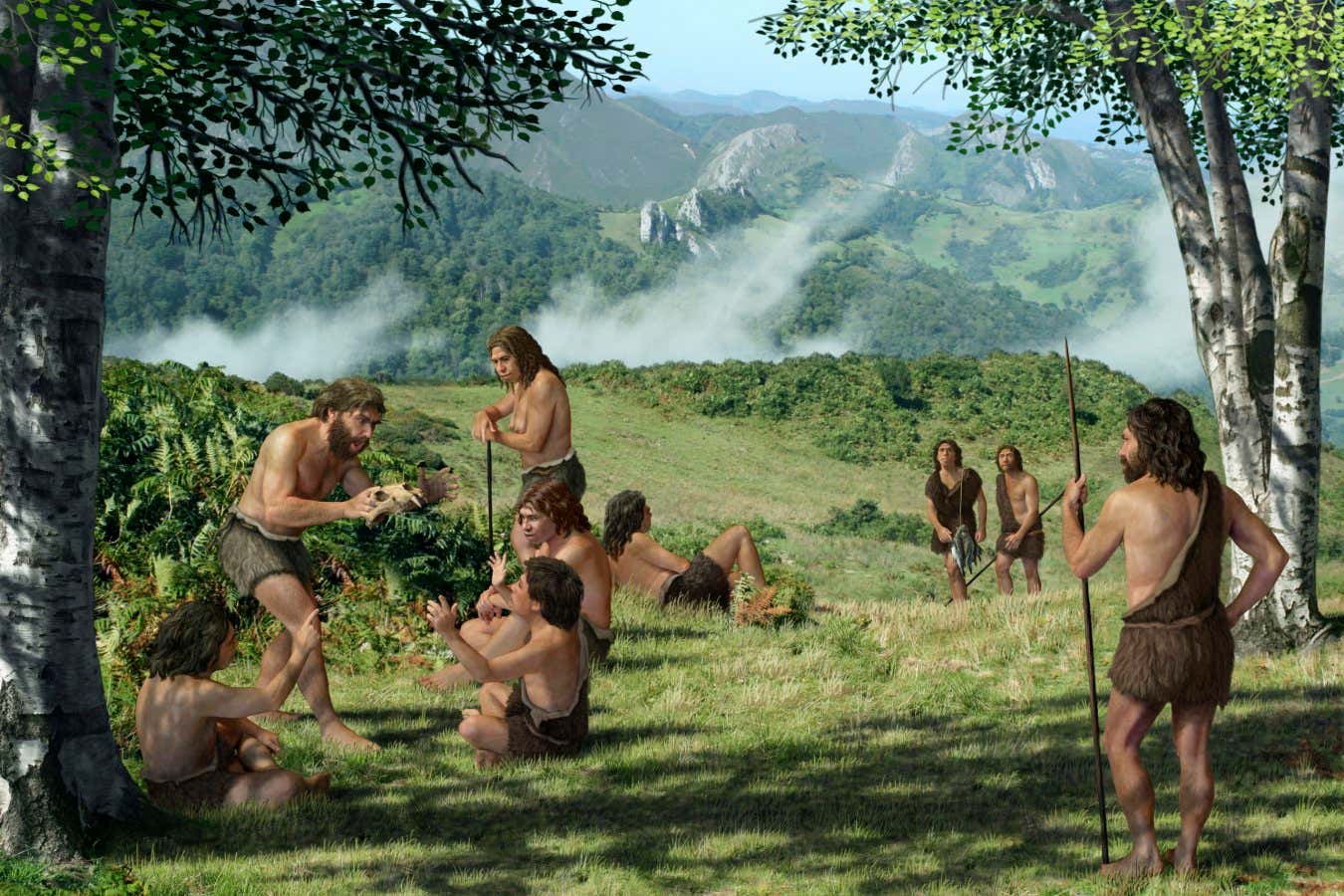
Genetic analysis shows some late-surviving Neanderthals had diverse populations, challenging inbreeding extinction theory
A new genetic analysis of Neanderthals from north-western Europe reveals that some of the last surviving Neanderthals lived in genetically d
 newscientist.com·14d ago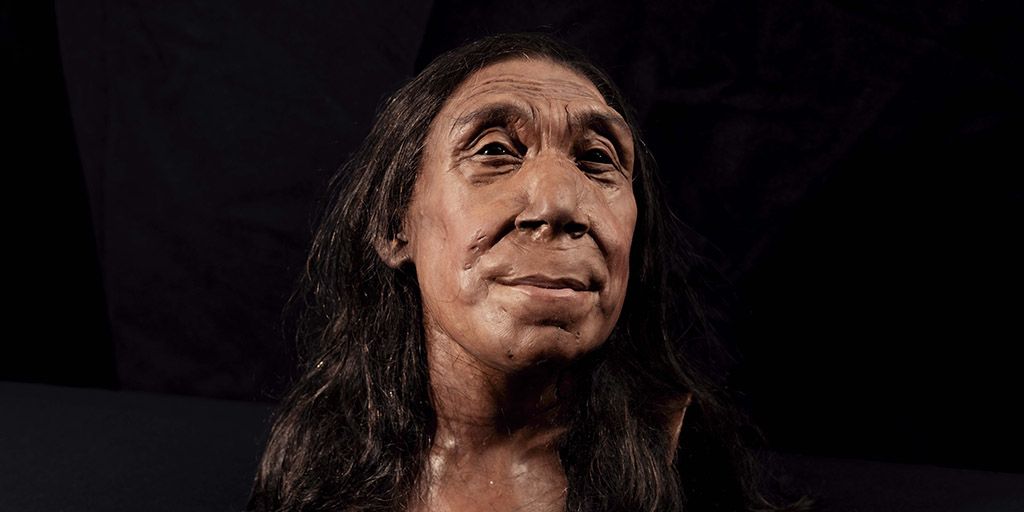
Archaeologists Reconstruct Face of 75,000-Year-Old Female Neanderthal from Iraqi Cave Burial Site
Archaeologists have reconstructed the face of a 75,000-year-old female Neanderthal named Shanidar Z, whose skull was discovered in a cave in
 cam.ac.uk·3mo ago
Prehistoric cave discoveries hint at shared culture between Neanderthals and humans
keyt.com·1d ago
Larger brain, smaller face: Human evolution took a different course than previously thought
Phys·3d ago
Comments
Sign in to join the conversation.
No comments yet. Be the first.