
























Neutrinos from Carbon-Burning Red Supergiants and Their Detectability
Gwangeon Seong et al 2025 ApJ 981 84 Detecting neutrinos from supergiant stars in the carbon-burning phase would provide valuable insights into the details of stellar evolution, but detecting these…
Read the full articleYou might also wanna read
Spectroscopic Classification of ASASSN-25cm as a Classical Nova
Original link submitted from IFL Science: Comments URL: Points: 12 # Comments: 1

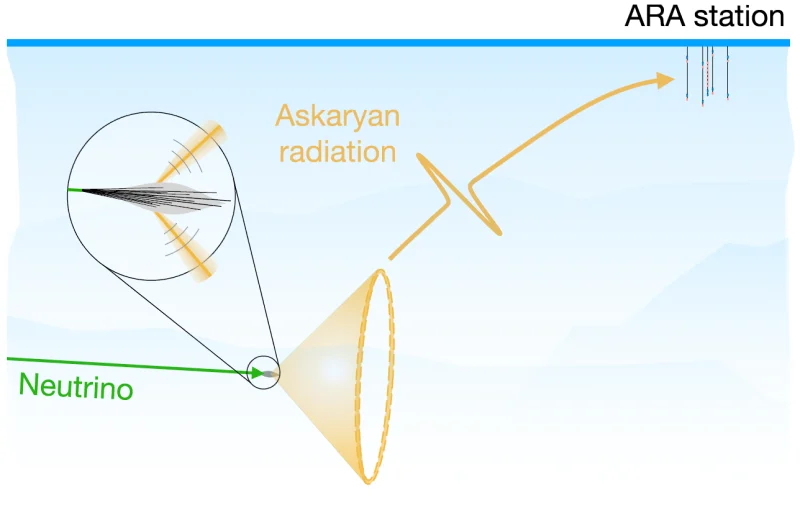
First direct observation of Askaryan radiation in ice confirms new method for detecting ultrahigh-energy neutrinos
Ultrahigh-energy neutrinos can be our gateway to studying some of the Universe’s most energetic but least understood phenomena. Today’s pape
 astrobites.org·1mo ago
VLT Study Reveals Dramatic Nickel Emission and CN Outgassing in Interstellar Comet 3I/ATLAS
We report VLT spectroscopy of the interstellar comet 3I/ATLAS (C/2025 N1) from $r_{\rm h}\!\simeq\!4.4$ to $2.85$ au using X-shooter (300-55
 arxiv.org·10mo ago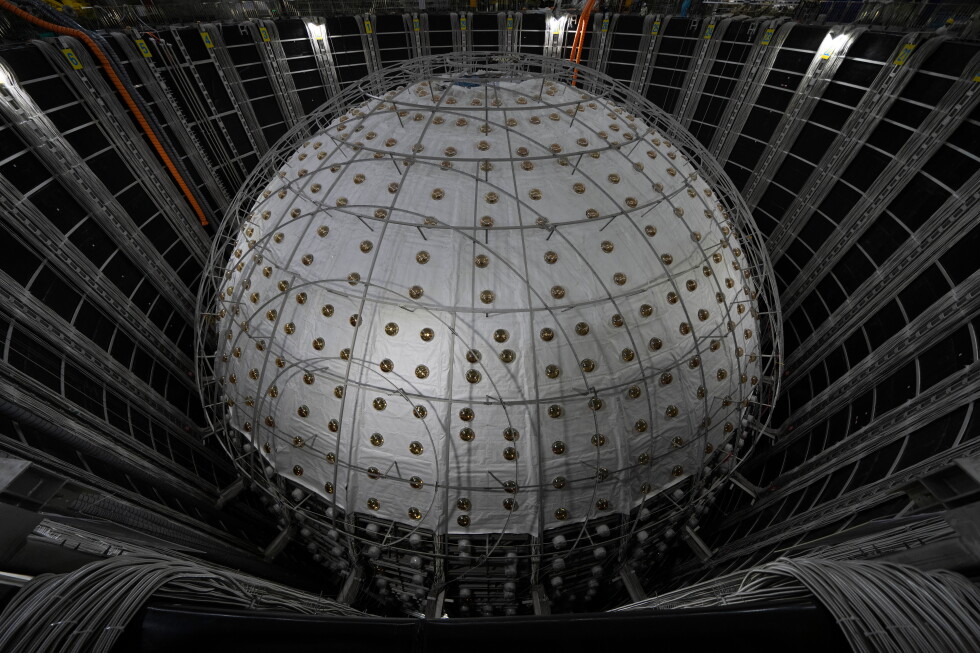
China's JUNO neutrino detector releases first major results with precise measurements of particle flavor-switching
A massive underground detector aimed at understanding the mysterious ghost particles in our universe has released its first major findings.
 apnews.com·27d ago
Stellar Pulsations Shape Supernova Explosions: New research challenges the standard models of final moments of massive stars.
A new study published in The Astrophysical Journal Letters has found that the pulsations experience by red supergiant stars in the final sta
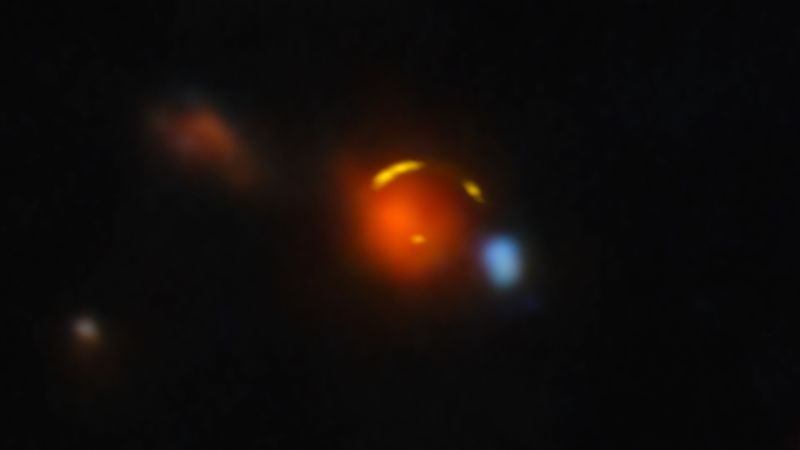
Astronomers trace high-energy neutrino to distant 'Shadow Blaster' galaxy 11 billion light-years away
Scientists still don’t know where ghostly particles called neutrinos originate. A distant galaxy could be a potential source.
 cnn.com·13d ago
Comments
Sign in to join the conversation.
No comments yet. Be the first.