





















Decoding AI's Internal Language: How Sparse Autoencoders Help Interpret Neural Activations
By
@AnthropicAI

An everything bagel for the brain. Substantive, layered, well-seasoned.
Summary
This article discusses how AI models like Claude process language through numerical activations, similar to neural activity in the human brain. It explains that researchers have developed tools like sparse autoencoders and attribution graphs to better understand these activations, which are otherwise difficult to decode. The article focuses on the challenge of interpreting AI's internal representations and the progress made in making AI thinking more transparent and understandable.
Key quotes
· 4 pulledWhen you talk to an AI model like Claude, you talk to it in words. Internally, Claude processes those words as long lists of numbers, before again producing words as its output.
These numbers in the middle are called activations—and like neural activity in the human brain, they encode Claude's thoughts.
Also like neural activity, activations are difficult to understand. We can't easily decode them to read Claude's thoughts.
Over the past few years, we've developed a range of tools (like sparse autoencoders and attribution graphs) for better understanding activations.
You might also wanna read


Anthropic researchers extract interpretable features from Claude 3 Sonnet using sparse autoencoders
Researchers at Anthropic demonstrate that sparse autoencoders can extract interpretable features from Claude 3 Sonnet, a production-scale la
 arxiv.org·3d ago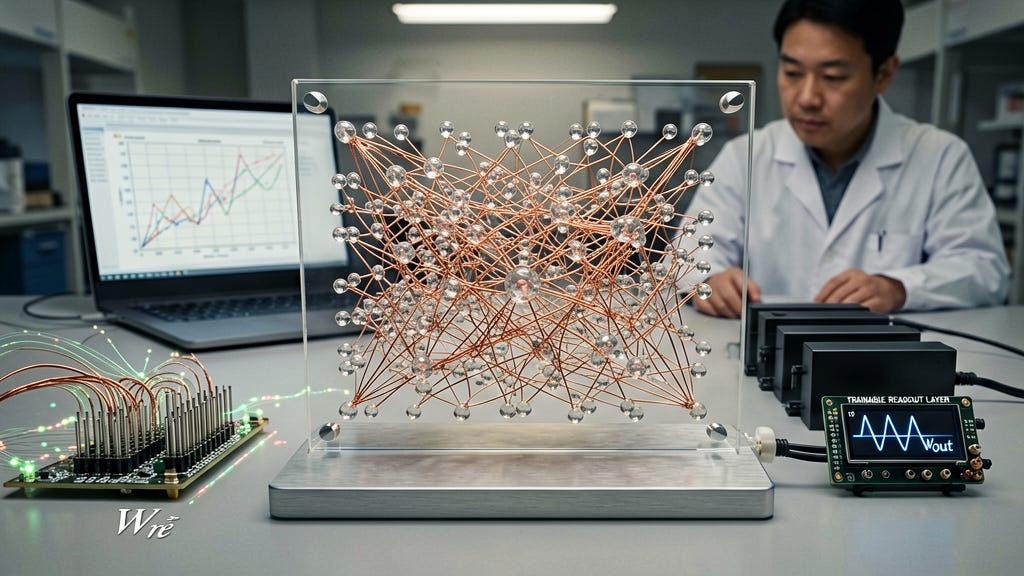
Researchers Work to Decode the "Black Box" of Reservoir Computing and Brain-Inspired AI
This article explores Reservoir Computing (RC), a specialized form of recurrent neural networks (RNNs) that mimics biological brain processe
 akmaier.substack.com·10h ago