
























 Baker's Take
Astronomers Finally Confirm a Stellar-Mass Black Hole in Omega Centauri After Decades of Searching

By
Mr Bagel
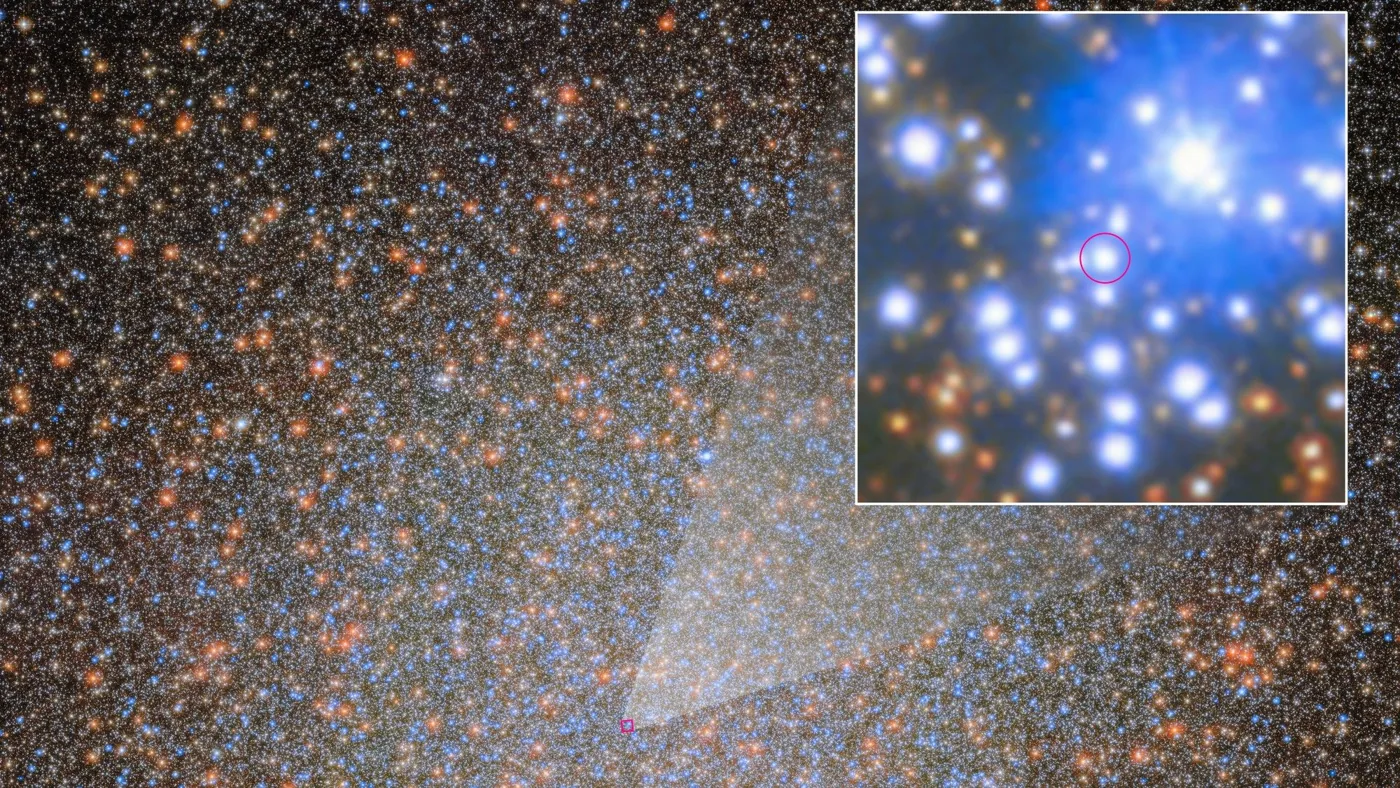
Astronomers using archival data from NASA's Hubble Space Telescope and supportive observations from the James Webb Space Telescope have located the first stellar-mass black hole in the massive globular star cluster Omega Centauri, according to reports from multiple outlets including Phys and the European Space Agency. The discovery ends a long-standing mystery, as the cluster was expected to be filled with black holes left behind by ancient exploding stars, yet evidence for them had been strikingly absent.

"The massive globular star cluster Omega Centauri has puzzled astronomers for decades. It should be filled with black holes left behind by exploding stars, yet evidence for them is scarce."
That puzzling scarcity drove the hunt. By tracking the motion of a visible star orbiting an invisible massive object over more than 20 years of Hubble data, the team identified the black hole's presence. Space.com reported that this black hole is the first of an estimated 10,000 "missing" black holes thought to reside in Omega Centauri, opening the door to finding many more.
"The first of an estimated 10,000 'missing' black holes thought to exist in the cluster."
Independentspacenews.com noted that the findings were supported by Webb observations, confirming the black hole's nature. The European Space Agency added that discovering this first missing black hole will help refine current theories on black hole formation within dense star clusters like Omega Centauri. The results were published in The Astrophysical Journal Letters, as reported by Phys.
This breakthrough represents a major step forward, not only confirming a long-sought object but also validating techniques that can now be applied to uncover the rest of the cluster's hidden black hole population. With Hubble's decades of archival data and Webb's sharp infrared eyes, astronomers expect to fill in a significant gap in our understanding of how black holes evolve in crowded stellar environments.
The reporting
6 outlets covered this story. Each links to the original.



Comments
Sign in to join the conversation.
No comments yet. Be the first.