





















Cooling patch in North Atlantic linked to weakening AMOC ocean current system
By
Alec Luhn

Crisp on the outside, thoughtful on the inside. A keeper.
Summary
A patch of ocean south-east of Greenland, known as the "cold blob" or "warming hole," has cooled by up to 1°C over the past 150 years while the rest of Earth warms. The latest evidence suggests this anomaly is caused by a weakening of the Atlantic Meridional Overturning Circulation (AMOC), the ocean current system that transports warm water from the tropics to Europe. This finding has significant implications for climate patterns in the North Atlantic region.
Key quotes
· 3 pulledOver the past 150 years, Earth's entire surface has been warming, except for one patch of the north Atlantic.
Located south-east of Greenland, this area has cooled by as much as 1°C and is known as the 'warming hole' or the 'cold blob'.
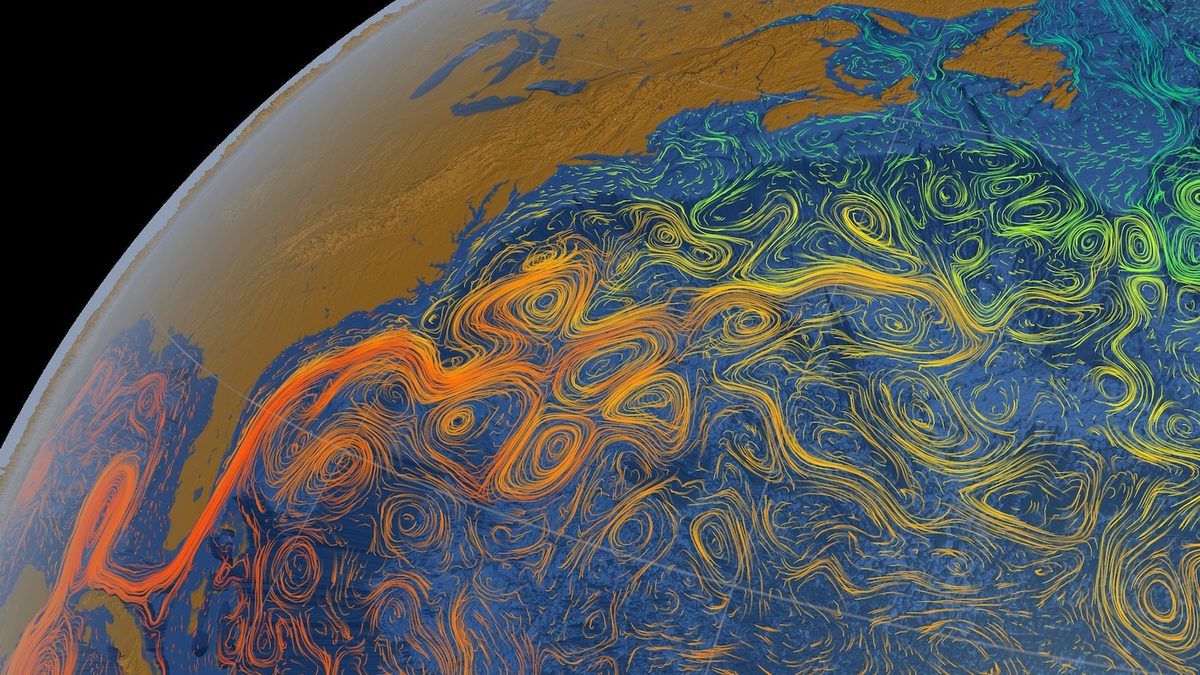
Scientists have been split over why this cold blob exists, but the latest evidence backs up the idea that it is caused by a weakening of the Atlantic Meridional Overturning Circulation (AMOC), the system of currents that transports warmth from the tropics to Europe.
You might also wanna read

Scientists Warn Atlantic Ocean Current System (AMOC) May Be Nearing Collapse
Scientists are increasingly concerned that the Atlantic Meridional Overturning Circulation (AMOC), a critical ocean current system that tran
 Yale E360·1mo ago
Scientific Analysis: The Atlantic Meridional Overturning Circulation (AMOC) and Its Potential Collapse Due to Climate Change
The article discusses the potential collapse of the Atlantic Meridional Overturning Circulation (AMOC), also known as the Gulf Stream, which
 thatjoescott.com·4mo ago
Physics-Based Indicators for Predicting Atlantic Ocean Circulation Collapse Under Climate Change
This scientific research paper proposes physics-based indicators for detecting the onset of Atlantic Meridional Overturning Circulation (AMO
 agupubs.onlinelibrary.wiley.com·9mo ago
Iceland Declares Potential Ocean Current Collapse a National Security Threat
Iceland's government has declared the potential collapse of the Atlantic Meridional Overturning Circulation (AMOC) ocean currents a national
 edition.cnn.com·6mo ago
Study identifies three-phase mechanism driving Antarctic sea ice decline since 2015
This scientific study analyzes the drivers of Antarctic sea ice decline since 2015, using an observationally constrained sea ice–ocean model
 Science Advances·1mo ago
Study Reveals Major Reversal in Southern Ocean Circulation
A study led by the National Oceanographic Center (NOC) has detected a major reversal in ocean circulation in the Southern Ocean since 2016,
iefworld.org·11mo ago