
























Morning glory adaptation plummets 96% amid pollinator decline
A University of Michigan study finds morning glories evolving to attract pollinators instead of adapting to climate change, with a steep drop in adaptation rate.
Read the full articleYou might also wanna read
Morning glories reveal 96% drop in adaptation as pollinator pressure reshapes evolution
Facing both climate change and a crashing pollinator population, plants may be evolving to attract pollinators rather than adapting to a war


Citizen science and AI reveal latitudinal flowering trends and adaptation mechanisms in perennial grasses
Juxtaposing citizen science in situ observations and designed ex situ experiments through identified major genetic and environmental determi
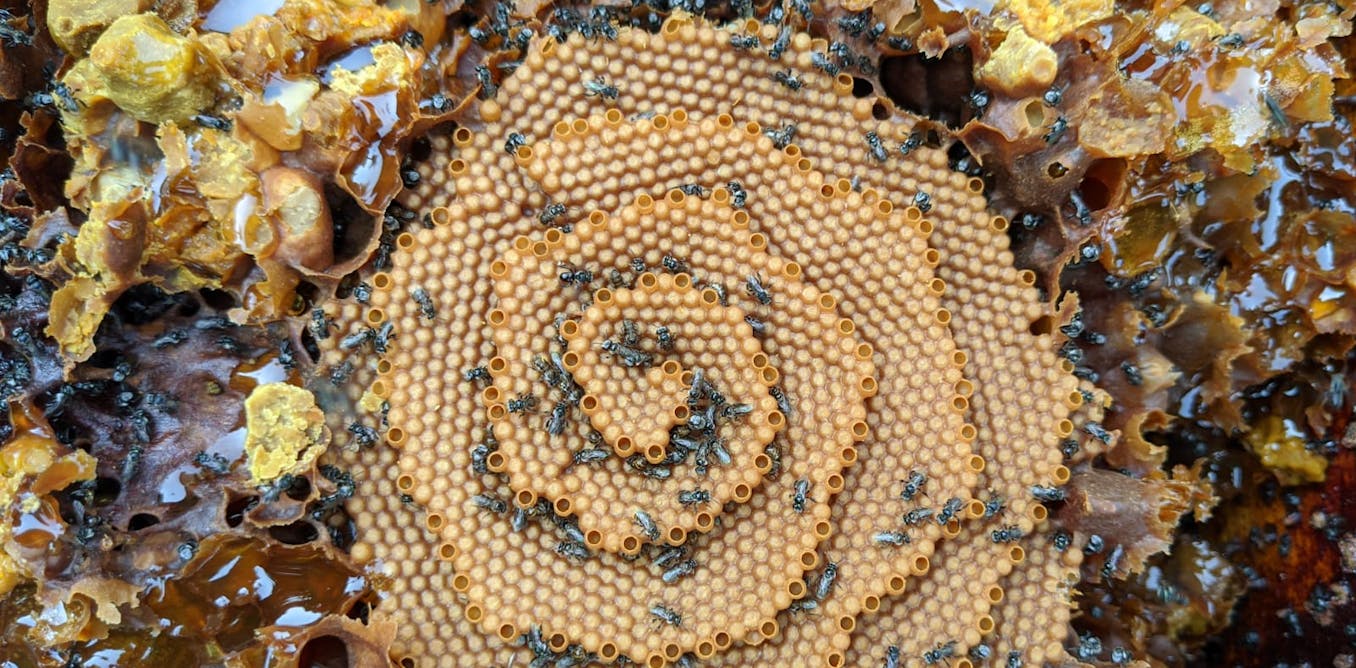
Study: Native Australian bees' climate change resilience depends on nest type
Surprisingly, the species that are the most tolerant to heat, are also the most vulnerable to future warming.
 theconversation.com·24d ago
Study finds angiosperm reproductive diversification predated the end-Cretaceous extinction
Angiosperm reproductive evolution is traditionally linked to the end-Cretaceous biotic crisis and subsequent ecological restructuring. Here,
 scim.ag·10d ago
Study finds angiosperm reproductive diversification predated the end-Cretaceous extinction
Angiosperm reproductive evolution is traditionally linked to the end-Cretaceous biotic crisis and subsequent ecological restructuring. Here,
scim.ag·10d agoStudy finds angiosperm reproductive diversification predated the end-Cretaceous extinction
Angiosperm reproductive evolution is traditionally linked to the end-Cretaceous biotic crisis and subsequent ecological restructuring. Here,
 science.org·14d ago
Biologists Report Minimal Evolutionary Change Over Past 24 Hours
STANFORD, CA—Calling it a “pretty slow one” as far as natural selection and genetic drift were concerned, biologists from Stanford Universit
 The Onion·2mo ago
Comments
Sign in to join the conversation.
No comments yet. Be the first.