
























Monthly Roundup: A Cluster of Cosmic Spiders
Arachnophobes beware: today's post concerns the behavior of the voracious stellar remnants called spider pulsars. The post Monthly Roundup: A Cluster of Cosmic Spiders appeared first on AAS Nova .
Read the full articleYou might also wanna read

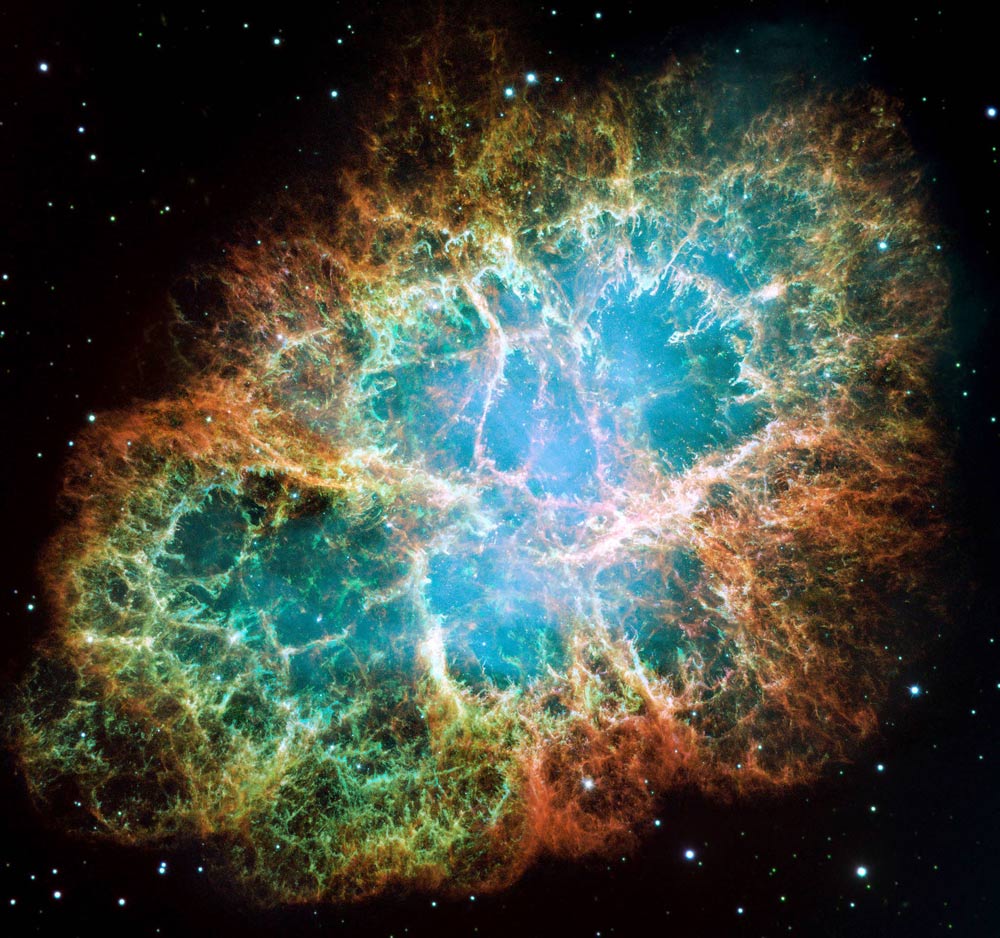
Issue #1054: A nod to the Crab Nebula and a brown dwarf on the verge of becoming a star
Just a fun tip o’ the hat to a great gas cloud, and a brown dwarf is eating another one and may become a star
 badastronomy.beehiiv.com·14d ago
'Cosmic wallflowers' may hold the key to the origin of globular clusters
Astronomers using computer simulations have investigated whether a class of star clusters nicknamed "cosmic wallflowers" could be the long-s
Spectroscopic Classification of ASASSN-25cm as a Classical Nova
Original link submitted from IFL Science: Comments URL: Points: 12 # Comments: 1

Faint radio signals detected from previously silent 'Blue Eye' neutron star for the first time
The hushed pulsar, nicknamed Blue Eye, was a previously radio-silent neutron star.
 space.com·3d ago
Faint radio signals detected from previously silent 'Blue Eye' neutron star for the first time
The hushed pulsar, nicknamed Blue Eye, was a previously radio-silent neutron star.
space.com·3d agoFaint radio signals detected from previously silent 'Blue Eye' neutron star for the first time
The hushed pulsar, nicknamed Blue Eye, was a previously radio-silent neutron star.
Space·3d agoAstronomers witness the birth of a magnetar for the first time
A strange "chirping" signal from a distant supernova has revealed the birth of a magnetar, confirming that these incredibly magnetic neutron
A New Nova Just Appeared in the Night Sky – You Can See It with the Naked Eye
Article URL: Comments URL: Points: 5 # Comments: 0
Comments
Sign in to join the conversation.
No comments yet. Be the first.