
























How Single Retirees Face Different Tax Rules and Challenges Than Married Couples
By
Kelley R. Taylor
Summary
Traditional retirement planning assumes a two-person household with adult children involved in financial decisions, but this no longer applies to a growing share of retirees. Roughly 1 in 5 people over 50 in the U.S. live alone, and about 23% never had children. The article examines how key tax strategies — including the standard deduction, capital gains thresholds, Roth IRA conversions, Required Minimum Distributions (RMDs), and Social Security taxation — differ for single retirees versus married couples. It highlights both advantages (simpler finances, lower tax brackets for some) and challenges (higher effective tax rates on Social Security benefits, lack of spousal tax benefits, and the need for self-directed planning without family support).
Source

 bskyHow Single Retirees Face Different Tax Rules and Challenges Than Married Coupleskiplinger.com
Key quotes
· 3 pulledTraditional retirement planning has long assumed a household of at least two people and often the involvement of adult children in managing financial decisions later in life.
Surveys and data show that many people living in the U.S. are charting a different course, with roughly 1 in 5 over the age of 50 living alone.
Some core tax strategies look different when you're living single and planning for one.
You might also wanna read


How Housing Policies Disadvantage Single People in the Real Estate Market
The article explores how single people face significant challenges in the housing market due to government policies and societal structures
 thewalrus.ca·5mo ago
Economic Systems and Retirement Savings: How National Policies Shape Financial Security
The article challenges conventional wisdom about retirement savings, arguing that Americans' regret over insufficient savings stems less fro
 governance.fyi·4mo ago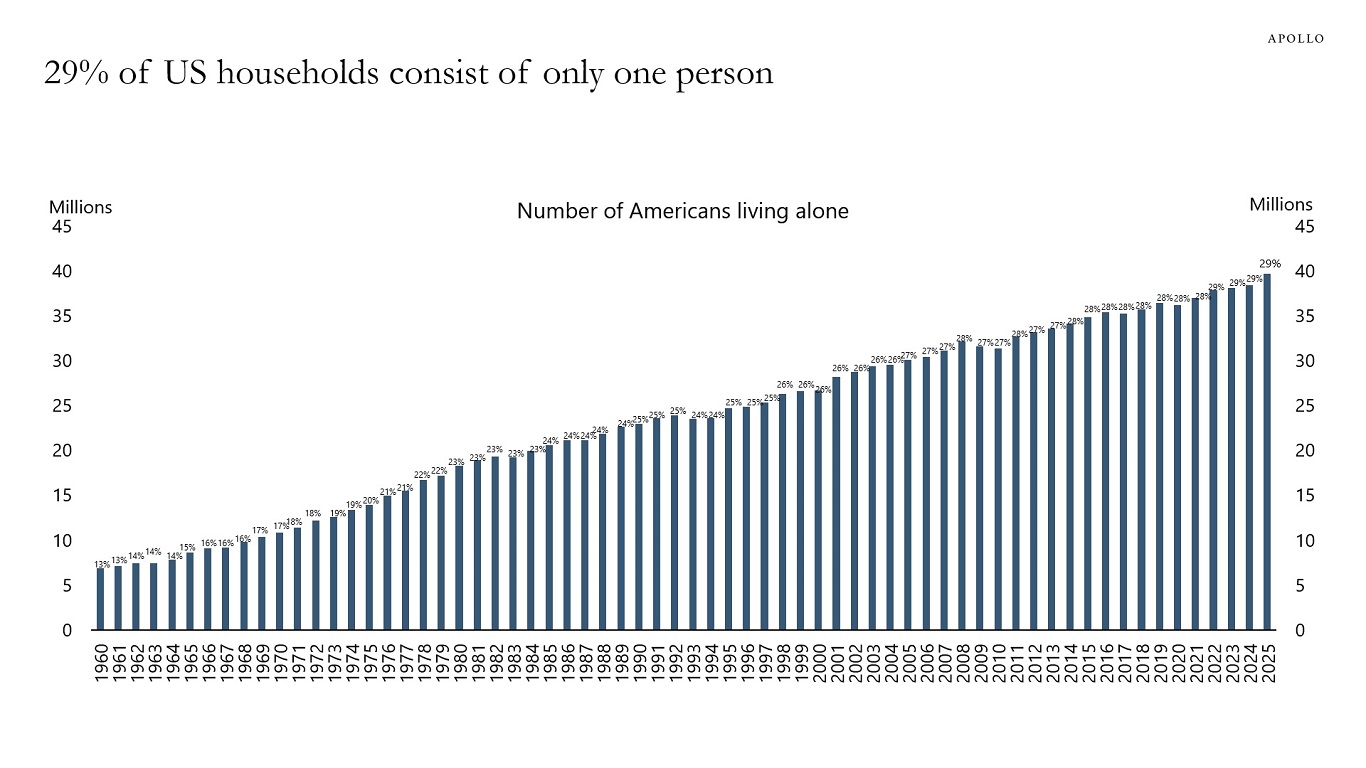
40 Million Americans Now Live Alone as Single-Person Households Continue Rising
The article examines the growing trend of single-person households in the United States, with 40 million Americans now living alone. It anal
 apolloacademy.com·5mo ago
Your aging parent has a new romance. Here’s how to protect your inheritance — without looking greedy.

Tax Calculator: Compare Single vs. Joint Filing for 2025 US Federal Taxes
This is a tax calculator tool that allows users to estimate their income taxes for single and joint filers based on 2025 US Federal Tax Brac

The Growing Financial Divide Between Millennials and Their Wealthy Boomer Parents
This article explores the growing tension between millennial adults and their wealthy baby boomer parents over financial support. Through in
 thecut.com·10d ago
Comments
Sign in to join the conversation.
No comments yet. Be the first.