
























Michelle-Flávio spat exposes internal realignment of Bolsonarism
2d agopt
From the article
A public spat between Senator Flávio Bolsonaro and former first lady Michelle Bolsonaro has laid bare the struggle over former President Jair Bolsonaro’s electoral legacy, raising questions about the movement’s future when its central figure can no longer act publicly as arbiter—and as the family’s presidential bid, led by Flávio, is running into mounting obstacles. Analysis: Liberal Party undercuts Michelle with opposition to fast-tracking Misogyny Bill Flávio seeks to contain rift with Michelle as women allies stay away Michelle leaves PL Mulher, shaking up the Bolsonaro political family Experts who study right-wing movements say the rift is unlikely to weaken Bolsonarism as a political force, but it is sharpening the fight for influence and reshaping the factions that formed around Bolsonaro, who is currently service his sentence under house arrest by order of Brazil’s Supreme Court (STF) after being convicted of attempting a coup. On Friday (3), Justice Alexandre de Moraes extended the former president’s house arrest. Bolsonaro was sentenced to 27 years and three months in prison; his defense argued that his health remains fragile and that he’d be better cared for at home. The original 90-day house-arrest window had expired June 25. Moraes’s new ruling set no fixed end date, and he also revoked the former president’s permit for a firearm seized last month. Michelle Bolsonaro’s own electoral plans remain up in the air—she has not said whether she will run for the Senate seat representing the Federal District—but analysts believe her keeping her distance from Flávio’s prospective campaign could unsettle religious voters and make it harder to win over women, a group Bolsonarism has historically struggled with. Thais Pavez Arquivo pessoal Political scientist Thais Pavez, co-author of the 2024 study “Bolsonarismo sem Bolsonaro?” (“Bolsonarism Without Bolsonaro?”), says there’s a real risk of losing evangelical women, who view Michelle as “one of their own”—though she cautions that “it’s still too early to talk about a full realignment within segments of the movement’s base.” “Michelle is a leader who’s built her own political capital, unlike Flávio. She mobilized supporters at street demonstrations, Marches for Jesus, and tours around the country, and she was one of the central voices behind the spiritual-warfare narrative that defined the 2022 campaign—the whole good-versus-evil framing,” Pavez says. As she sees it, there’s now “a fight over who gets to lead the Bolsonarist project,” with part of the base convinced that Michelle is the one who can carry forward the mission of transforming society and pushing back against what they call the “inversion of values” that Bolsonaro set in motion. Just how costly the family rift will be for Flávio, should he formalize his presidential bid, is still an open question. But any erosion of support could matter in what’s shaping up to be a tight race against President Luiz Inácio Lula da Silva, the Workers’ Party (PT) likely candidate and current frontrunner in the polls. Jonas Medeiros Arquivo pessoal The push toward what social scientist Jonas Medeiros, a researcher at the Brazilian Center for Analysis and Planning (Cebrap), calls “Bolsonarism without Bolsonaro” has picked up speed now that the former president is imprisoned and barred from holding office. “That’s clearly fueling the infighting. What’s really at stake in the 2026 election is whether the Bolsonaro family can hold onto control—not just of its own camp, but of the broader slice of Brazil’s right that’s perfectly comfortable aligning with a political project that has authoritarian overtones and answers to Donald Trump’s United States,” Medeiros says. Medeiros, who co-authored a book on Bolsonaro’s rise, says the real test is whether the former president’s sons can keep allied factions together “without Jair weighing in publicly himself.” He also floats the possibility that the family might land on what he calls the “more rational” play: better to lose with Flávio in 2026 than to forfeit the outsized influence the family currently wields within the opposition. Anthropologist Isabela Kalil, who coordinates the Observatory of the Extreme Right, points to another goal shaping the family’s strategy—Jair’s political rehabilitation, which would only gain traction if an ally wins the presidency. “Not every political calculation is about winning the election. Holding onto dominance on the right, and clearing a path to a possible pardon for Bolsonaro, are the two things really driving Bolsonarism right now,” she says. Kalil argues the movement has always been an unstable coalition of conservative groups whose interests don’t always line up. “What’s different now is that we’re watching a succession fight play out through family disputes, with no Bolsonaro around to settle things the way they used to. Fragmentation definitely weakens the movement—but it doesn’t necessarily mean it’s coming apart.” Isabela Kalil Arquivo pessoal
Continue reading on Extra OnlineYou might also wanna read

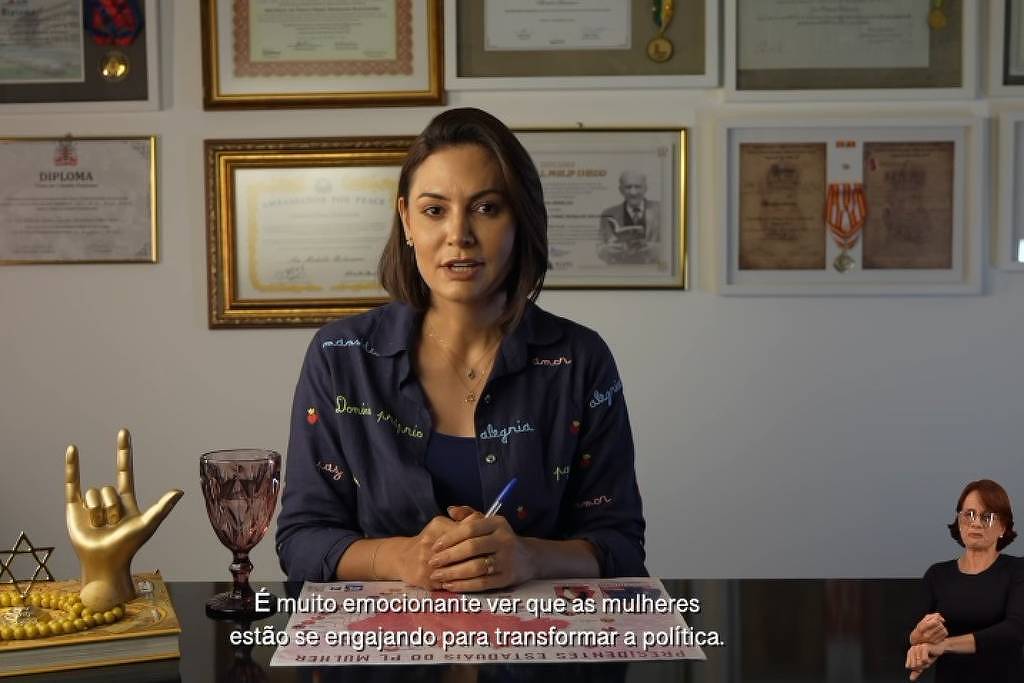
Aliados de Flávio Bolsonaro veem blefe em possível desistência de Michelle da candidatura ao Senado
Aliados do senador Flávio Bolsonaro consideram um blefe a sugestão de Michelle Bolsonaro de desistir da candidatura ao Senado. A ex-primeira
 www1.folha.uol.com.br·8d ago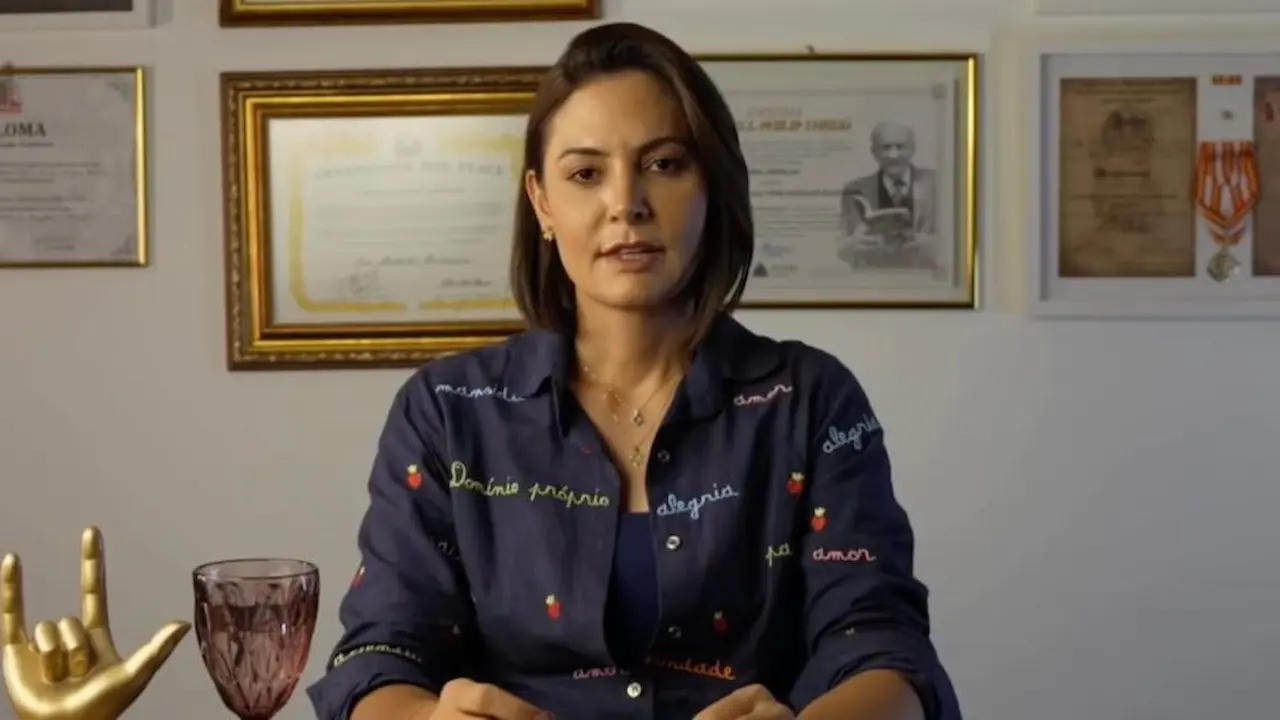
Michelle Bolsonaro expõe racha com Flávio Bolsonaro e relata humilhação por divergências políticas
Michelle Bolsonaro, ex-primeira-dama do Brasil, expôs publicamente um racha familiar e político com seu enteado, o senador Flávio Bolsonaro,
 diariocarioca.com·14d ago
PGR pede que Flávio Bolsonaro seja ouvido por calúnia contra Lula
agenciabrasil.ebc.com.br·2d ago
Lula x Flávio Bolsonaro: o eleitor invisível nas pesquisas para a presidência em 2026
Brasil de Fato·21h ago

PF faz buscas na casa de Jair Bolsonaro, mas não encontra novas armas
Tribuna Online·21h ago
PF tem 10 dias para ouvir Flávio em caso de calúnia contra Lula
agenciabrasil.ebc.com.br·1d ago
Comments
Sign in to join the conversation.
No comments yet. Be the first.