





















Interview with AAS Keynote Speaker Prof. Mario Jurić: Solar System Science and Rubin Observatory
By
Katya Gozman

Pulled from the oven just right. Trustworthy, fact-dense, deeply satisfying.
Summary
This article is an interview with Prof. Mario Jurić, a Solar System scientist and expert in Rubin Observatory data, who is a keynote speaker at the 248th AAS meeting. It covers his unexpected career path working on large-scale astronomical projects, his research on estimating distances to millions of stars, and his work with the Rubin Observatory's Legacy Survey of Space and Time (LSST).
Key quotes
· 2 pulledWhen Mario Jurić began graduate school, he didn't expect to spend the next 20+ years of his life working on once-in-a-quarter century projects.
He realized that he had estimated distances to 48 million stars, almost 700 times more stars than any previous study.
You might also wanna read

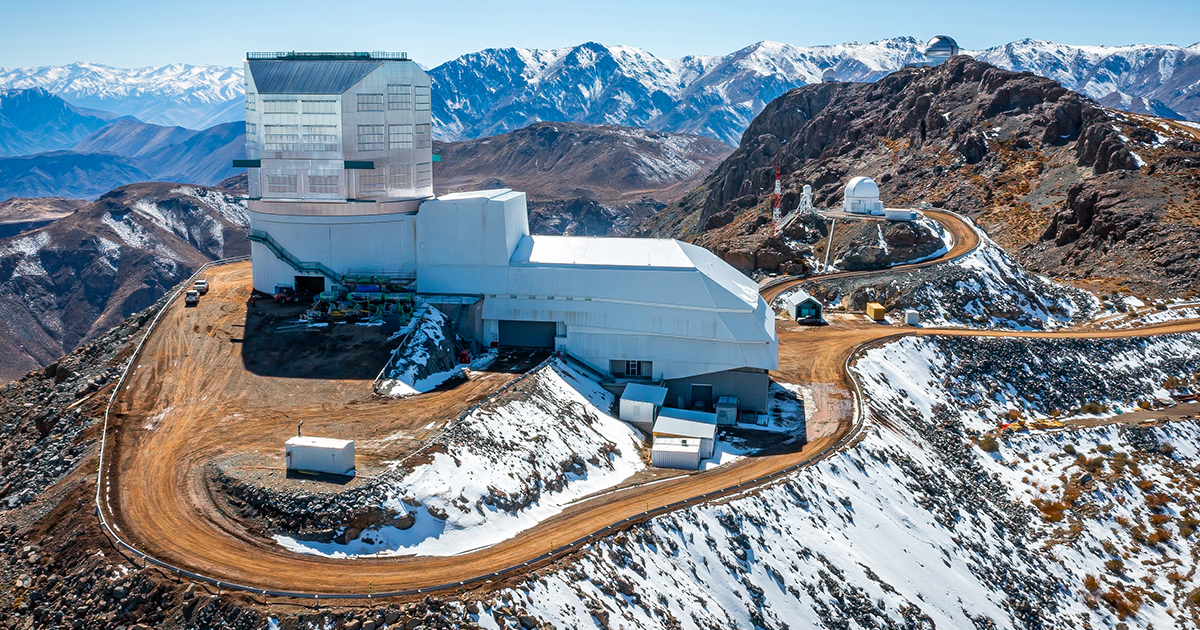
Vera C. Rubin Observatory Set to Discover Millions of Asteroids and Transient Phenomena in Big-Data Astronomy Era
The Vera C. Rubin Observatory in Chile is preparing to begin operations, designed to capture the entire Southern Hemisphere night sky every
 quantamagazine.org·15d ago
Vera C. Rubin Observatory first images

VLT Study Reveals Dramatic Nickel Emission and CN Outgassing in Interstellar Comet 3I/ATLAS
Astronomers using the Very Large Telescope (VLT) have conducted spectroscopic observations of interstellar comet 3I/ATLAS (C/2025 N1) as it
 arxiv.org·9mo ago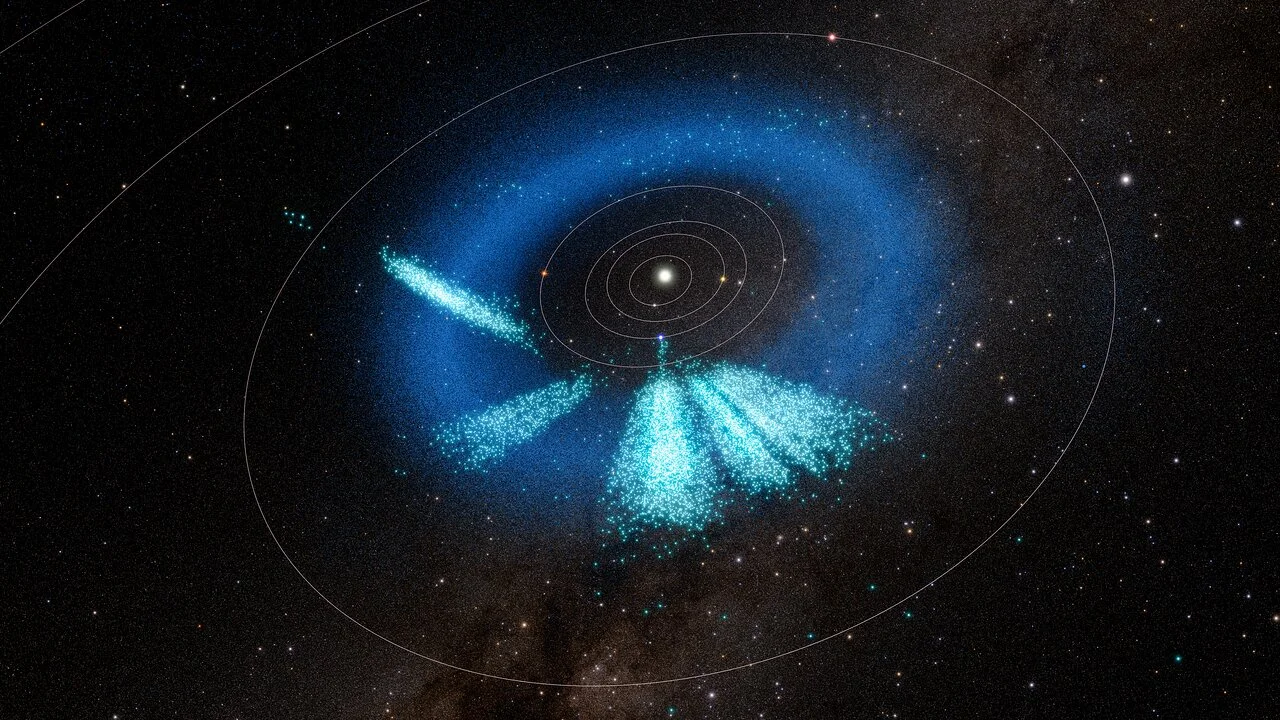
Vera C. Rubin Observatory Discovers 11,000 New Asteroids Before Official Survey Launch
The Vera C. Rubin Observatory, using preliminary data before its official 10-year Legacy Survey of Space and Time (LSST) begins, has already
 universetoday.com·1mo ago
Testing Google's Antigravity IDE and Gemini 3 with JavaScript Statistical Physics Visualizations
The article discusses the author's evolving approach to testing large language models, moving from asking about obscure people to using Java
christopherkrapu.com·6mo ago
Vera C. Rubin Observatory's Giant Telescope Revolutionizing Astronomy
The Vera C. Rubin Observatory in Chile is equipped with a giant telescope designed for speed and efficiency, capable of capturing 3200-megap
science.org·1y ago