





















Vera C. Rubin Observatory Set to Discover Millions of Asteroids and Transient Phenomena in Big-Data Astronomy Era
By
By Jonathan O'Callaghan May 15, 2026

Sesame, salt, and substance. A flagship bake.
Summary
The Vera C. Rubin Observatory in Chile is preparing to begin operations, designed to capture the entire Southern Hemisphere night sky every few days for a decade, creating the world's largest time-lapse movie of the universe. In its first year alone, scientists expect the observatory to discover approximately 1 million asteroids, including potentially hazardous skyscraper-size objects, along with failed supernovas, interstellar visitors, and other transient astronomical phenomena. The article covers how astronomers are preparing for this new era of big-data astronomy, with early results already starting to arrive from the observatory's commissioning phase.
Key quotes
· 3 pulledIn Rubin's first year alone, scientists expect the observatory to find 1 million asteroids.
Rubin is designed to study our constantly moving and changing universe in greater detail than ever before.
Once every few days for a decade, Rubin will take images of the entire night sky over the Southern Hemisphere, creating the world's largest time-lapse movie.
You might also wanna read


DynaFit: A Software Tool for Nonlinear Regression of Biochemical Kinetics and Binding Data
DynaFit is a software program designed for nonlinear least-squares regression analysis of chemical kinetic, enzyme kinetic, and ligand-recep
NVIDIA Open-Sources Cosmos 3 Foundation Model for Physical AI Reasoning and Action Generation
NVIDIA has released Cosmos 3, an open-source foundation model for Physical AI that integrates physical reasoning, world generation, and acti
 developer.nvidia.com·1h ago
NEST Simulator Included in SPEC CPU 2026 Benchmark Suite for First Time
The Standard Performance Evaluation Corporation (SPEC) released its first updated benchmark suite since 2017 in May 2026, designed to measur
 ebrains.eu·1h ago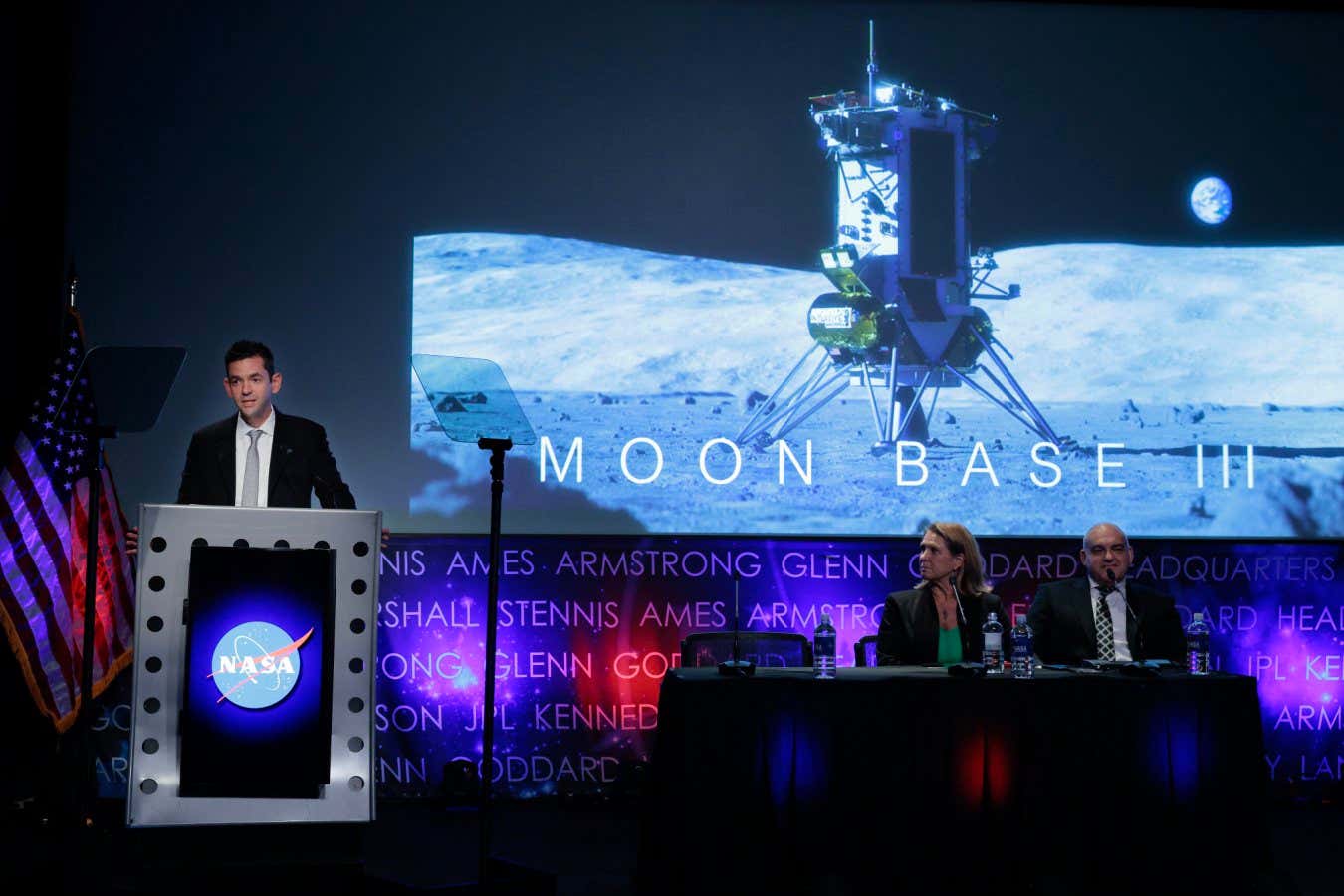
NASA reveals plans for permanent lunar base spanning hundreds of square kilometres
NASA has revealed plans to build a permanent lunar base spanning hundreds of square kilometres as part of its Artemis programme. The initial
 newscientist.com·1h ago
Study Shows Weight Decay During Pretraining Improves Language Model Adaptability After Fine-Tuning
This research paper investigates how weight decay during pretraining of large language models affects their downstream adaptability (plastic
 arxiv.org·2h ago
New Quantum Oblivious Transfer Protocol Achieves Simulation Security with One-Way Functions
This paper presents a new simulation-secure quantum oblivious transfer (QOT) protocol built on one-way functions in the plain model. The pro
 quantum-journal.org·2h ago