
























Mathematical Breakthrough Reveals Complexity in Measuring Knot Untangling
Two mathematicians have proved that a straightforward question — how hard is it to untie a knot? — has a complicated answer.
Read the full articleYou might also wanna read


Mathematicians Use Gödel's Incompleteness Theorems to Develop New Cryptographic Tool
A graduate student recently harnessed the complexity of mathematical proofs to create a powerful new tool in cryptography.
 quantamagazine.org·1mo ago
Doughnut‑shaped topology reveals new way to classify knitting, crochet and other textiles
Fabrics are made by repeatedly intertwining yarns into characteristic patterns. Many of their properties, such as stretchiness, arise not on
How Physics and Mathematical Modeling Help Us Make Better Clothes
A new paper in the journal Nature Physics offers insights into the physics of liquid droplets – and while many people may not appreciate the
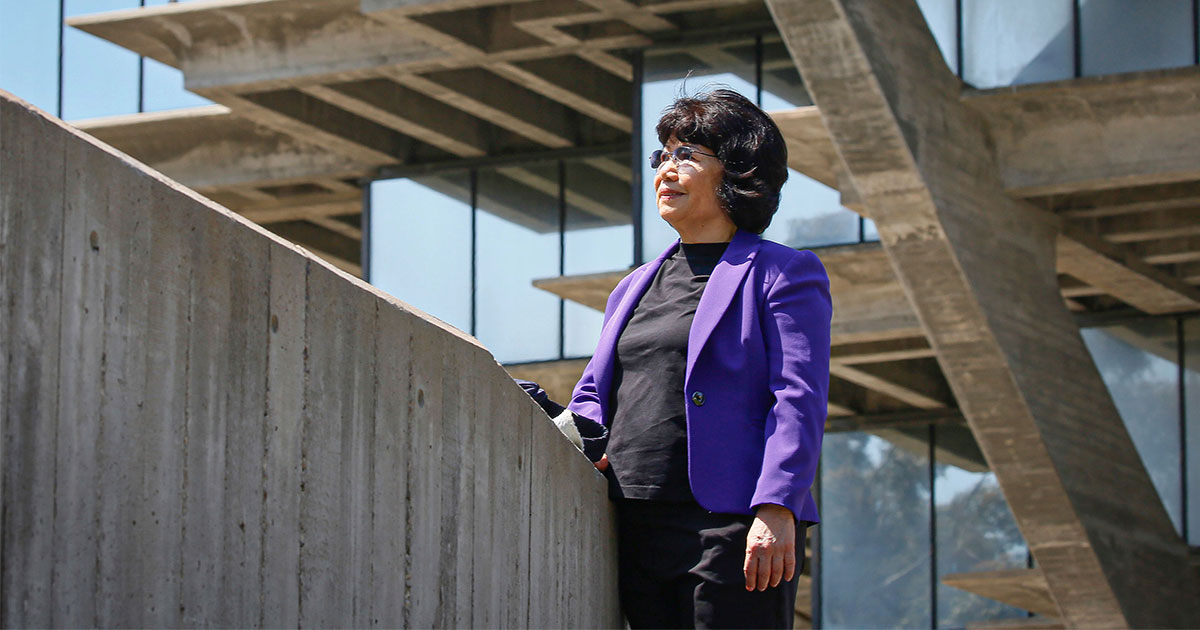
Fan Chung on Why Collaboration Is Essential to Mathematics
Fan Chung, who has an Erdős number of 1, discusses the importance of connection — both human and mathematical.
quantamagazine.org·6d agoDoughnut‑shaped topology reveals new way to classify knitting, crochet and other textiles
Fabrics are made by repeatedly intertwining yarns into characteristic patterns. Many of their properties, such as stretchiness, arise not on

De novo design of DNA origami with a generative diffusion model
Discover advanced DNA origami design! Using a diffusion model on extensive datasets, complex nanostructures become reality. Dive into the fu
Comments
Sign in to join the conversation.
No comments yet. Be the first.