
























First reported by The Independent
Marine heatwave moving in from Pacific could cause weather chaos for months
Massive Pacific marine heatwave to fuel extreme heat and strong storms
By
Bradlyn Oakes
9h agoen
Source
Theweather.comMassive Pacific marine heatwave to fuel extreme heat and strong stormstheweather.comThe heat keeps growing across the Pacific as a massive area of above-average sea surface temperatures stretches across it, impacting the weather to come. A massive marine heatwave has taken over the Pacific over the last few months. Part of the hot temperatures does come down to El Niño taking hold of the equatorial Pacific, but generally, the globe is seeing hot ocean temperatures. According to the most recent observations from NOAA, global sea surface temperatures through the end of June and into July are the hottest on record, beating both 2024 and 2023. As of July 5th, the preliminary data show that the global sea surface temperature was 21.01°C, which is 0.85°C above the 1982 to 2010 average. Pacific Ocean marine heatwave Looking at the Pacific, the marine heatwave stretches across the largest ocean basin in the world. It starts just east of the Philippines and stretches all the way across the ocean to the coast of California and south to the coast of Peru. Originally, these were two separate marine heatwaves that combined as one. A massive marine heatwave has taken hold of the Pacific. And this area is not the only one experiencing above-average conditions; some areas just east of Japan are also seeing well-above-average conditions. Going forward over the coming months, the marine heatwave is set to continue, particularly as El Niño intensifies and likely combines with the Pacific Meridional Mode, another natural climate variation that can increase sea surface temperatures off the California coast and in areas north of the equator. Related article Global Sea Surface Temperature Reaches a New Daily Record in Mid-April 2026 Lasting and far-reaching impacts This extreme heat in the ocean doesn't just stay in the water, though. It has impacts on the weather around it. One of those impacts is the well above average conditions along the coast of South America that have led to people flocking to the beach in the Peruvian winter. Another impact is Super Typhoon Bavi, which just brought devastating impacts to Guam and the surrounding Pacific Islands, as it passed through as a Category 5-equivalent storm. This super typhoon was fuelled by those warm waters in the Pacific, allowing it to intensify into a monster storm. Currently, it is moving towards China and Taiwan. Heading forward, the heat in the ocean is likely to make its way into the atmosphere. Modelling currently suggests that this could help to form a heat dome over the western United States through the middle of the month. Modelling suggests heat is incoming for the west through the middle of July. Looking even further ahead, the heat in the Pacific has to go somewhere, and thus it will end up in the atmosphere. This will likely intensify the subtropical jet, which could lead to more storm activity across the eastern and southern parts of the country. Climate scientists predict that this marine heatwave will fuel wildfire weather and danger through the western half of the US. This is bad news, as fires have been raging already through parts of New Mexico and Arizona. They also note that the heatwave could raise sea levels along the California coast, which could lead to flooding.
You might also wanna read


Marine heatwave moving in from Pacific could cause weather chaos for months
The Independent·2d ago

Massive marine heatwave could cause months of weather chaos – here’s why
The Independent·1d ago

'Uncharted territory': Record high ocean temperatures confirmed for June as El Niño strengthens its grip
Live Science·5d ago
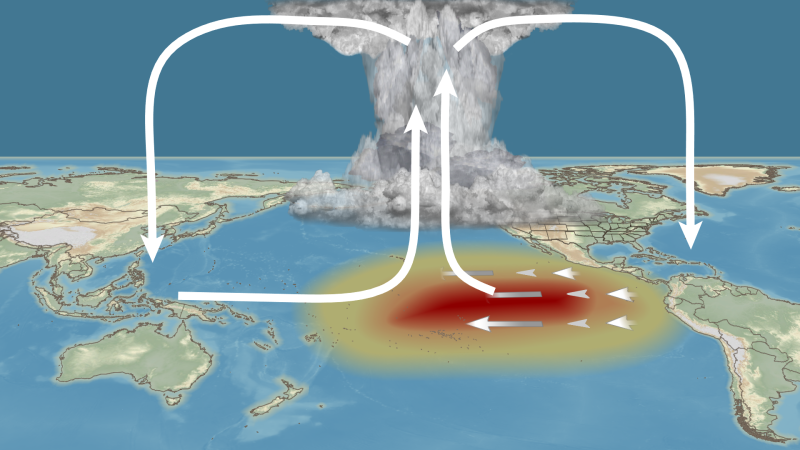
NOAA confirms El Niño has begun and is forecast to intensify into a strong event with global weather impacts
El Niño has officially begun and is forecast to rapidly intensify into a very strong or "Super" El Niño, according to a new NOAA report. Thi
 cnn.com·26d ago
Fiebre oceánica: el Pacífico alcanza temperaturas récord y pone en alerta a científicos
Infobae·14h ago

NOAA confirms El Niño formation, scientists warn of historic strength and extreme weather impacts
NOAA has confirmed the formation of El Niño in the Pacific Ocean, with meteorologists warning it could reach historic strength. The natural
 euronews.com·25d ago
Comments
Sign in to join the conversation.
No comments yet. Be the first.