
























Martin Griffiths: ‘I’ve never seen a war like Gaza, with such desecration’
From the article
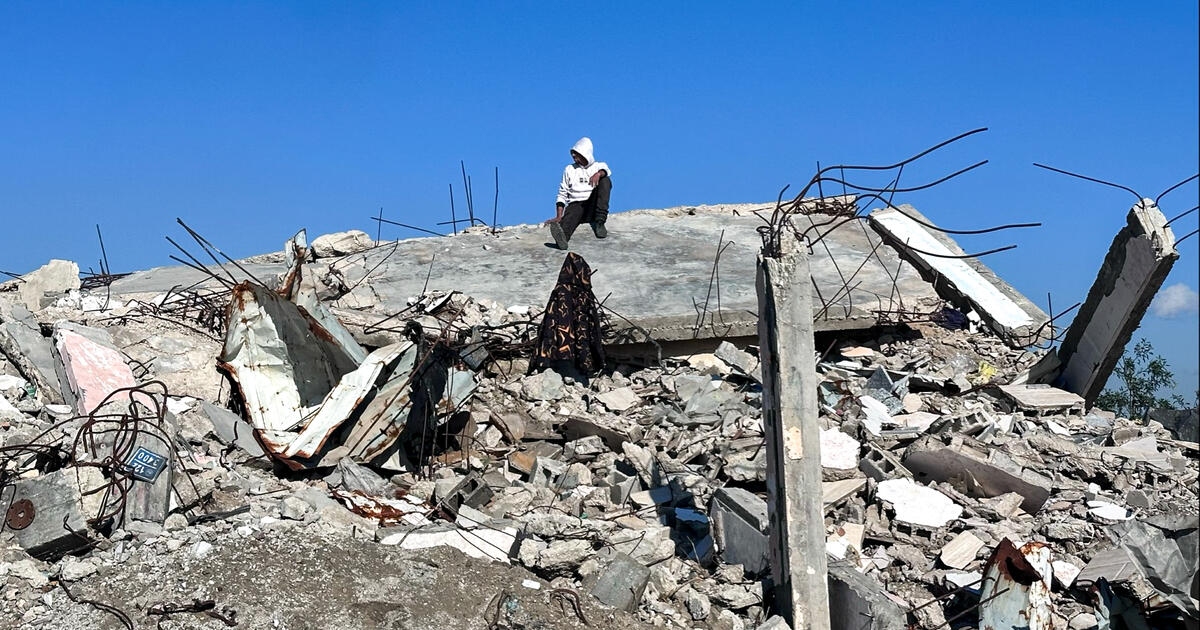
Martin Griffiths: ‘I’ve never seen a war like Gaza, with such desecration’ The World Today iallan.drupal 3 December 2024 The former UN humanitarian chief tells Iona Allan about the impunity he sees in Gaza and Sudan, the failings of the Security Council and why aid is not a substitute for ‘principled’ conflict mediation. Martin Griffiths was until June 2024 the United Nations Emergency Relief Coordinator and Under Secretary-General for Humanitarian Affairs during which he led the mediation resulting in the Black Sea Grain Initiative that secured food and fertilizer exports from Russia-blockaded Ukraine in 2022. He has more than 50 years’ experience serving in some of the world’s worst humanitarian crises, including as UN Special Envoy to Yemen. In 1999, he founded the Centre for Humanitarian Dialogue in Geneva, where he mediated between governments and insurgent groups across Africa, Asia and the Middle East. Since you were made UN humanitarian chief in 2021, the world has been gripped by a series of overlapping emergencies. But you have described the situation in Gaza as ‘the worst ever.’ Why? Gaza is a place where people cannot escape to safety beyond its borders. I have never seen a war with such desecration. The other unique quality of Gaza is the way in which international law, the opinions of the International Court of Justice, the UN secretary-general and the Security Council are flouted. That goes from 75 years of broken promises, and of progressive conflict leading up to the moment on October 7 and the dreadful Hamas attacks. Extraordinary numbers were killed and taken on that day, and then the collective punishment of the Gazan people has been getting worse ever since. My colleagues working in Gaza risk their lives every day and are being stopped from delivering the aid that is needed. They are working in an environment which in my 50-year career has never been so savage, so constrained and full of daily trauma. The deconfliction process needed to safely deliver aid into Gaza simply isn’t working. How does the Israeli parliament’s ban on the UN agency for Palestinian Refugees (UNRWA) operating in Gaza change the humanitarian outlook? The long-standing efforts to undermine UNRWA have been boosted by these Knesset decisions. It wasn’t unexpected, it is still shocking. I think it will have three effects. First, it will make aid delivery that much more difficult, because UNRWA is the backbone of humanitarian operations in the occupied Palestinian territories, the West Bank and elsewhere. Banning UNWRA sets a dangerous precedent to try to take out a UN agency and shows extraordinary spite against the multilateral system. Second, it sets a dangerous precedent to try to take out a UN agency and shows extraordinary spite against the multilateral system. Third, just as important, is the killing of hope. UNRWA is the companion of the Palestinian people on their journey towards freedom. No other agency has the depth of knowledge of the Palestinian situation or the capabilities to reach into Palestinian communities over the past seven decades. There is no substitute. What you see across the world is that you shouldn’t run away from a problem. The way some western donors paused funding to UNRWA six months ago, following allegations of staff complicity in the October 7 attacks, was not appropriate. Most went back, but this was another dangerous precedent. When there is an unproven allegation against a UN agency, you don’t simply abandon that agency. There is a sense that humanitarian intervention has become more political over the past decade. How does this affect operations on the ground? Donor support for humanitarian operations has always been subject to different priorities, but it has become even more apparent in recent years. We see this in the case of Ukraine and Gaza where aid has been given generously, but far less is going to Myanmar, Syria and Afghanistan, which are equally deserving. Humanitarian action has become something of an alibi for member states, who can claim that they are doing something to address the human suffering resulting from conflict, while not doing as much to actually tackle the causes. Gaza has attracted a significant amount of international attention and diplomatic efforts over the past year. Do you think diplomacy and mediation are losing their power? There is a huge amount of international attention on the Middle East. Antony Blinken, the US Secretary of State, has been to the region 11 times since the October 7 attacks, but I wouldn’t call most of that ‘principled mediation’. I’d call it international diplomatic intervention, which I welcome, but it is something different. You don’t see the United States being neutral between Israel and Hamas and I wouldn’t expect them to be. Qatar has acted as a principled mediator but it has suffered from accusations that it is acting inappropriately with Hamas. We need to improve our understanding of the practice of ‘principled mediation’ – the need to treat both parties equally, to shine a light on the exit strategy. Imagine how difficult it would be as a mediator to plan future governance for the Palestinian people while excluding one of the parties? Blinken has been to the Middle East 11 times since the October 7 attacks, but I wouldn’t call that ‘principled mediation’. When I was a mediator 25 years ago, setting up the Centre for Humanitarian Dialogue in Geneva, we had great support from key countries. That funding is diminishing as money now goes on arms and other priorities. We need an increased focus on mediation with more funding, and we need to train those carrying it out who are increasingly going to be from the Global South. How has the international community failed in Sudan’s civil war? Sudan’s lessons are deeper and bleaker. The numbers are horrific: 14 million people displaced and it is estimated that 12 million could die from hunger, even if the war were to end next year. I was a close observer at the first Jeddah meetings a year and a half ago where the Sudanese Armed Forces and the Rapid Support Forces – mediated by the United States and Saudi Arabia – signed a declaration of commitment to humanitarian principles. But they have largely ignored it since. There has been very little progress on humanitarian access and protection of civilians; or on identifying a clear pathway to peace. The result is that the talks are halting and insufficient, and mediating states have failed to make both parties take the negotiations seriously. Related work In conversation with Martin Griffiths: How can a divided world address conflict? Do you feel that the UN is working the way it should? How can it learn from the Black Sea Grain Initiative, the agreement that opened food exports from Russia-blockaded Ukraine? I remember during the negotiation between Ukraine and Russia – mediated importantly with Turkey – both parties said they wouldn’t have been able to sign an agreement like that without it being clearly defined as having a humanitarian objective. Doing something with a humanitarian objective allows the parties to look beyond immediate hostilities and act for the greater good. We need to pursue mitigating opportunities like that – but we obviously need to acknowledge that the Security Council has not fulfilled the international responsibilities given to it by the UN Charter. Its principal role is to stop wars and provide stability, and it is a plain fact the world is getting worse. No wars have been stopped in recent years.
Continue reading on Chatham HouseYou might also wanna read

UN Relief Chief urges Security Council: Gaza civilians cannot wait for diplomatic solutions
UN Relief Chief Tom Fletcher briefed the Security Council on the dire humanitarian situation in Gaza, urging that civilians cannot wait for
 unocha.org·20d ago
A UN report details the ‘overwhelming’ scale of children killed in Gaza. It raises grave legal questions
Radio Free·9d ago
A UN report details the ‘overwhelming’ scale of children killed in Gaza. It raises grave legal questions
Radio Free·9d ago

UNICEF Deputy Director Urges Security Council Action on Sudan's Humanitarian Crisis
UNICEF Deputy Executive Director Hannan Sulieman addresses the UN Security Council on the catastrophic humanitarian crisis in Sudan, now in
 unicef.org·12d ago
Life Support review – quietly devastating medics’ eye view of the war in Gaza
The Guardian·2d ago

Gaza War Becomes Deadliest Conflict for Journalists with Over 189 Media Workers Killed
The Gaza war has become the deadliest conflict for journalists in history, with at least 189 journalists and media workers killed since Octo
 theguardian.com·10mo ago
Comments
Sign in to join the conversation.
No comments yet. Be the first.