
























New photomemristor-based artificial vision system adapts to changing light like the human eye
By
Isabelle Dumé
Summary
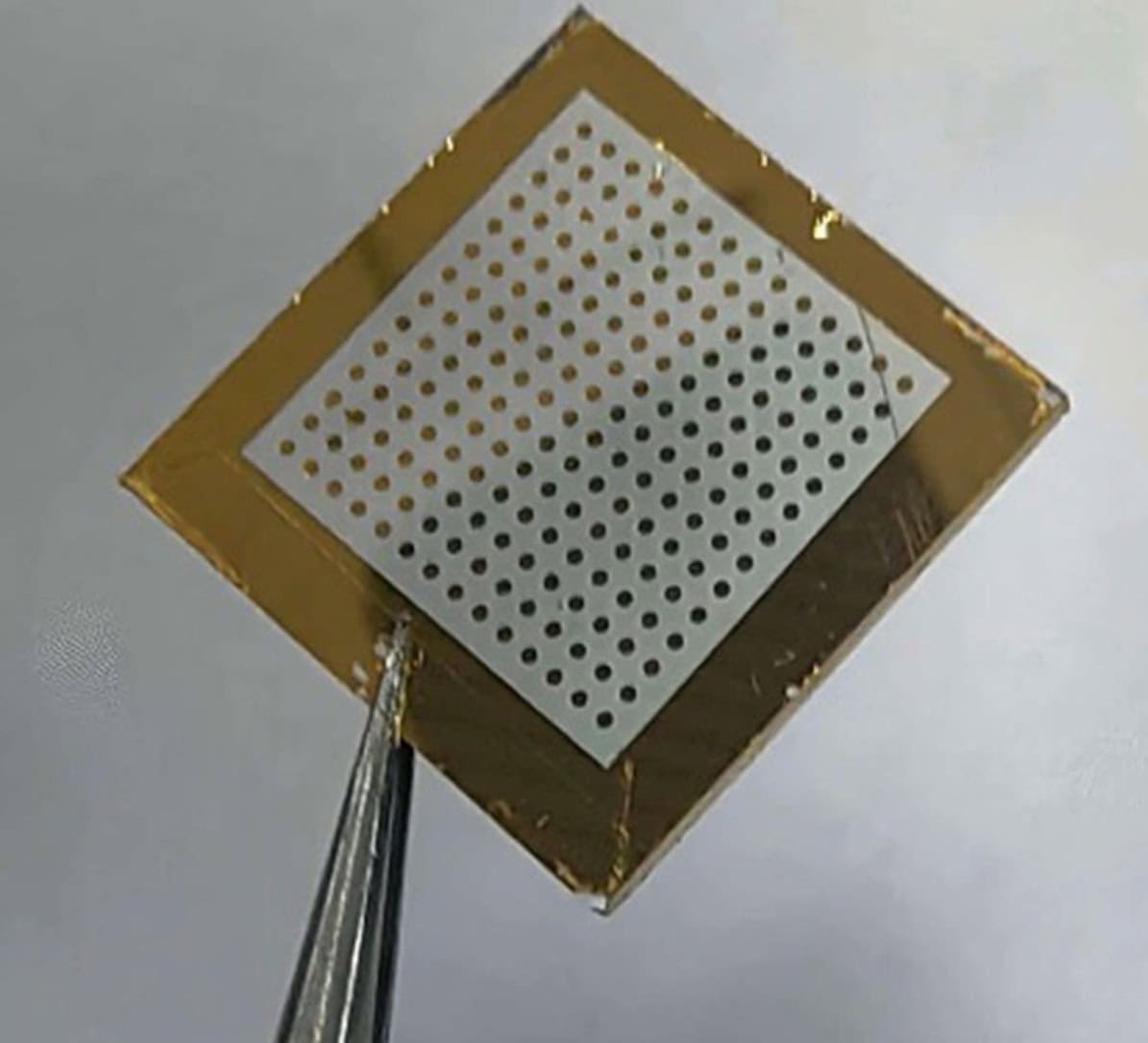
Researchers have developed a photomemristor-based artificial vision system that adapts to changing light conditions much like the human eye. The device, measuring only half a millimetre across, can handle complex real-world lighting scenarios such as glare, dimness, and uneven light levels — overcoming key limitations of current artificial vision systems used in self-driving cars and robotics.
Source
 bskyNew photomemristor-based artificial vision system adapts to changing light like the human eyephysicsworld.com
Key quotes
· 3 pulledThe team's photomemristor measures only half a millimetre across, but can convert light energy into electrical current to power advanced optical systems.
Artificial vision is employed in applications ranging from self-driving cars to advanced robotics.
Most 'artificial eyes' do not work well in complex real-world conditions, such as sudden strong glare, dimness or uneven light levels.
You might also wanna read

Shiitake Mushroom Mycelium Used to Create Sustainable Memristors for Neuromorphic Computing
Researchers have developed sustainable memristors using shiitake mushroom mycelium for high-frequency bioelectronics applications. The study
 journals.plos.org·8mo ago
Breakthrough in Neuromorphic Photonic Computing with GHz-Scale PSNN Chip
The article discusses a groundbreaking advancement in neuromorphic photonic computing with the development of a photonic spiking neural netw
 arxiv.org·11mo ago
Researchers Develop Materials for Light-Based Computer Chips to Improve Efficiency and Speed
Researchers are developing light-based computers that use photons instead of electricity, which could offer greater energy efficiency and fa

All-Optical Chip Enables Large-Scale AI Semantic Vision Generation
Researchers have developed an all-optical synthesis chip that addresses the computing power shortage in large-scale generative AI models. Th
 science.org·6mo ago
Generative AI improves a wireless vision system that sees through obstructions

Comments
Sign in to join the conversation.
No comments yet. Be the first.