
























Machine Learning Decoding of Circuit-Level Noise for Bivariate Bicycle Codes
Quantum 10, 2149 (2026). Fault-tolerant quantum computers will depend crucially on the performance of the classical decoding algorithm which takes in the results of measurements and outputs…
Read the full articleYou might also wanna read


Quantum CNNs: The Quest for Error-Free Computing
Quantum CNNs promise speed but face hurdles with noise and qubit costs. A new error-correction technique using bivariate bicycle codes might
Quantum Crosstalk Noise Modeling Reveals Higher Error Rates in Fault-Tolerant Computing
Error rates in logical qubits demonstrably increase when coherent crosstalk noise is accounted for, a finding at odds with prior analyses re
 quantumzeitgeist.com·1mo ago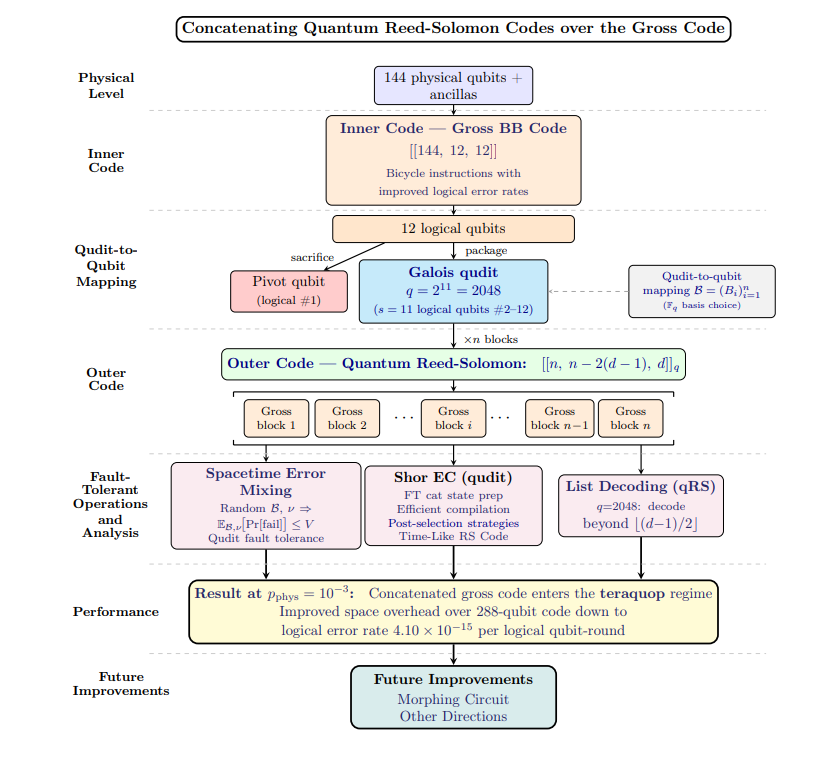
IBM Quantum announces unified synthesis bridging qLDPC codes with algebraic outer block constraints
An overview of the moving parts of the construction and analysis. IBM Quantum has expanded its fault-tolerant roadmap by reporting a unified
 quantumcomputingreport.com·1mo ago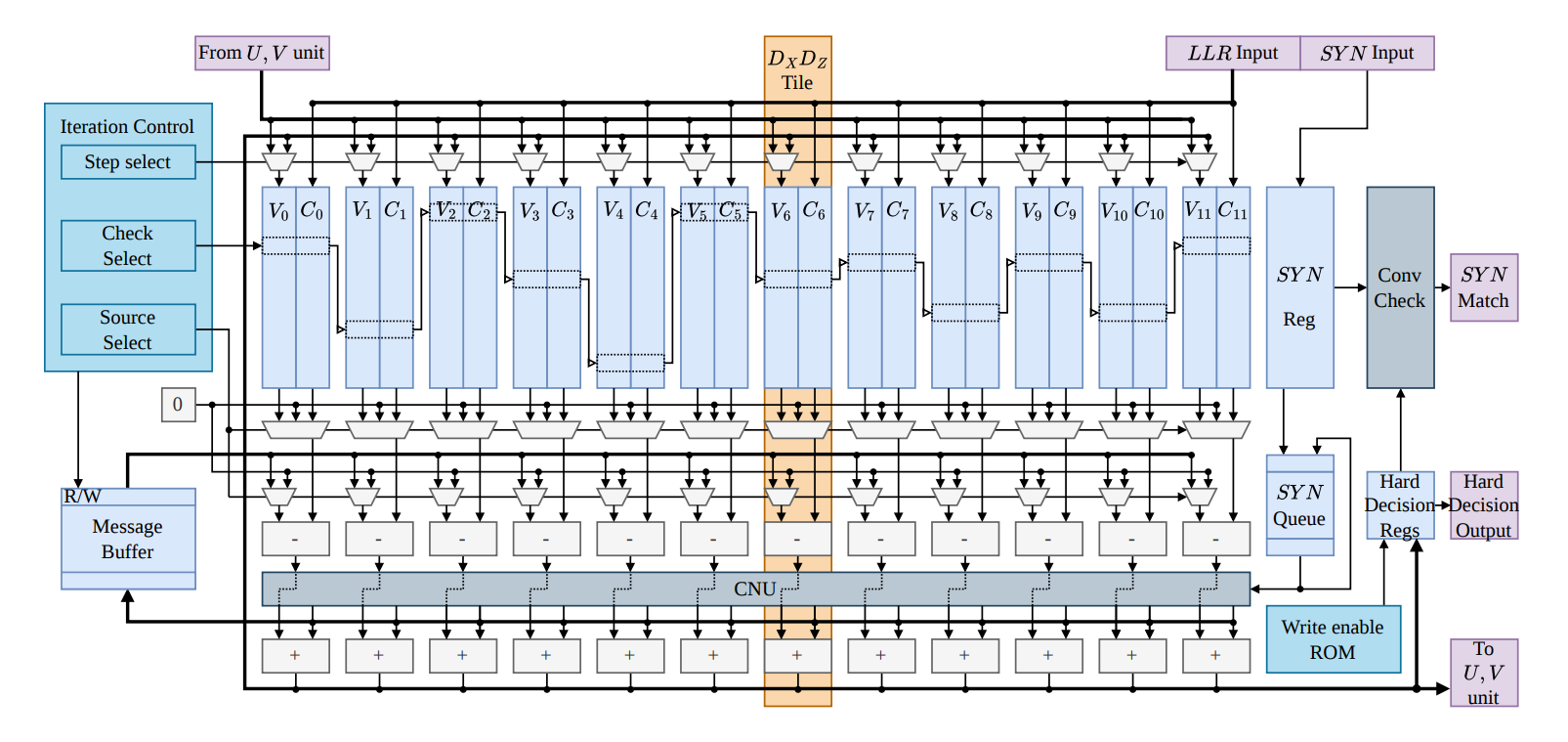
FPGA-Based Hardware Architecture Enables Real-Time Decoding of Quantum LDPC Codes
The architecture for the DX, DZ decoder. Memory elements shown in blue (light for RAM, dark for ROM). I/O in purple. Sub-modules in gray. Re
quantumcomputingreport.com·22d ago
Bosonic Cyclic Codes: Trading Error Protection for Logical Phase Gates in Quantum Error Correction
Bosonic codes offer hardware-efficient approaches to quantum error correction, with the best encodings offering effective protection of idle
 iq.fp2.dev·1mo ago
Trapped-ion quantum computer achieves breakeven performance with qLDPC error-correcting codes
High-rate quantum low-density parity-check (qLDPC) codes are a leading candidate for fault-tolerant quantum computing. They feature higher e
 arxiv.org·1mo ago
Comments
Sign in to join the conversation.
No comments yet. Be the first.