





















Low-cost solar PV enables profitable CO2 conversion into carbon fiber, silicon carbide, and graphene for negative emissions
By
pv magazine

Sesame, salt, and substance. A flagship bake.
Summary
Low-cost solar photovoltaic technology can transform CO2 from a waste product into valuable raw materials like carbon fiber, silicon carbide, and graphene, enabling monetizable carbon capture and negative emissions. Three recent studies explore electricity-based production of these materials to achieve large-scale negative emissions by 2050, reframing carbon capture and sequestration as a profitable carbon dioxide removal option.
Key quotes
· 4 pulledLow-cost solar PV enables to turn CO2 from an unwanted burden into a precious raw material and sequestered in materials with many applications.
This effectively reframes carbon capture, utilization, and sequestration as a monetizable carbon dioxide removal option.
Three recent studies on electricity-based carbon fiber, silicon carbide, and graphene aimed at enabling large-scale negative emissions by 2050.
Reaching net zero emissions by 2050 is achievable, whereby any amount of residual and unavoidable CO2 emissions must be compensated by carbon sinks, either natural or artificial.
You might also wanna read

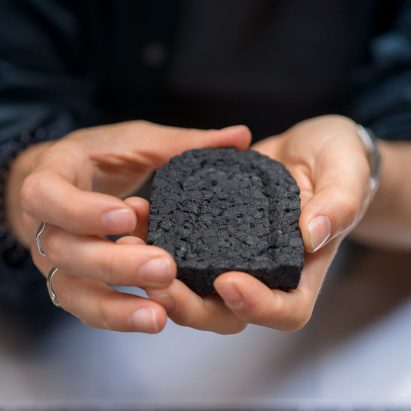
Carbon Cell Develops Carbon-Negative, Compostable Alternative to Polystyrene from Agricultural Waste
British company Carbon Cell has developed a carbon-negative, compostable alternative to polystyrene packaging and building insulation made f
 Dezeen·6mo ago
Sustainable Carbon-to-Acetylene Process with Barium Compounds
This article discusses a sustainable methodology for converting carbon sources into acetylene and carbon monoxide while capturing CO2 based
pubs.rsc.org·10mo ago
New Perovskite Betavoltaic Cell Promises Decades of Power Without Recharging
A research group at DGIST developed a perovskite betavoltaic cell using carbon-14 and perovskite materials, offering long-lasting power for
neowin.net·10mo ago
UC Santa Barbara researchers develop liquid battery material that stores solar energy as heat for years
Researchers at UC Santa Barbara, led by Associate Professor Grace Han, have developed a novel material that absorbs sunlight, stores the ene

Two Decades After Discovery: Assessing the Commercial Reality of Graphene
This article examines the current state of graphene commercialization two decades after its discovery at the University of Manchester in 200
 theguardian.com·8mo ago
Tarkett Announces World's First Carbon-Negative Linoleum Across Full Life Cycle
French flooring company Tarkett has announced that its linoleum flooring is now carbon-negative across its entire life cycle, from raw mater
Dezeen·6mo ago