
























LLM Architecture Through the Lens of Ptolemaic Cosmology
In his work "The Celestial Mirror," Michael Mangialardi compares the operation of neural networks to the concept of "phantasms" in medieval cosmology. He proposes a new framework for understanding…
Read the full articleYou might also wanna read


Fixing the AI Trust Deficit with Neurosymbolic Logic
LLMs predict. They don't reason. Neurosymbolic AI fixes the hallucination problem by fusing neural networks with logic. Here's what it is an

Yann LeCun's World Models: The AI That Dreams in Physics
Inside the machines that dream in physics — and why they may finally drag AI out of the datacenter and onto the device on your desk.

The Physicist and the Frustrated Machine
What Giorgio Parisi’s collaboration with an LLM reveals about hallucinations, contradictions, and why the field was built before the questio

Metacognition as a Solution to LLM Hallucinations: Expressing Uncertainty Rather Than Answering or Abstaining
Despite significant strides in factual reliability, errors -- often termed hallucinations -- remain a major concern for generative AI, espec
 arXiv.org·2mo ago
Researchers argue anthropomorphic LLM attributes are non-unique using Age of Empires II neural network
Much research has been carried out on large language models (LLMs) and LLM-powered agentic workflows. However, many works within the field s
arxiv.org·23d agoResearchers argue anthropomorphic LLM attributes are non-unique using Age of Empires II neural network
Much research has been carried out on large language models (LLMs) and LLM-powered agentic workflows. However, many works within the field s
arxiv.org·23d ago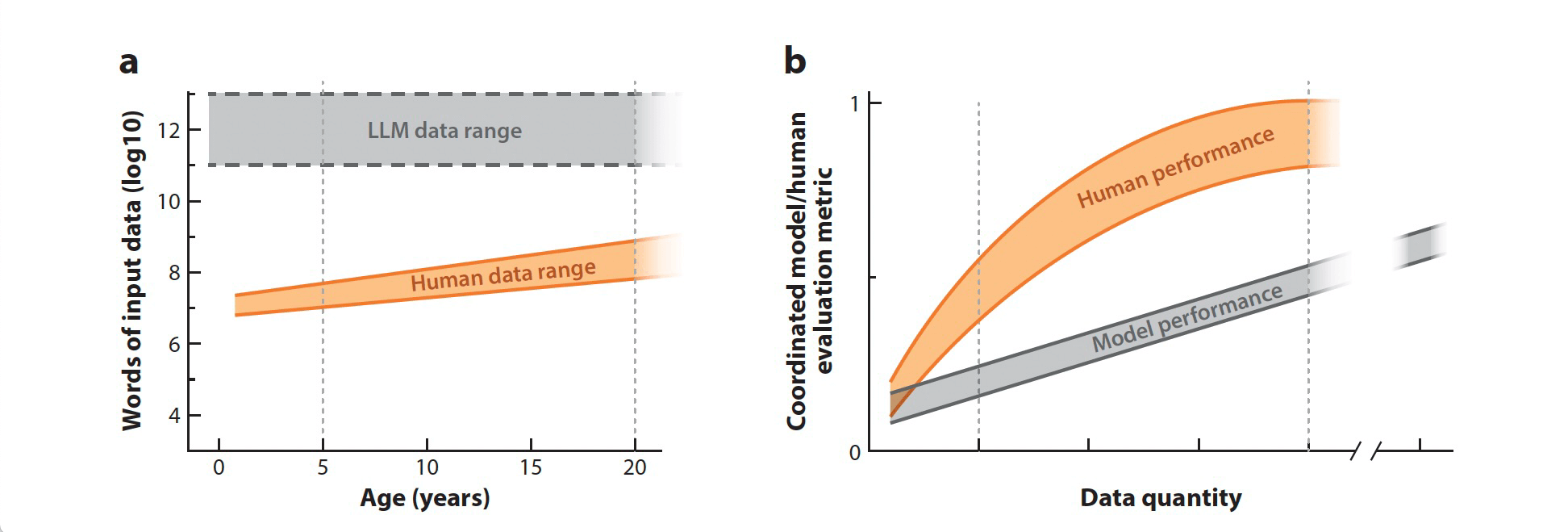
AI Systems Will Become Less Human-Like as They Scale, Despite Superficial Similarities
Despite superficial similarities, humans and LLMs operate under fundamentally different constraints and algorithms. Scaling AI will only wid
 research.roundtable.ai·7mo ago
Comments
Sign in to join the conversation.
No comments yet. Be the first.