
























10 Essential Linux Hardening Steps That Don't Require Fancy Security Tools
By
HackMoN Ai
Summary
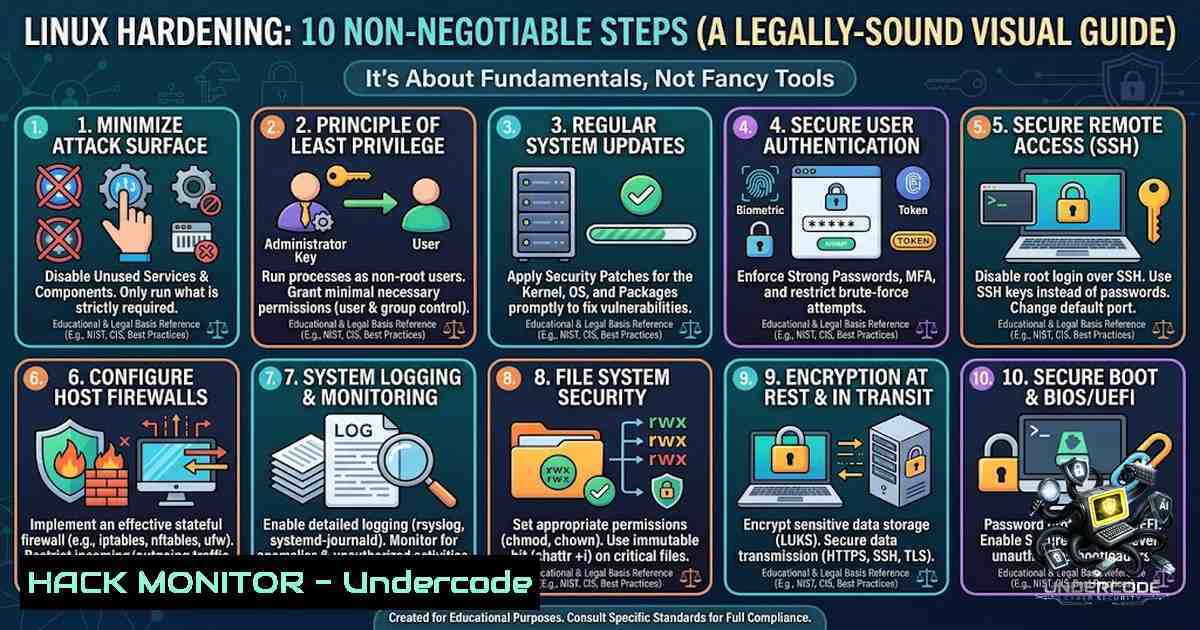
This article argues that effective Linux security comes from mastering foundational hardening practices rather than relying on expensive security tools. It presents 10 essential, non-negotiable steps for securing Linux systems, emphasizing that most breaches result from overlooked basic security measures rather than sophisticated exploits. The piece covers practical hardening techniques including SSH configuration, user privilege management, firewall setup, filesystem permissions, auditing, and kernel hardening, positioning these as the critical first line of defense that creates a resilient security foundation.
Source
 bsky10 Essential Linux Hardening Steps That Don't Require Fancy Security Toolsundercodetesting.com
Key quotes
· 3 pulledThe harsh reality is that most security incidents don't stem from sophisticated zero-day exploits or advanced persistent threats—they occur because administrators overlooked basic security practices that could have been implemented in minutes.
Linux hardening represents the critical first line of defense that creates a resilient foundation upon which every other security control depends.
Organizations often rush to deploy expensive security tools while neglecting the foundational layer of defense: the operating system itself.
You might also wanna read


A Comprehensive Guide to Securing a Linux Server
The article is a comprehensive how-to guide for securing a Linux server, covering various security measures and best practices. It aims to e
 github.com·10mo ago
Understanding Linux Capabilities: Fine-Grained Access Control for System Security
This technical article explores Linux capabilities, which provide fine-grained access control by dividing root privileges into distinct unit
 dfir.ch·8mo ago
Linux and Ubuntu: Essential Tools for Modern Cybersecurity
The article discusses the critical role of Linux, particularly Ubuntu, in addressing modern cybersecurity challenges. It highlights the nece
DEV Community·11mo agoA 30-Minute Guide to Hardening Linux Servers After Fresh Install (Ubuntu & Red Hat)
The article provides a step-by-step guide on hardening a Linux server within 30 minutes after a fresh install, covering updates, security co
DEV Community·11mo ago
Enhancing Security in Linux: Hardening SystemD Service Units and Podman Quadlets
The article discusses the security implications of systemd in Linux, highlighting its robustness but also its default focus on functionality
 roguesecurity.dev·10mo ago
FreeBSD security hardening: A sysadmin's guide to fixing poor default configurations
A critical analysis of FreeBSD's default security configurations, documenting specific hardening changes a sysadmin should make after a vani
Comments
Sign in to join the conversation.
No comments yet. Be the first.