
























Late-Time Optical and X-Ray Emission Evolution of the Oxygen-Rich SN 1996cr
Daniel Patnaude et al 2025 ApJ 980 82 Observations of a supernova taken 18 and 22 years after the explosion was initially detected suggest that the supernova’s forward shock has broken through any…
Read the full articleYou might also wanna read


VLT Study Reveals Dramatic Nickel Emission and CN Outgassing in Interstellar Comet 3I/ATLAS
We report VLT spectroscopy of the interstellar comet 3I/ATLAS (C/2025 N1) from $r_{\rm h}\!\simeq\!4.4$ to $2.85$ au using X-shooter (300-55
 arxiv.org·10mo ago
JWST studies a supernova near the dawn of time
A long time ago, in a galaxy far, far away, a massive star collapsed, triggering a supernova explosion so bright it could be seen across the
Newborn stars preserve organic-rich gas within ancient supernova debris
For the first time, astronomers have discovered stellar cocoons rich in complex organic molecules within a supernova remnant. A research tea
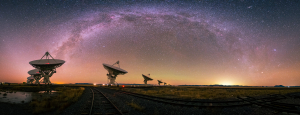
NSF VLA Reveals Supermassive Black Holes Emit Radio "Burps" Years After Destroying Stars
Astronomers using the U.S. National Science Foundation Very Large Array (NSF VLA) have found that when a supermassive black hole tears apart
 public.nrao.edu·24d ago
Cosmic-ray bath in a past supernova gives birth to Earth-like planets
Article URL: Comments URL: Points: 7 # Comments: 0
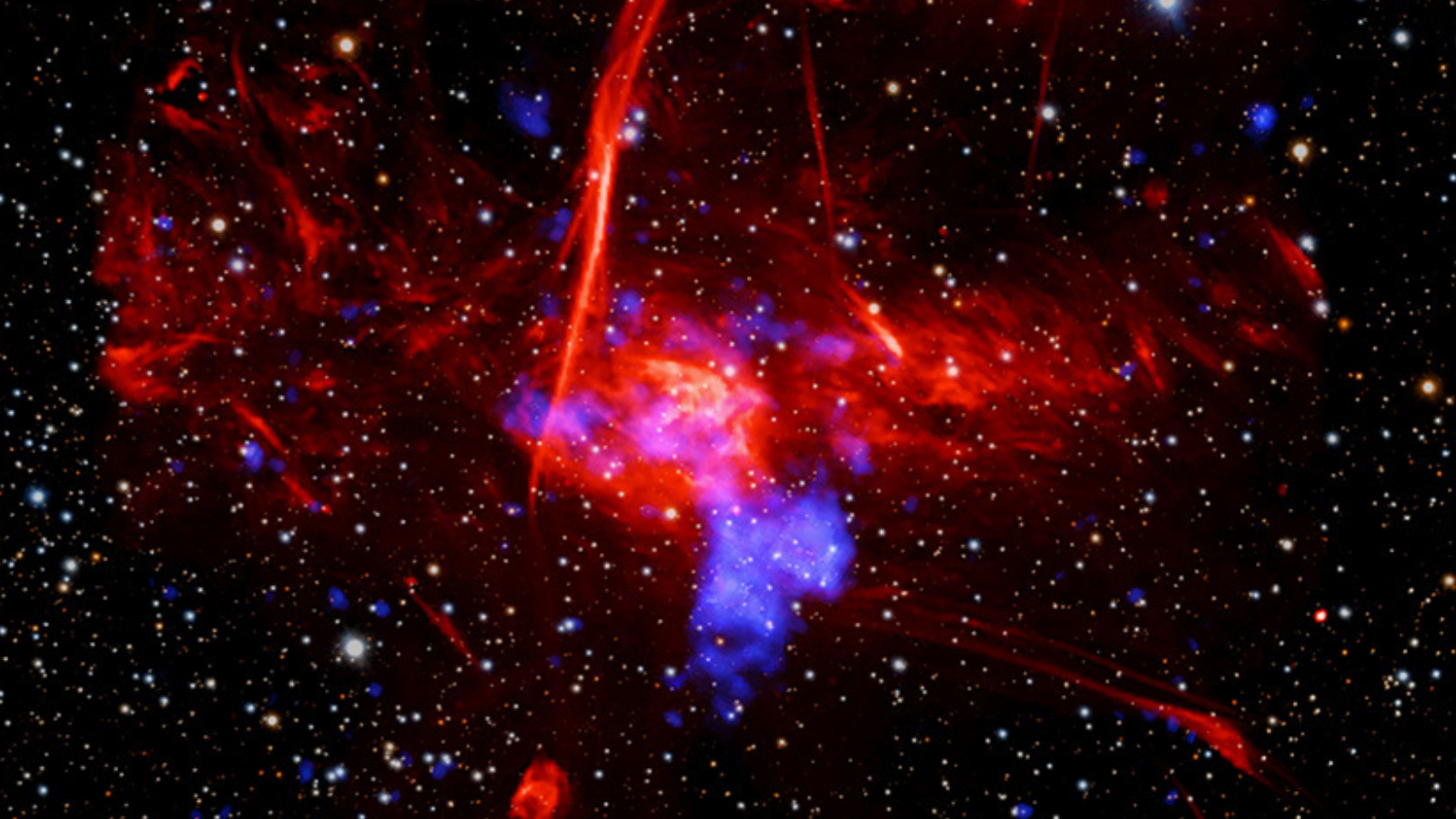
NASA's Chandra X-ray Observatory detects supernova debris near Milky Way's supermassive black hole
The dead star erupted around 1,700 years ago. It ejected material at around 2 million miles per hour.
 space.com·24d ago
Comments
Sign in to join the conversation.
No comments yet. Be the first.