
























Late-Blooming Magnetars: Awakening as Long-Period Transients After a Dormant Cooling Epoch
Arthur G. Suvorov et al 2026 ApJ 1000 55 Magnetothermal modeling suggests that neutron stars may remain “silent” at radio frequencies for approximately 100,000 years before activating, potentially as…
Read the full articleYou might also wanna read


Faint radio signals detected from previously silent 'Blue Eye' neutron star for the first time
The hushed pulsar, nicknamed Blue Eye, was a previously radio-silent neutron star.
 space.com·3d ago
Faint radio signals detected from previously silent 'Blue Eye' neutron star for the first time
The hushed pulsar, nicknamed Blue Eye, was a previously radio-silent neutron star.
Space·3d agoFaint radio signals detected from previously silent 'Blue Eye' neutron star for the first time
The hushed pulsar, nicknamed Blue Eye, was a previously radio-silent neutron star.
space.com·3d agoAstronomers witness the birth of a magnetar for the first time
A strange "chirping" signal from a distant supernova has revealed the birth of a magnetar, confirming that these incredibly magnetic neutron
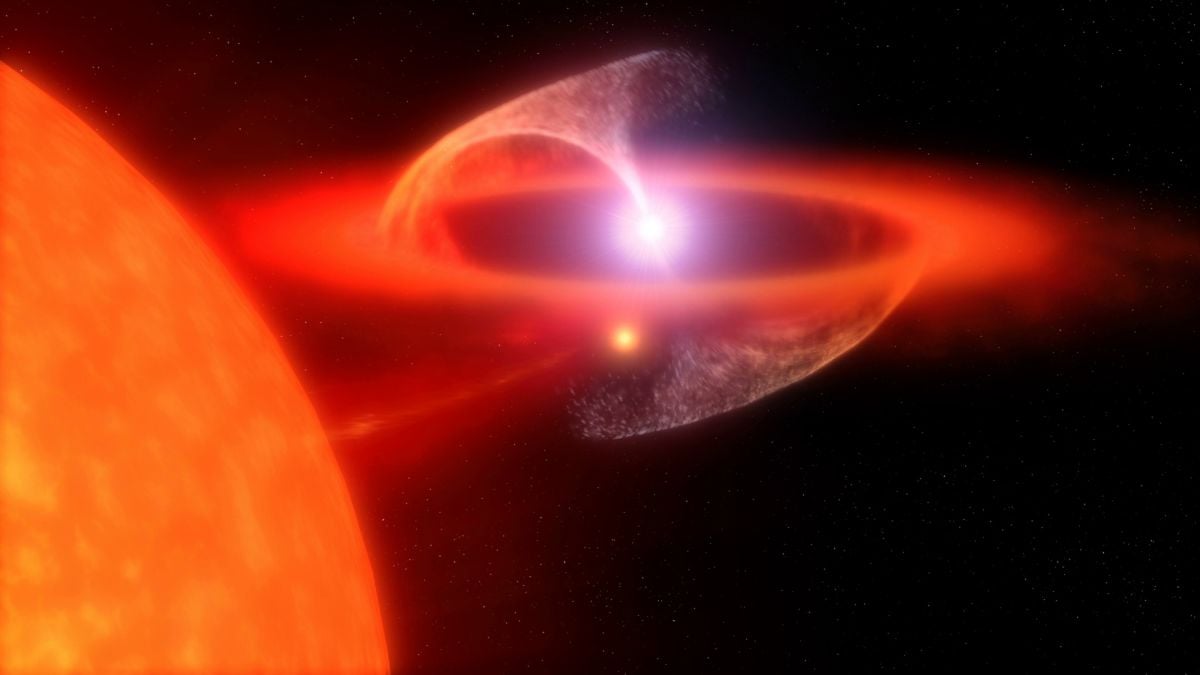
Astronomers Discover New Class of Long-Period Radio Transients in the Milky Way
Just a few years ago, a strange signal was received from the plane of the Milky Way.
 sciencealert.com·1mo ago
NSF VLA Reveals Supermassive Black Holes Emit Radio "Burps" Years After Destroying Stars
Astronomers using the U.S. National Science Foundation Very Large Array (NSF VLA) have found that when a supermassive black hole tears apart
 public.nrao.edu·24d ago
Untitled
🌌 🧪 For two decades now, #astronomers have been recording short-lived extremely energetic radio signals dubbed fast radio bursts. ✍🏼 New
Helioseismology Reveals Unexpected Changes in the Sun's 11-Year Magnetic Cycle
The Sun has a heartbeat. Every eleven years it swells with magnetic fury, hurling solar flares and charged particles into space, sparking au
 universetoday.com·1mo ago
Comments
Sign in to join the conversation.
No comments yet. Be the first.