
























JWST weighs a dormant black hole and reveals an anomaly in the early universe
The James Webb Space Telescope measured a black hole with a mass of 6 billion Suns in a galaxy that challenges the relationship between galactic bulges, stars, and the early evolution of galaxies in…
Read the full articleYou might also wanna read

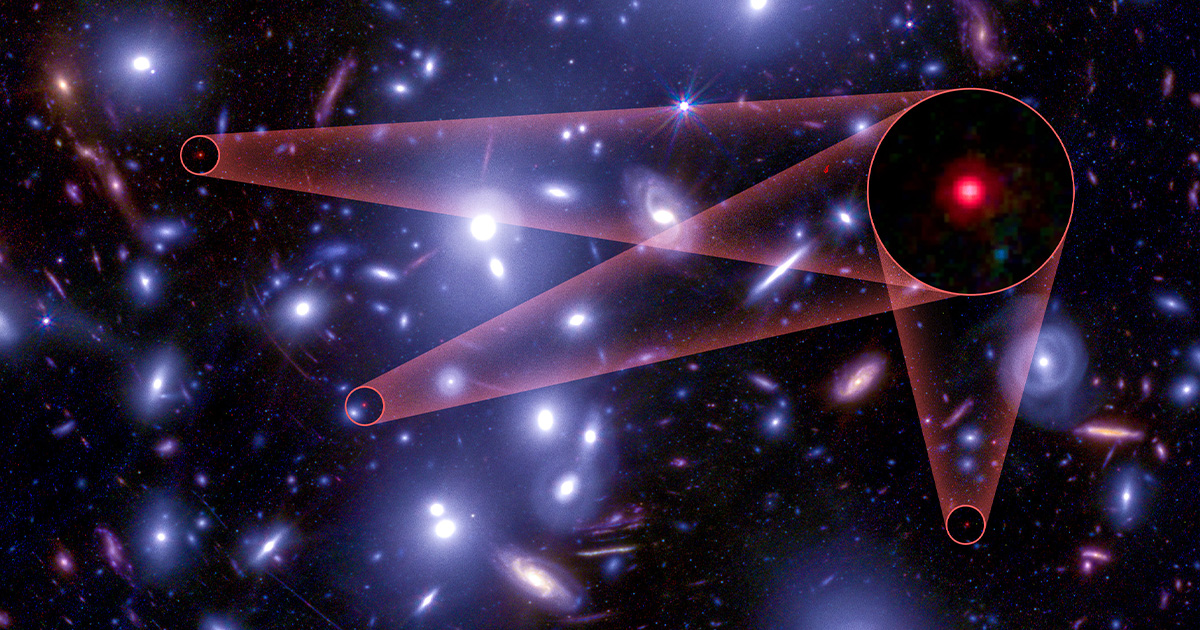
James Webb Telescope Discovers Massive Isolated Black Hole in Early Universe
The James Webb Space Telescope has found a lonely black hole in the early universe that’s as heavy as 50 million suns. A major discovery, th
 quantamagazine.org·9mo ago
Astrophysicists Grapple with Unexpected JWST Discoveries of Early Galaxies and Black Holes
Faced with observations of early black holes and galaxies that weren’t expected to exist, scientists have come up with a wealth of new theor
quantamagazine.org·8d agoAstrophysicists Grapple with Unexpected JWST Discoveries of Early Galaxies and Black Holes
Faced with observations of early black holes and galaxies that weren’t expected to exist, scientists have come up with a wealth of new theor
quantamagazine.org·8d ago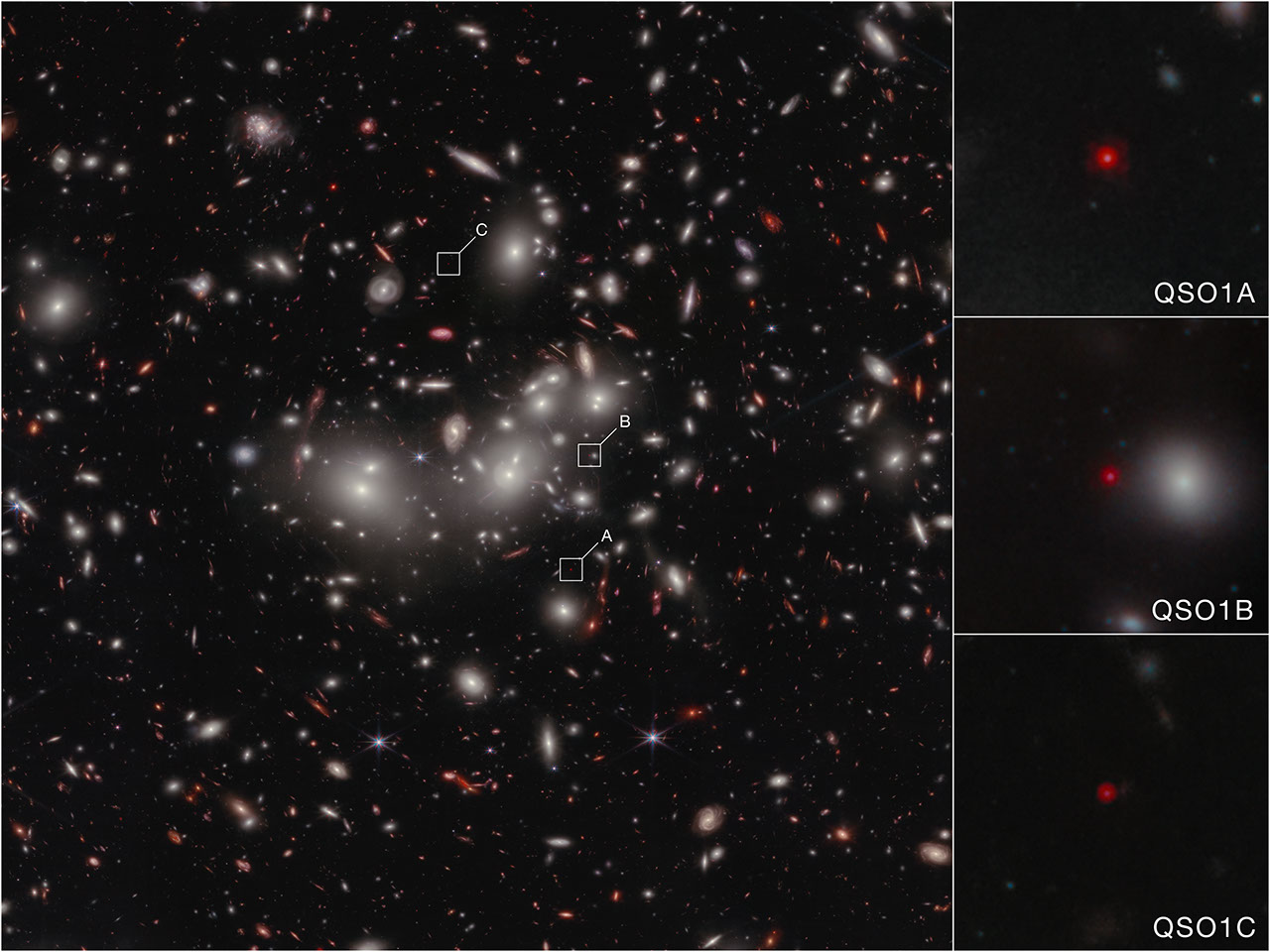
NASA's Webb Telescope Detects Black Hole That Formed Before Its Host Galaxy, Challenging Cosmic Evolution Theories
Which comes first, the galaxy or the black hole? We don’t know, but scientists have long thought it could be the galaxy: Large stars within
 science.nasa.gov·1mo ago
JWST's 'overmassive' early black holes may not be so massive after all
Astronomers studying a population of unusually X-ray-silent and overmassive black holes discovered by the James Webb Space Telescope have fo
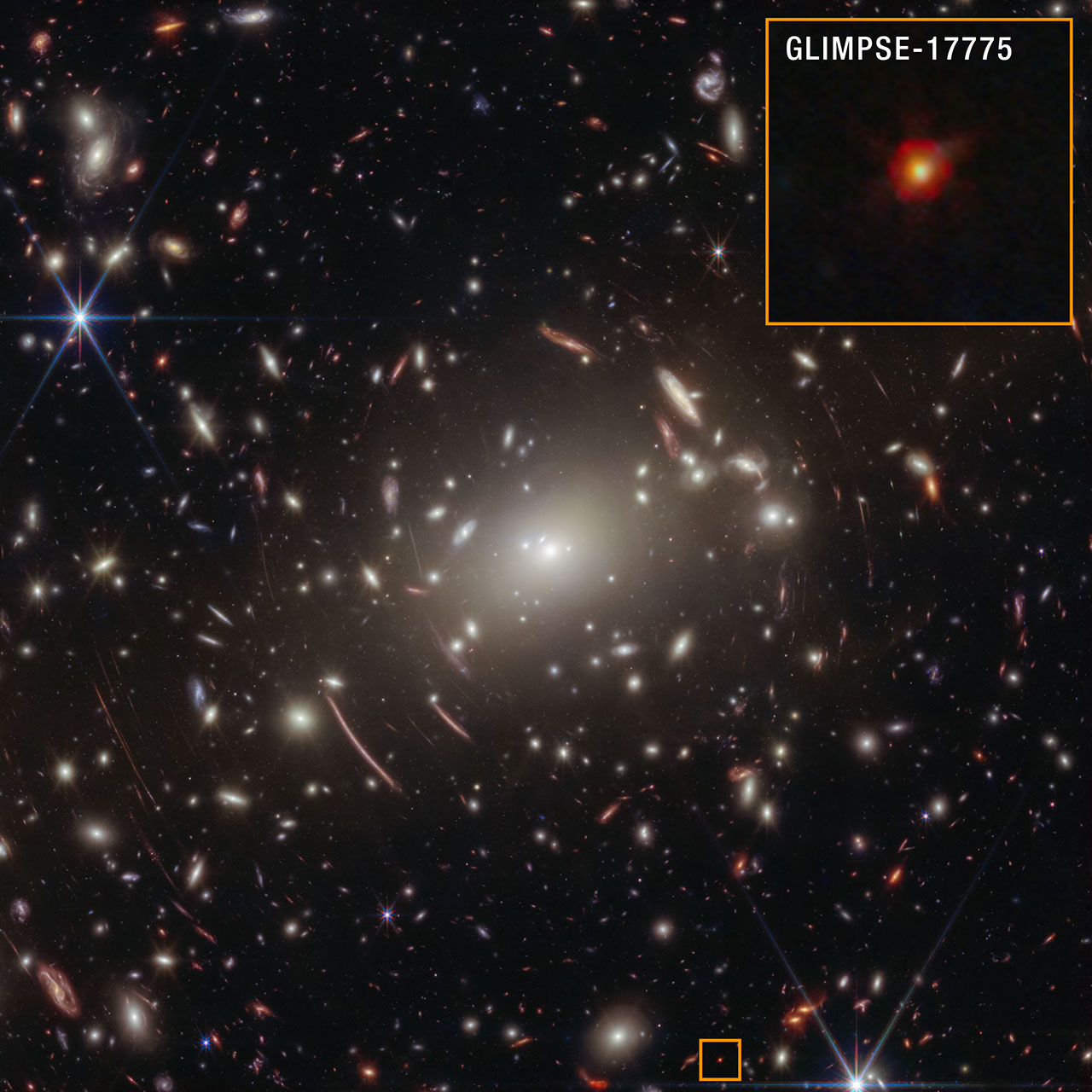
NASA's Webb Telescope Provides Strongest Evidence Yet for 'Black Hole Stars' in Early Universe
The complex puzzle known as little red dots has become more complete since their initial discovery by NASA’s James Webb Space Telescope in 2
science.nasa.gov·29d ago
JWST observes normal AGB stars at Cosmic Noon through 5000x gravitational lensing
We pointed JWST at a galaxy magnified 5000 times by the universe–what did we learn by seeing the unseeable?
 astrobites.org·1mo ago
Comments
Sign in to join the conversation.
No comments yet. Be the first.