
























JWST Edge-On Disk Ice (JEDIce): Program Overview and Ice Survey Results
Jennifer B. Bergner et al 2026 ApJ 1002 17 In a survey of five protoplanetary disks, researchers find ice features, CO:CO2 mixtures, micron-sized dust, atomic and molecular gas, polycyclic aromatic…
Read the full articleYou might also wanna read

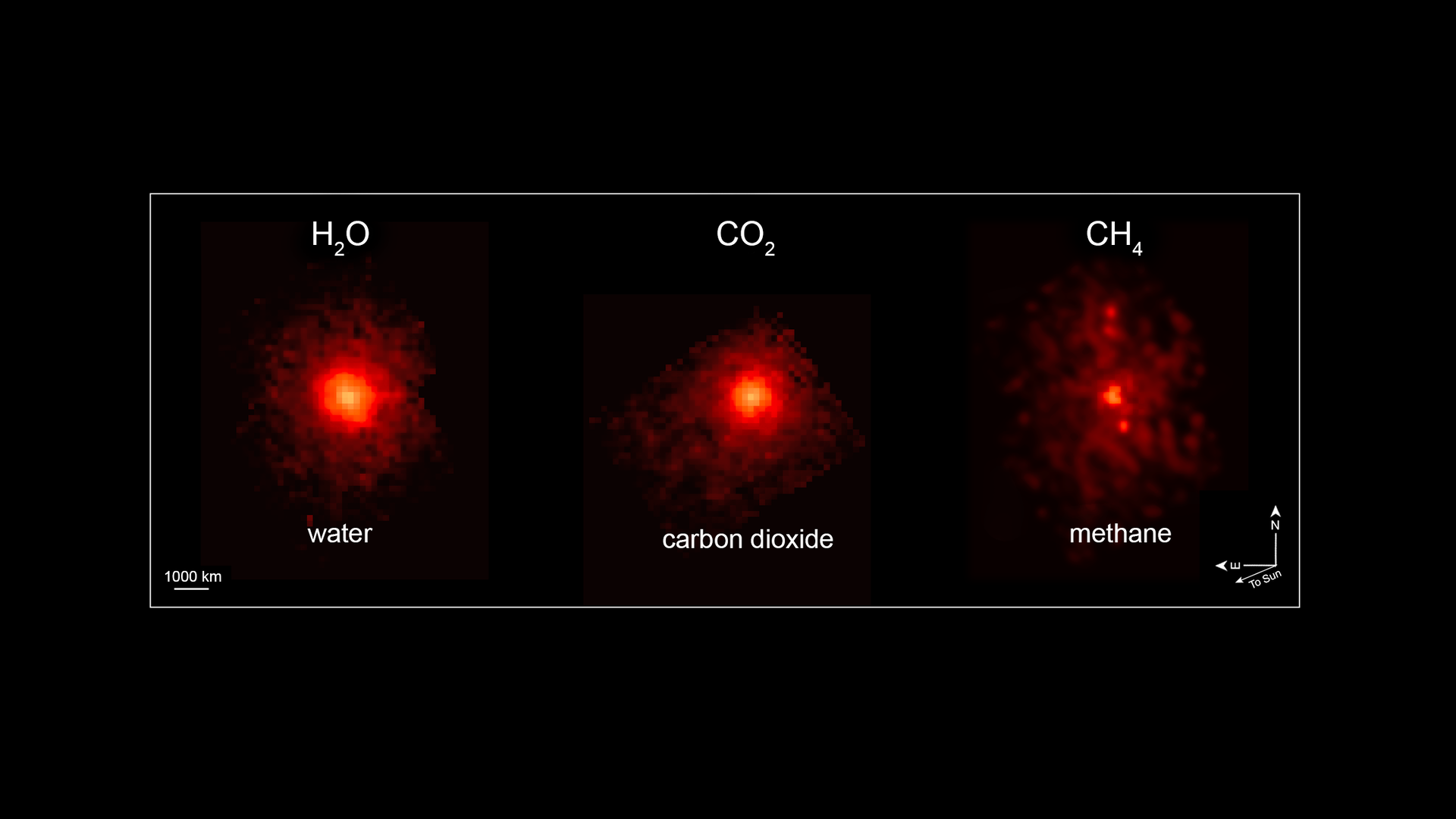
James Webb Space Telescope detects methane and other gases on interstellar Comet 3I/ATLAS
Webb's MIRI image of the interstellar Comet 3I/ATLAS in three different light wavelengths
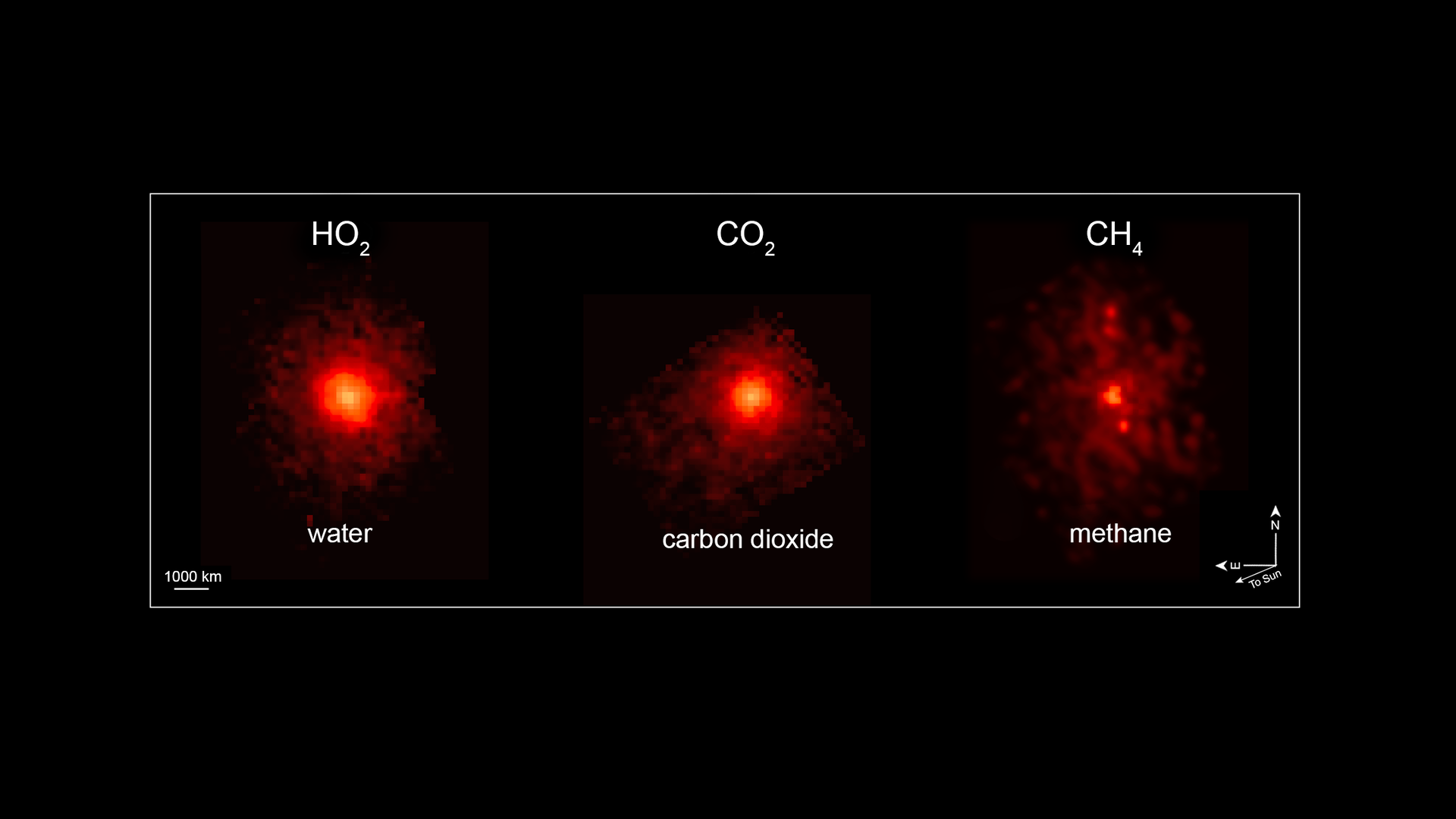
James Webb Space Telescope detects methane and other gases on interstellar Comet 3I/ATLAS
Webb's MIRI image of the interstellar Comet 3I/ATLAS in three different light wavelengths
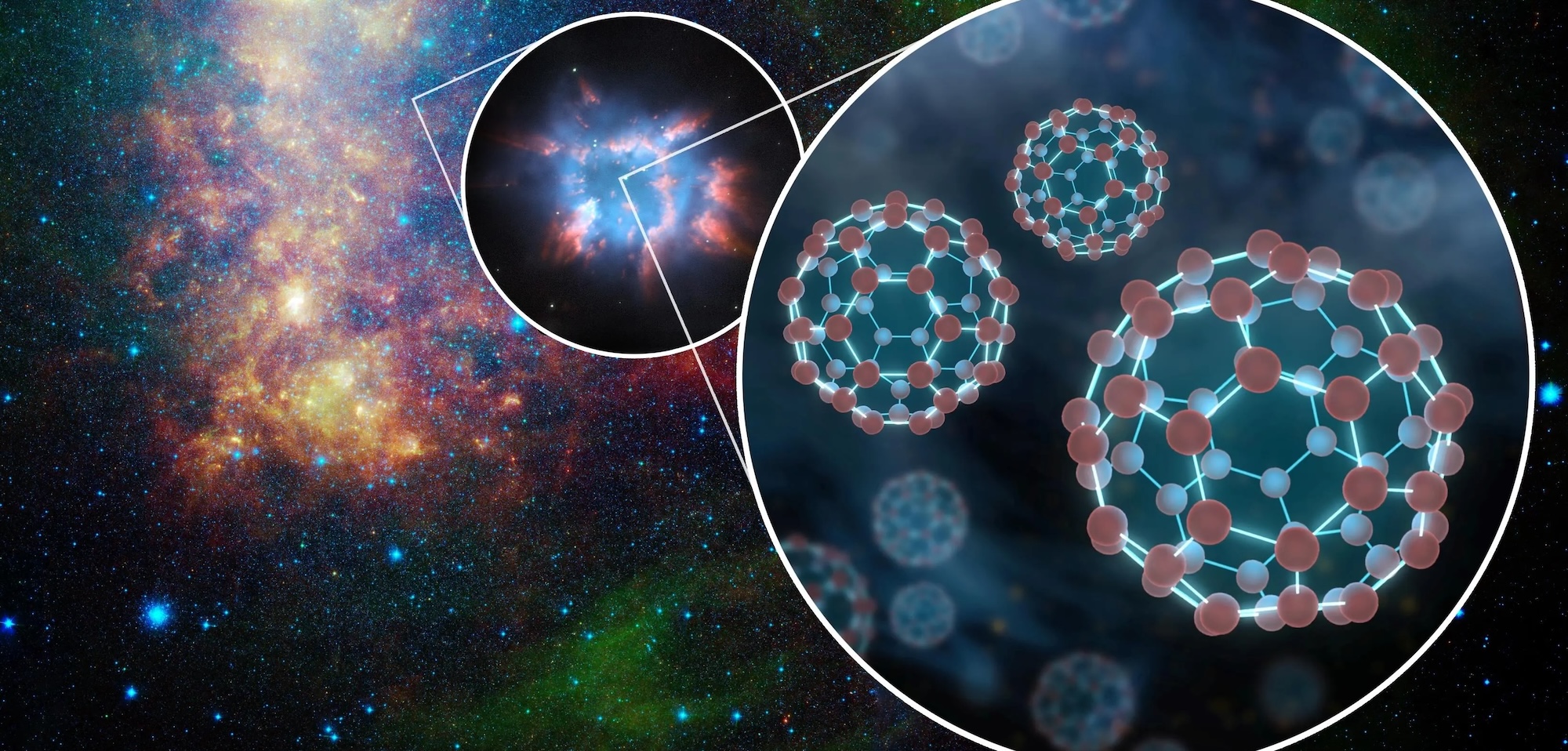
JWST Detects New Spectral Signatures of Buckyballs in Planetary Nebula Tc 1
JWST observations serendipitously revealed new emission features from fullerenes, the largest molecules definitively detected in space.
 AAS Nova·15d ago
JWST Detects New Spectral Signatures of Buckyballs in Planetary Nebula Tc 1
JWST observations serendipitously revealed new emission features from fullerenes, the largest molecules definitively detected in space.
aasnova.org·15d ago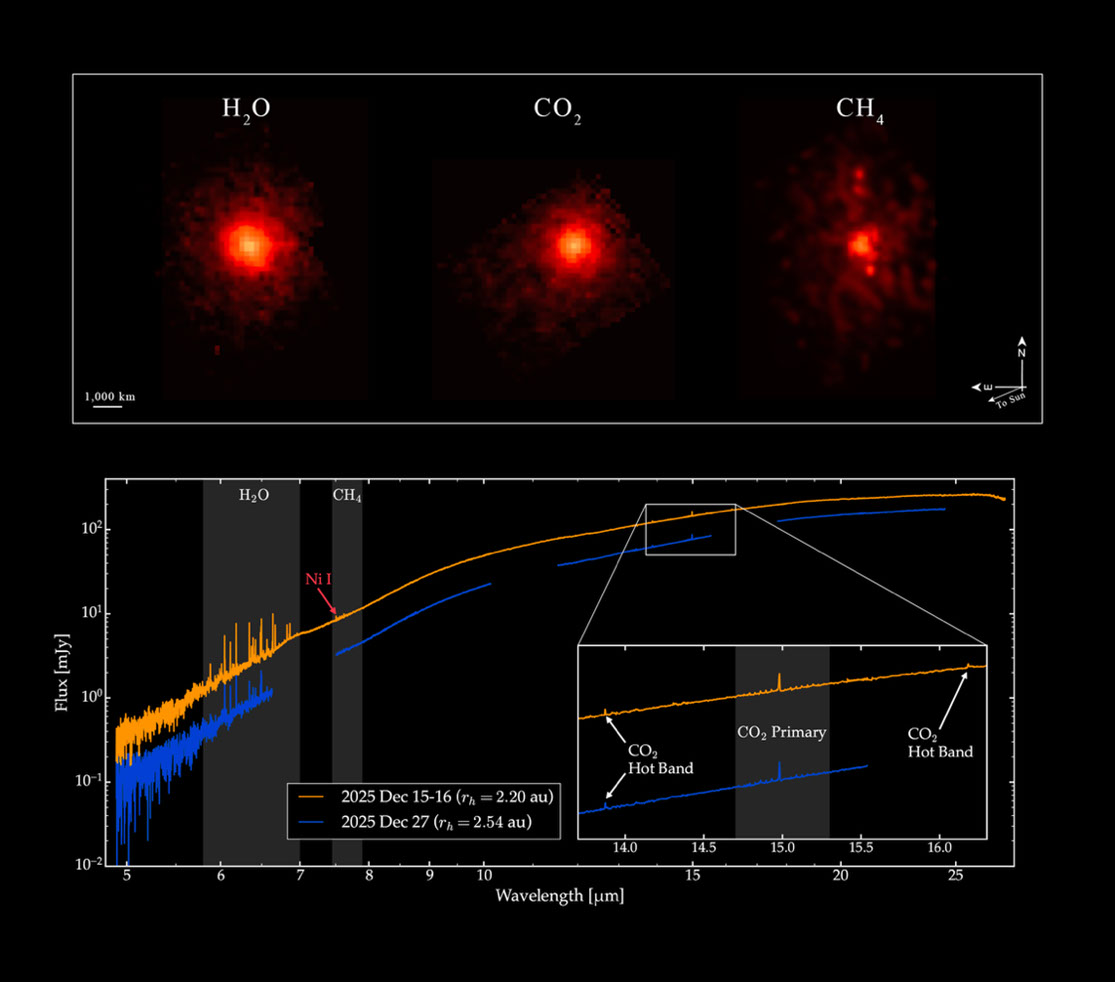
NASA's Webb Telescope Detects Methane on Interstellar Comet 3I/ATLAS
NASA’s James Webb Space Telescope has collected its first mid-infrared chemical fingerprint of an interstellar object during a recent revisi
 science.nasa.gov·1mo ago
Aerosols and hydrocarbons in the atmosphere of a white dwarf planet
Nature, Published online: 01 July 2026; doi:10.1038/s41586-026-10514-7 Transmission spectroscopy of the planet WD 1856 b, orbiting a white d

JWST detects molecular hydrogen in the ultra-low metallicity dwarf galaxy Leo P
Considering that molecular hydrogen is the most abundant molecule in the universe, you’d think it’d be easier to find.
 astrobites.org·6d ago
JWST detects molecular hydrogen in the ultra-low metallicity dwarf galaxy Leo P
Considering that molecular hydrogen is the most abundant molecule in the universe, you’d think it’d be easier to find.
astrobites·6d ago
Comments
Sign in to join the conversation.
No comments yet. Be the first.