
























Japan Interest Rates Surge on "Honebuto Shock"
From the article
(Adnkronos) - Tokyo, July 9 (Jiji Press)--A draft of the Japanese government's upcoming annual economic and fiscal policy guidelines, nicknamed "honebuto," has spurred a jump in long-term interest rates, forcing the government to revise some of the wording. The draft, released at the end of last month, reflected Prime Minister Sanae Takaichi's emphasis on proactive fiscal policy and monetary easing. It has fueled concerns among investors that Japan may experience further fiscal deterioration and faster inflation stemming from a possible delay in interest rate hikes by the Bank of Japan. The ensuing long-term rate jump, resulting from what market players call the "honebuto shock," may be a sign of an increase in market distrust in the policy management of the government and the BOJ. The yield on the most recent issue of 10-year Japanese government bonds, a key long-term interest rate, has risen to 30-year highs in interdealer trading, according to Japan Bond Trading Co. Higher long-term rates may curb corporate capital investment, chilling the economy. In the draft honebuto guidelines, the government said that appropriate monetary policy management by the BOJ is "extremely important" to achieve a strong economy, which was perceived by market participants as a message to discourage interest rate hikes. This, along with the removal of wording regarding fiscal consolidation, seen in past guidelines, triggered selling of JGBs, boosting their yields. On Tuesday, economic and fiscal policy minister Minoru Kiuchi told a press conference that the market has misinterpreted the intent of the draft. "There are reports that the government is encouraging moves to guide interest rates lower, but that is not at all the case," he added. Unable to hit the brakes on rising interest rates in the market, the government presented to the ruling coalition a revised draft Tuesday. The new document added to the section calling for "appropriate monetary policy management" a phrase "contributing to achieving stable price increases." This is believed to be aimed at allaying market concerns that the government is trying to stop the BOJ from raising interest rates further. Weaker fiscal health tends to dampen confidence in the yen and lead to the currency's depreciation, further strengthening inflationary pressure in Japan. "The government needs to listen to the warnings of the market and engage in fiscal management that can win its confidence," said Takahide Kiuchi, executive economist at Nomura Research Institute Ltd. END [Copyright The Jiji Press, Ltd.]
Continue reading on AdnkronosYou might also wanna read


Japan benchmark bond yield extends rise after hitting 30-year high
Business Recorder·6h ago
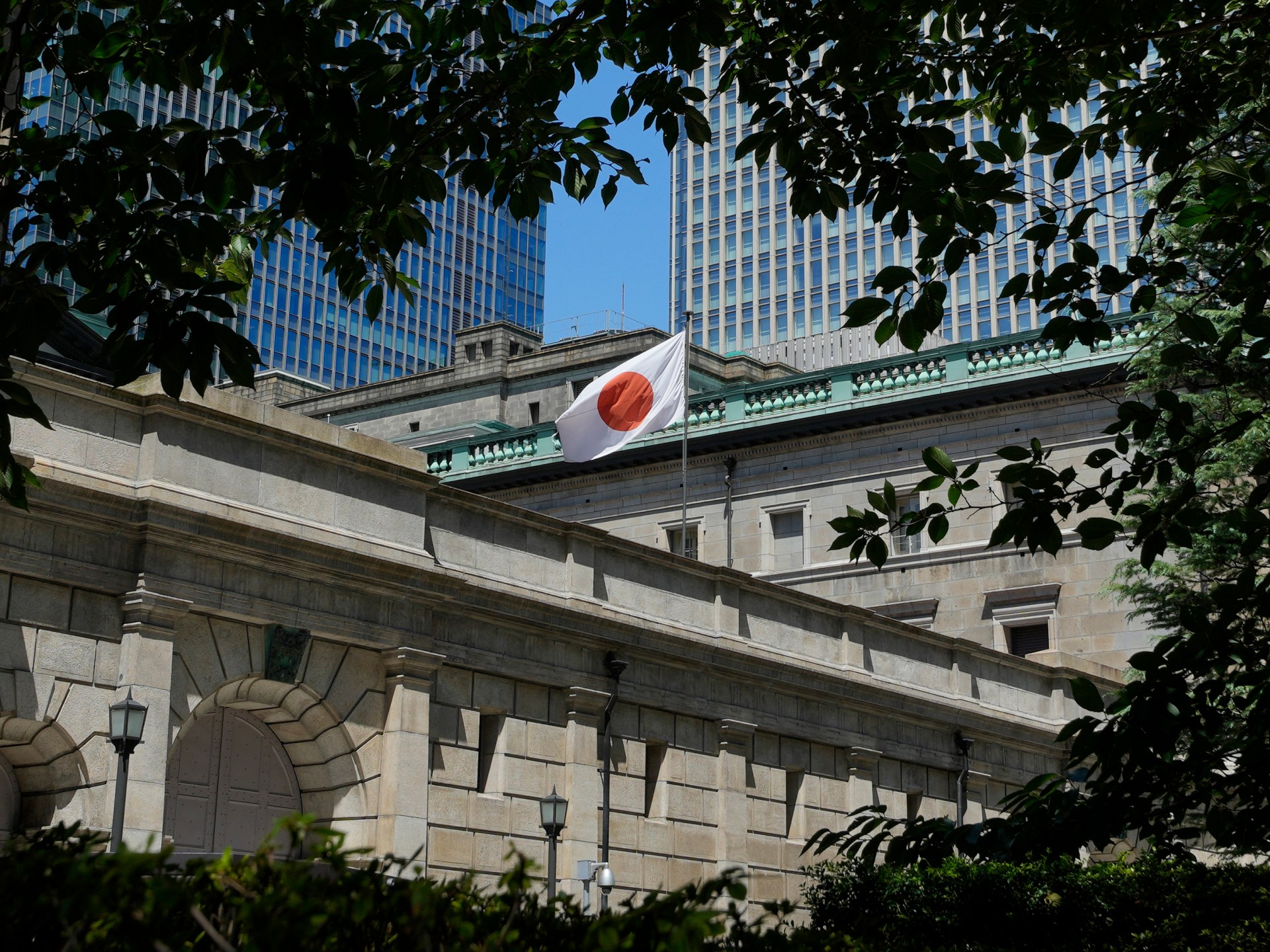
Bank of Japan raises benchmark interest rate to 1%, highest in 30 years
The Bank of Japan (BOJ) raised its benchmark interest rate to 1 percent, the highest level since 1995, marking a significant shift away from
 aljazeera.com·23d ago
Japanese banks surge as BoJ raises rates to 1%, but smaller lenders face bond losses
The Bank of Japan raised its benchmark interest rate from 0.75% to 1% in June 2024, marking a symbolic end to nearly 31 years of near-zero o
 econ.st·18d ago
Japanese banks surge as BoJ raises rates to 1%, but smaller lenders face bond losses
The Bank of Japan raised its benchmark interest rate from 0.75% to 1% in June 2024, marking a symbolic end to nearly 31 years of near-zero o
econ.st·18d agoJapan risks return to stagnation without early rate hike, ex-BOJ policymaker says
reuters.com·1mo ago

JGB yields hit 30-year highs on inflation, fiscal concerns
Business Recorder·1d ago

Japan's supplementary budget and bond yield surge spark market concerns over fiscal discipline
Japanese Prime Minister Sanae Takaichi is compiling a ~3 trillion yen ($19 billion) supplementary budget to help households with cost-of-liv
 cnbc.com·1mo ago
Comments
Sign in to join the conversation.
No comments yet. Be the first.