
























Is the British empire widely taught in British schools? The data says no
From the article
Is the British empire widely taught in British schools? The data says no Submitted by Imran Mulla on Thu, 07/09/2026 - 14:15 Recent criticism of remarks by Green Party leader Zack Polanski and historian William Dalrymple saw a resurgence in the debate on imperial history in the UK education system A statue of Robert Clive, the 1st Baron Clive, better known as Clive of India, is pictured on Whitehall in central London on 11 June 2020 (AFP) Off “And what should they know of England who only England know?” That was the question famously posed by Indian-born writer Rudyard Kipling in his 1891 poem “The English Flag”. Kipling celebrated the British empire’s enormous reach and influence, castigating ordinary men and women in England who he believed knew little of it and cared even less. British identity, for the author of Kim and The Jungle Book , was inherently imperial, and so was England. As Tanjil Rashid argued in the New Statesman last year: "From its inception, Britishness was a composite identity, formed in the aftermath of the union of England and Scotland, capable of absorbing both nations, alongside the Welsh, the Irish and the myriad nationalities that would be absorbed (and invented) by the British empire: Australians, Canadians, New Zealanders and, crucially, Indians." But debate over the public’s memory of the imperial past, or lack thereof, rages periodically to this day. Often this takes the form of fierce disagreement over whether the British education system sufficiently teaches students about the empire. The debate saw a resurgence in the British media last week after comments made by Zack Polanski, leader of the left-wing Green Party. 'Most British people are entirely ignorant about what is, for better or worse, the most important thing Britain ever did” - William Dalrymple, historian Speaking on his podcast , Polanski said: “When I studied history at school, it was the Tudors, it was the Romans, bit of Second World War. I don’t remember talking about empire or colonisation. Maybe schools have got better but I imagine we’re still not there.” His guest, the prominent historian William Dalrymple, responded by noting that “it is possible to do A Level modules on the British Empire, that they are available. But they’re not core curriculum, and very few people do them, and very few teachers feel equipped to do them. It’s still a very much minority subject for most people”. He argued this means that “most British people are entirely ignorant about what is, for better or worse, the most important thing Britain ever did.” Dalrymple further pointed to ignorance over the British Mandate in Palestine and Britain’s role in events leading up to the creation of Israel and the expulsion of hundreds of thousands of Palestinians, “which at no point appears on the British curriculum”. He argued that “people confronted with Gaza’s terrible situation on the news have no idea how they got there. Ninety-nine percent of people in Britain simply have no idea.” A new and very dangerous imperial era has begun Read More » Michael Gove, the former Conservative education secretary and current editor of The Spectator, intervened on X. “It’s always fascinating to hear two privately educated chaps ruminate on their schooldays,” he said, “but whatever they were taught at Ampleforth [Dalrymple’s old school] and Stockport Grammar [Polanski’s], the history national curriculum in our state schools now deals extensively with the British Empire and indeed others”. The Spectator then published an article by Max Jeffery, the magazine’s writer-at-large, castigating Dalrymple and Polanski. “It would have taken Dalrymple a few seconds to do some research and realise his error,” Jeffery wrote. “In schools which follow the national curriculum, lessons about the British Empire are prescribed by the government. In Years 7, 8 and 9, the curriculum demands that pupils learn about Britain's 'ideas, political power, industry and Empire'. This has been the case for 13 years.” This defence of the education system was accompanied by an article in UnHerd by Samuel Rubinstein, asserting that “the British Empire is taught in schools. It has been on the national curriculum for history for as long as such a thing has existed… What [Polanski] and Dalrymple want instead is a national exercise in self-flagellation.” But what is the actual truth? What the data shows An analysis of available data reveals that the British empire is not widely taught in schools, and particularly not in detail. Gove, Jefferey and Rubinstein all pointed to the national curriculum, but this applies only to the minority of schools which are under local authority control. The national curriculum is not followed by academies and free schools, which make up 85 percent of all secondary schools in England, or by private schools. Former UK minister demands reparations from Britain’s ex-colonies Read More » In the national curriculum for history at Key Stages 1, 2 and 3, empire appears under the category of “non-statutory examples”, meaning it is optional and not mandatory. The only mandated topic is the Holocaust. Jeffery wrote: “These compulsory history lessons in Years 7, 8 and 9 are, for many, only the beginning of an exhaustive schooltime study of the British Empire's chronology and realities.” He added: "All the major exam boards – AQA, Edexcel and OCR – permit the history of the Empire to be taught at GCSE and A-level." A minority of pupils study history for their GCSEs. Only 36 percent of teachers who teach about the British empire do so at GCSE level, and an even smaller proportion - 23 percent - do so at A Level. Moreover, only 9.6 percent of GCSE history entries include a module focused on migration or empire. The three major exam boards offer optional, not mandatory, units on the empire. 'The history of Britain as a modern nation cannot be understood separate to its history of colonisation – from the wealth that contributed to its development and the peoples that call it home' - Gurminder Bhambra, University of Sussex The unit offered by Edexcel, however, is entitled "Migrants in Britain" and examines the effects of the British empire rather than the imperial project itself. "The curriculum is fine as it is, whatever Polanski and Dalrymple might say," wrote Jeffery. Yet a major national study published earlier this year, led by researchers at the University of Oxford and University College London, found that only 16 percent of teachers believe Britain's imperial past is taught well enough in schools. This was despite 94 percent - along with 79 percent of surveyed students - saying all young people should be taught about the topic. A recently published government review into the curriculum recommended "the wider teaching of History’s inherent diversity, including through the analysis of a wide range of sources", although it did not specifically mention the empire. Gurminder Bhambra, a sociologist at the University of Sussex who has written extensively about colonialism and modern Britain, told Middle East Eye that "the history of Britain as a modern nation cannot be understood separate to its history of colonisation – from the wealth that contributed to its development and the peoples that call it home, every aspect of Britain has been significantly shaped by empire." She added: "The failure to teach this history properly is what enables some to deny the citizenship claims of those that they deem other and, perhaps more perniciously, denies the very basis on which they make such claims." Teaching on Britain and Palestine In their podcast discussion, Polanski and Dalrymple discussed the British empire's role in the creation of Israel and its relevance today. In 1917 British Foreign Secretary Lord Arthur Balfour declared that Britain would support the “establishment in Palestine of a national home for the Jewish people”. Afterwards, under the British Mandate, Palestine saw the large-scale immigration of Jewish communities who were being heavily persecuted in Europe. The Nakba: All you need to know explained in five maps and charts Read More » The British ultimately believed the land needed to be partitioned between the two people, but Dalrymple noted that "rather than see that through and rather than police it so there isn’t a catastrophe, so that neither people get massacred, the British literally walk out". This set the stage for the establishment of the state of Israel and the Palestinian Nakba, or "disaster", in 1948 which saw more than 750,000 Palestinians expelled from their homes. Last July at a United Nations conference, announcing the Labour government’s intention to recognise Palestinian statehood, then-Foreign Secretary David Lammy said "108 years ago, my predecessor as British Foreign Secretary, Arthur Balfour, signed the Declaration that bears his name. It helped lay the foundations for a homeland for the Jewish people." He added that "the Balfour declaration came with the solemn promise 'that nothing shall be done, nothing which may prejudice the civil and religious rights' of the Palestinian people as well. Colleagues, this has not been upheld and it is a historical injustice which continues to unfold." Lammy declared that "it is with the hand of history on our shoulders that His Majesty’s Government therefore intends to recognise the State of Palestine". But few people in Britain would have felt that hand of history. Just under 2 percent of GCSE history students in England, according to a 2020 report , studied a module on the Middle East. Data from 2023 showed that only 44 schools in the UK taught the Israel-Palestine conflict at GCSE level. The sole exam board to offer a GCSE module on the conflict is Edexcel. And according to Edexcel's data, in 2023 only o.5 percent of GCSE history entries were for that module. Gove himself, as education secretary, argued that history teaching had been informed by "post-colonial guilt". But he was widely criticised after his Department for Education in 2013 amended the national curriculum which discussed "the Windrush generation, wider new Commonwealth immigration, and the arrival of East African Asians", replacing the reference with "the impact through time of the migration of people to, from and within the British Isles". According to a 2025 poll, 78 percent of the public believe that "teaching should contain a mixture of positive and negative aspects of the British Empire, so pupils are given a comprehensive balanced view". Dalrymple told Polanski that the British empire's legacy is in most of the country's "great country houses built in the 18th century", which "have some link with either the slave trade or the East India Company". Irish lawmaker @RBoydBarrett compares the occupation endured by Palestinians with the Irish struggle for independence from the British Empire. Watch this week's episode of the Big Picture podcast: pic.twitter.com/uXv27SYCyf — Middle East Eye (@MiddleEastEye) September 8, 2023 Meanwhile, "a huge proportion of this country now is descended from immigrants that came with the implosion of empire in 1947 when we left India... and again in the 1970s out of East Africa." The 19th-century imperialist writer John Robert Seeley described the British empire as the "extension of the English nationality into new lands". More recently the historian Robert JC Young characterised Englishness as "a global identity into which others could always translate themselves". As the data indicates, this central aspect of British history and the formation of Britain's national identity remains little taught - but there is high demand for that to change. UK Politics News Post Date Override 0 Update Date Mon, 05/04/2020 - 21:19 Update Date Override 0
Continue reading on middleeasteye.netYou might also wanna read
What Do Schools Look Like Under Reform? (And Why It Should Worry You)
open.substack.com·22d ago

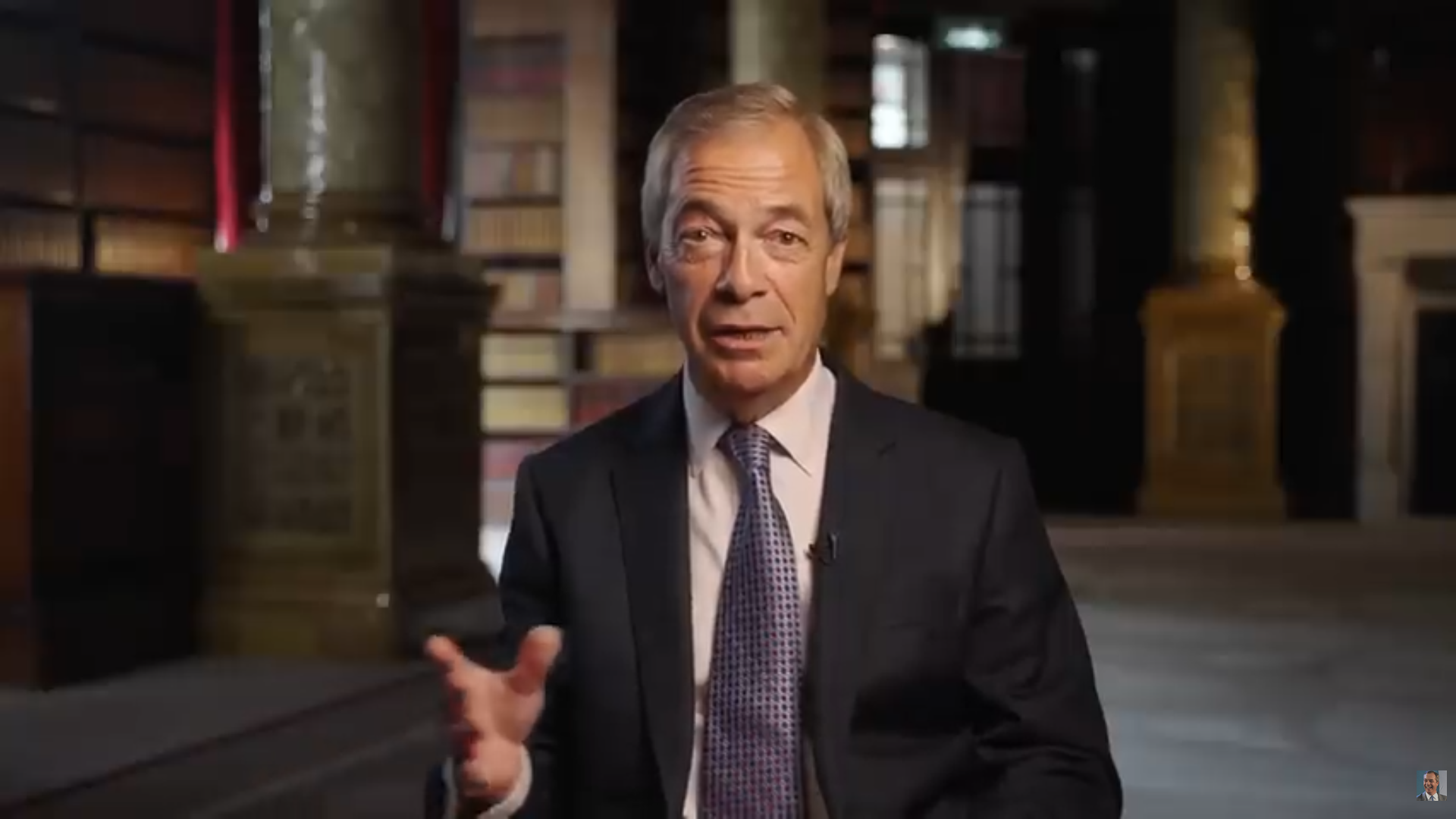
Nigel Farage criticizes UK education system over white privilege teachings and calls for scrapping Equality Act
Nigel Farage argues that the British education system is wrongly teaching white children about "white privilege" and microaggressions, claim
 freewordandfriendsworld.altervista.org·16d ago
Nigel Farage criticizes UK education system over white privilege teachings and calls for scrapping Equality Act
Nigel Farage argues that the British education system is wrongly teaching white children about "white privilege" and microaggressions, claim
freewordandfriendsworld.altervista.org·16d ago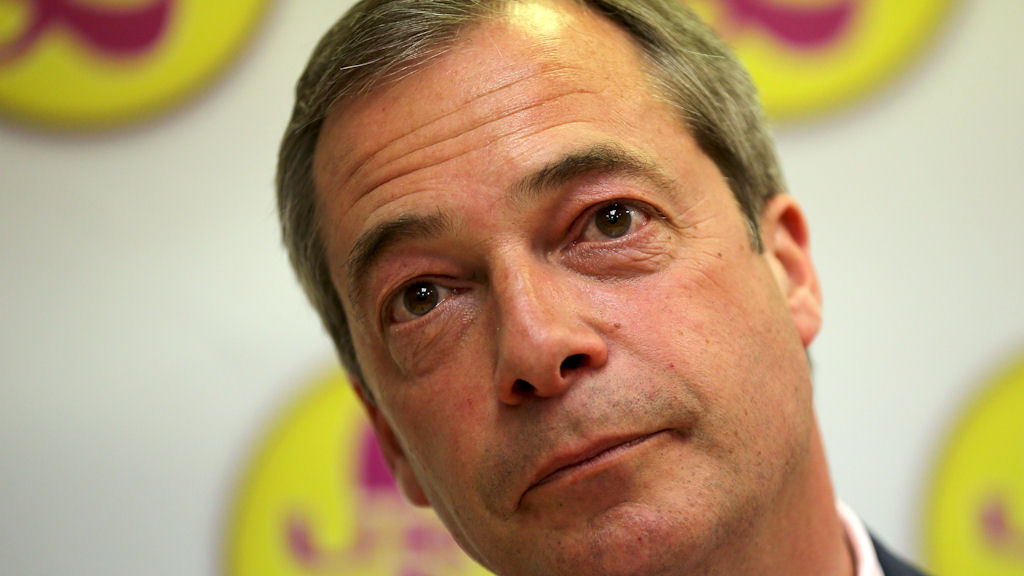
1981 school letter reveals teachers called Nigel Farage 'racist' and 'fascist' at Dulwich College
Channel 4 News has uncovered a letter from 1981 written by a teacher at Dulwich College, Chloe Deakin, to the headmaster David Emms, express
 channel4.com·1mo ago
UK, US and global politics: what students should know
ft.com·3d ago
Britain bans Hasan Piker and Cenk Uygur for opposing genocide
open.substack.com·1mo ago

Greatest Myths of English History
thegeographicalcure.com·6d ago
Comments
Sign in to join the conversation.
No comments yet. Be the first.