
























Interactive N-Body Simulator for Exploring the Three-Body Problem in Physics
Explore the famous three-body problem with this interactive N-body physics simulator. Real-time 3D visualization of gravitational dynamics and orbital mechanics.
Read the full articleYou might also wanna read


Google's Gemini AI Now Generates Interactive 3D Models and Simulations
Google is rolling out a new feature for its Gemini AI chatbot, allowing the tool to generate 3D models and simulations to explain the concep
 The Verge·3mo ago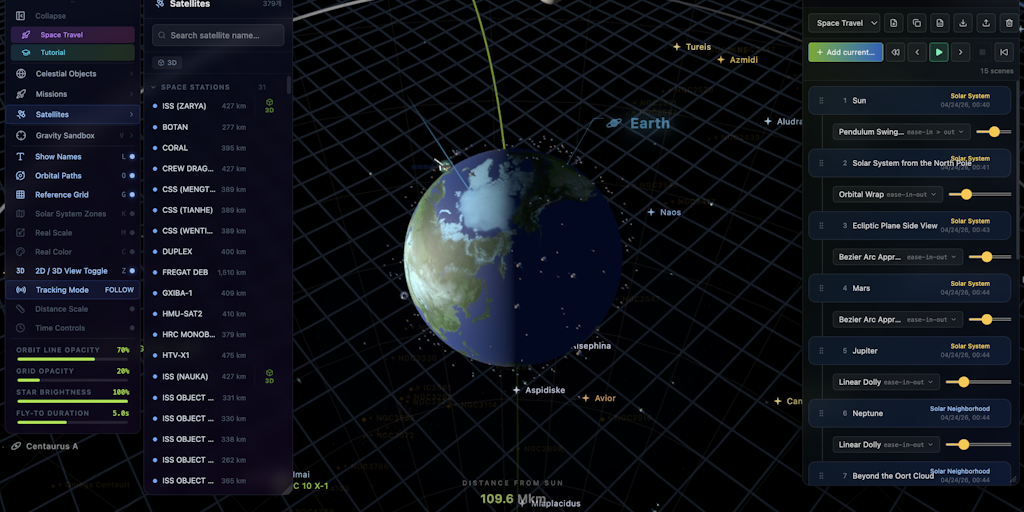
AstroGrid: A Browser-Based Real-Time 3D Universe Explorer
AstroGrid turns your browser into a spaceship. Fly from Earth's surface to the edge of the observable universe, all in real 3D.
 Product Hunt·2mo ago
Networked Physics Challenges - Q&A
Explore the complex world of networked physics in multiplayer games, tackling challenges like latency, collisions, and syncing issues.

Scientists Use Mars Orbiter to Observe Third Interstellar Object 3I/ATLAS
Although 3I/ATLAS stayed clear of Earth during its passage through the solar system, astronomers repurposed a spacecraft around Mars for a g
 aasnova.org·1mo ago
Scientists Use Mars Orbiter to Observe Third Interstellar Object 3I/ATLAS
Although 3I/ATLAS stayed clear of Earth during its passage through the solar system, astronomers repurposed a spacecraft around Mars for a g
AAS Nova·1mo ago
AI-based simulation reveals how neutron star mergers forge heavy elements
Researchers have created an AI-based simulation that makes it much faster to model how neutron star mergers produce many of the universe's h
AI-based simulation reveals how neutron star mergers forge heavy elements
Researchers have created an AI-based simulation that makes it much faster to model how neutron star mergers produce many of the universe's h
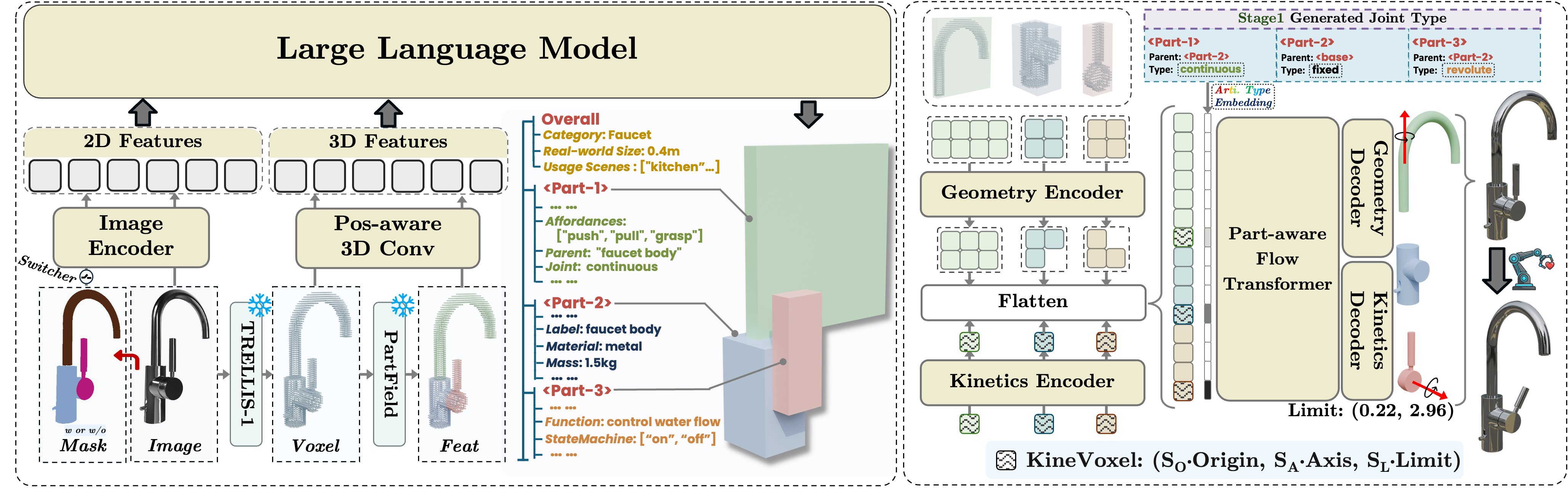
PhysForge: A Framework for Generating Physics-Grounded 3D Assets for Interactive Virtual Worlds
PhysForge: Generating Physics-Grounded 3D Assets for Interactive Virtual World
 hku-mmlab.github.io·24d ago
Comments
Sign in to join the conversation.
No comments yet. Be the first.