
























The evolution and regulation of infant formula
By
The Economist
Summary
A brief historical overview of infant formula, tracing its evolution from a 1865 Prussian "soup for infants" to modern FDA-regulated products requiring minimum levels of 30 nutrients. The article appears to be a short Science & Technology section piece that questions whether formula lives up to its marketing claims.
Source

 Twitter / XThe evolution and regulation of infant formulaeconomist.com
Key quotes
· 2 pulledBABY MILK has come a long way since a patented 'soup for infants' made with cow's milk, potassium bicarbonate, and wheat and malt flour was introduced in Prussia in 1865.
Today the Food and Drug Administration (FDA), an American regulator, requires baby formulas to have minimum levels of 30 nutrients including iron, iodine and vitamin D.
You might also wanna read


The history and marketing of fortified infant formula
A brief historical overview of baby formula development, from the 1865 Prussian invention of a cow's milk-based "soup for infants" to modern
 econ.st·14d ago
How good is infant formula?

FDA warned infant formula industry about botulism risks in 2023, prior to outbreak
This opinion piece discusses how the infant formula industry was warned about botulism risks long before a recent outbreak. It references an
 foodsafetynews.com·1mo ago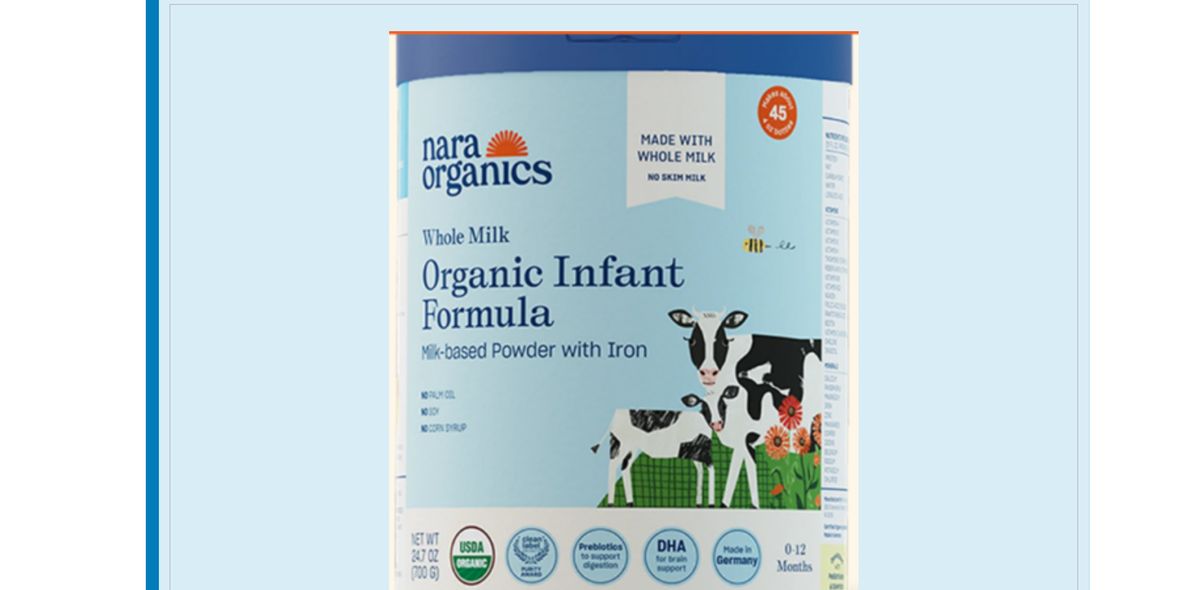
Infant botulism outbreak linked to Nara Organics powdered formula sickens three babies across three states
State and federal health officials are investigating an infant botulism outbreak linked to Nara Organics Whole Milk Organic Powdered Infant
foodsafetynews.com·19d ago
Nara Organics baby formula recalled after three infants sickened with botulism
Nara Organics has recalled its whole milk baby formula after three infants (ages 2-5 months) were sickened with potentially fatal infant bot
 latimes.com·20d ago
FDA recalls all Nara Organics infant formula after three babies hospitalized with botulism
On June 13, 2026, the FDA announced a voluntary recall of all Nara Organics infant formula cans after three infants (ages 2-5 months) in Cal
 france-jeunes.net·20d ago
Comments
Sign in to join the conversation.
No comments yet. Be the first.